In 2026, AI and smart technology are transforming tourism in Japan. From Visit Japan Web AI concierge to Kyoto big data crowd prediction, Hakone digital tourism maps, and Okinawa Okimeguri app — a comprehensive guide to the cutting edge of smart tourism.
Read this article to earn +5 MTC
Never Wait in Line Again — How AI Is Reinventing Travel in Japan
In 2025, Japan welcomed a record-breaking 36.87 million international visitors. Kyoto's Fushimi Inari Shrine sees queues forming by 7 a.m. On certain days, Kamakura's Komachi-dori is so packed that simply walking becomes a challenge. Social media is filled with posts saying, "I want to visit Japan, but I've heard the crowds are terrible."
In 2026, that story is changing — dramatically. Artificial intelligence and smart technology are transforming the Japanese travel experience from the ground up. Avoiding crowds, discovering hidden gems, designing a trip that's truly your own — that future has already arrived.
Visit Japan Web — The Government's AI Travel Concierge
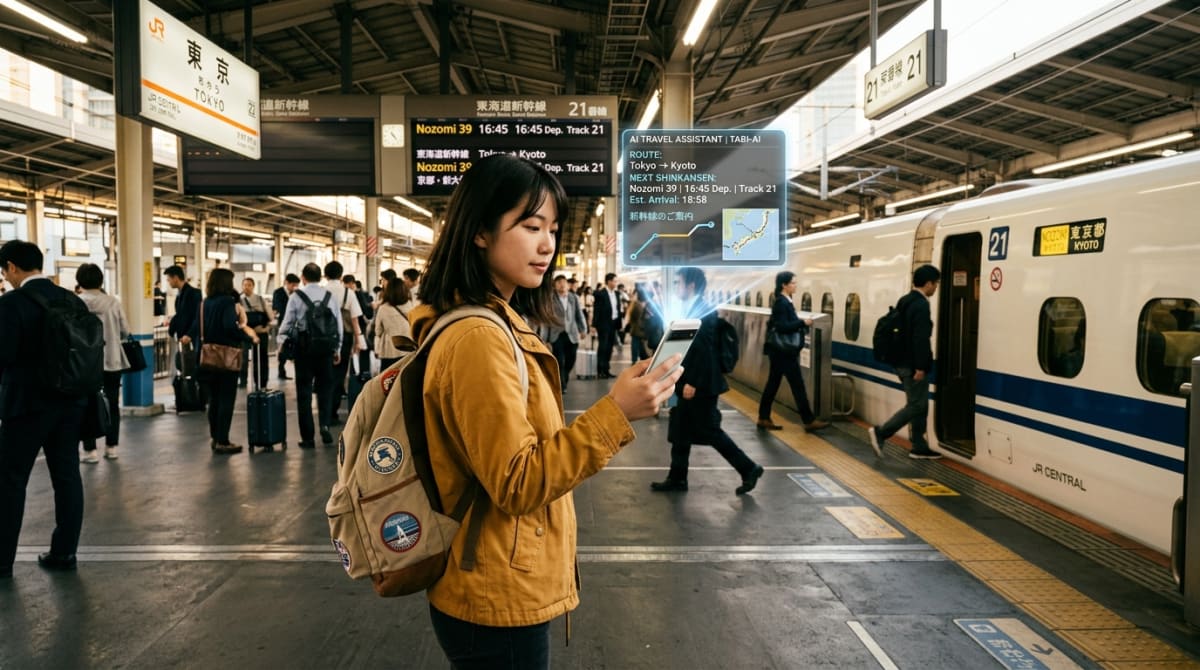
In 2026, Japan's Ministry of Land, Infrastructure, Transport and Tourism (MLIT) fully integrated a generative AI concierge into "Visit Japan Web," the platform originally built for entry procedures. What was once a simple immigration app has evolved into a personal travel assistant.
Type in "three days in Tokyo, budget of 100,000 yen, interested in temples and Japanese food," and the AI synthesizes real-time crowd data, weather forecasts, and local events to propose an optimized itinerary. These suggestions are not generic — they are personalized based on each traveler's preferences and behavioral history.
MLIT's strategy rests on three pillars: personalized AI itineraries, real-time infrastructure monitoring, and sustainable regional dispersal. Powering these pillars are smart tourism technologies being deployed across the country.
Kyoto — Live Cameras and Big Data Building a "Crowd-Free Kyoto"
Kyoto has become synonymous with overtourism. Starting in fiscal year 2026, the city's accommodation tax will effectively double, generating an estimated 12.6 billion yen in revenue earmarked for tourism infrastructure and crowd management.
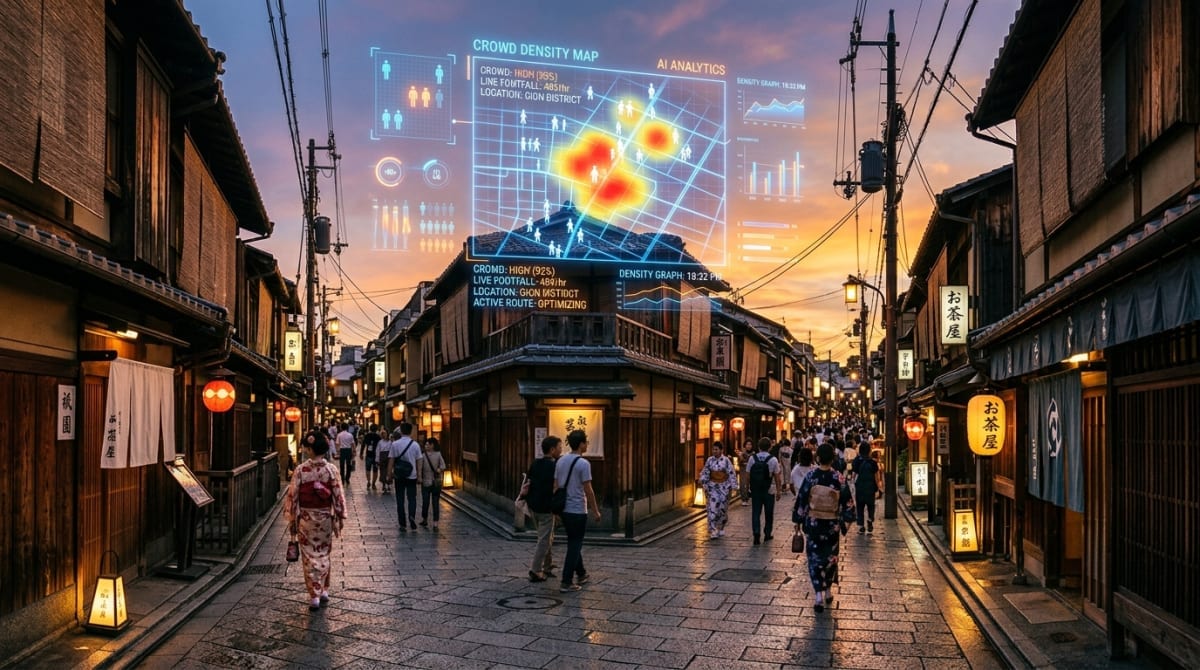
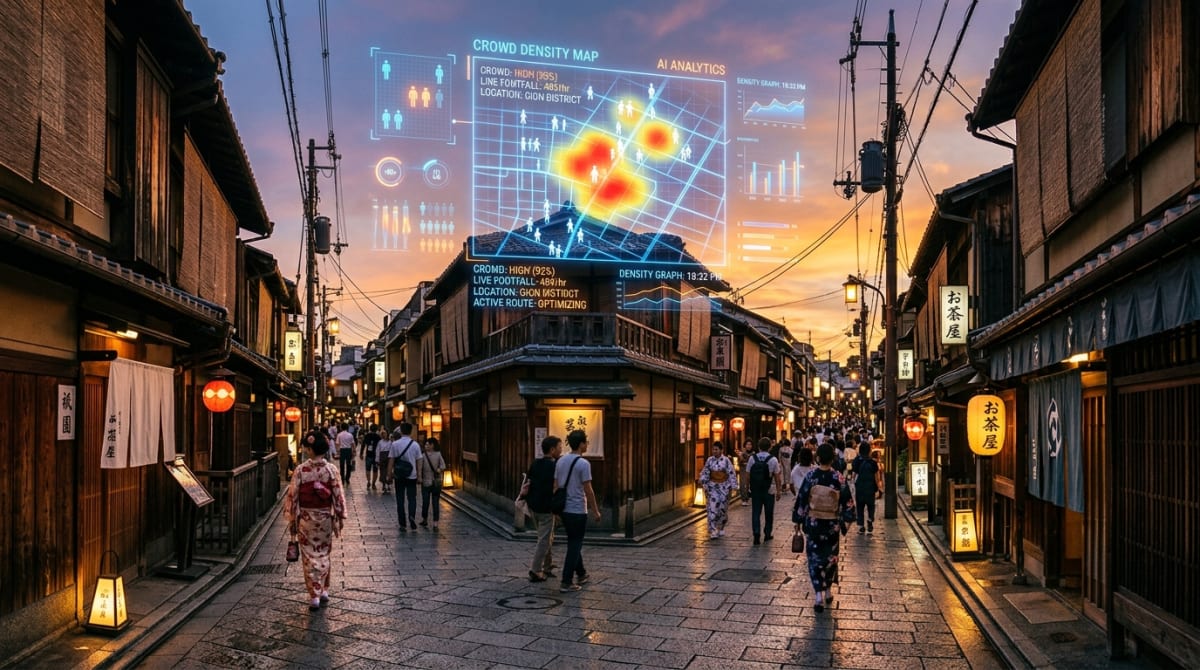
But Kyoto's approach goes far beyond taxation. AI-powered cameras installed at more than ten locations across the city analyze foot traffic in real time, displaying congestion levels on a five-point scale. When the area around Kiyomizu-dera shows "very crowded," the system recommends lesser-known alternatives like Sennyu-ji or Tofuku-ji.
Even more impressive is the big data crowd prediction system. Machine learning models trained on years of foot traffic data, weather patterns, day-of-week effects, and event schedules forecast congestion up to three days ahead. Travelers can check whether Arashiyama will be busy on a Tuesday morning and adjust their plans accordingly.
The result is a flattening of the crowd curve — better comfort for visitors and less friction with local residents. Technology enabling a model where everyone wins.
Hakone — A Digital Tourism Map Guiding You in Real Time
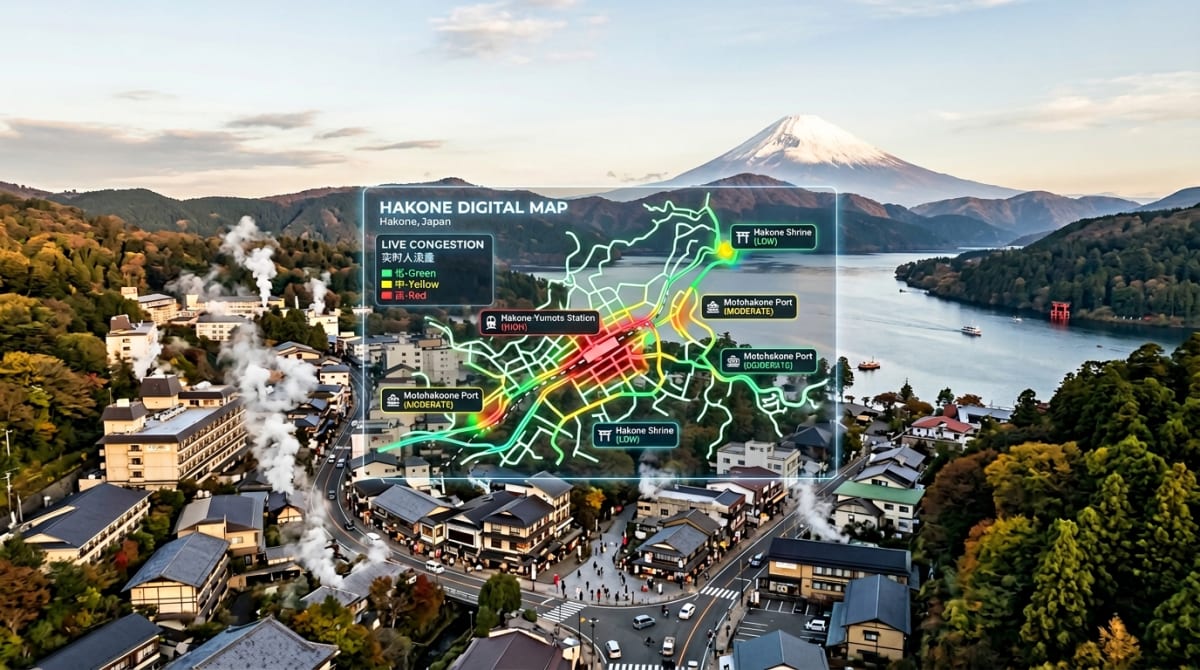
Just ninety minutes from Tokyo, Hakone is beloved for its hot springs and stunning views of Lake Ashi. The local government has introduced a "Digital Tourism Map" that delivers real-time congestion data for each major attraction.
Open the map on your smartphone and you'll see Owakudani, the Lake Ashi cruise terminal, Hakone Shrine, and other key spots color-coded: green for comfortable, yellow for moderately busy, red for long wait times. IoT sensors and camera footage are processed by AI and updated every five minutes.
Weekend parking congestion was once a serious issue, but since the system launched, peak-hour dwell times have dropped by an average of 20 percent. Visitors naturally began spreading out across different times and locations.
Okinawa's "Okimeguri" — AI Predicts Crowds and Guides You to Hidden Gems
The AI-powered congestion prediction app "Okimeguri," developed by Okinawa Prefecture, is at the forefront of tourism DX. It displays real-time crowd conditions at popular spots like Churaumi Aquarium, Kokusai Street, and Shuri Castle Park — and goes further by predicting congestion several hours into the future.
The app's true value lies in its alternative suggestions. A push notification might read: "Churaumi Aquarium will hit peak congestion at 2 p.m. Nearby Bise Fukugi Tree Road is currently uncrowded." These gentle nudges naturally guide travelers toward lesser-known destinations.
The effect ripples outward. Smaller regional attractions see increased foot traffic, boosting local economies. What AI enables is not just crowd avoidance — it is the joy of discovery itself.
Society 5.0 and New Challenges in 2026
Within Japan's "Society 5.0" national strategy, tourism sits at the cutting edge of smart city implementation. Autonomous buses, MaaS (Mobility as a Service), and multilingual AI guide robots are accelerating the integration of transportation and tourism.
In September 2026, the Asian Games come to Aichi and Nagoya. In preparation, AI-driven smart transportation systems are being tested along the corridor from Chubu Centrair International Airport to event venues. AI-optimized traffic signal control, demand-predictive shuttle buses, and multilingual AI chatbots — all working in concert to move hundreds of thousands of spectators seamlessly.
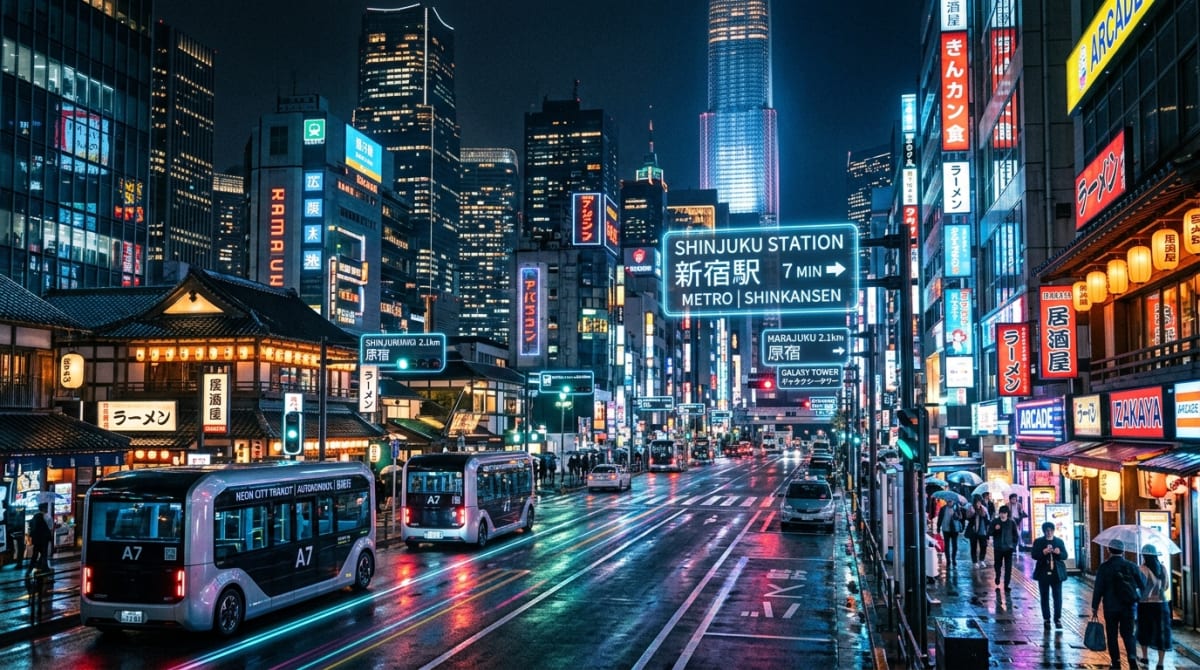
These technologies will remain as a lasting legacy after the games, rolling out to tourism destinations nationwide. A sporting event becomes the catalyst for a technological transformation.
Technology Protecting the Essence of Travel in Japan
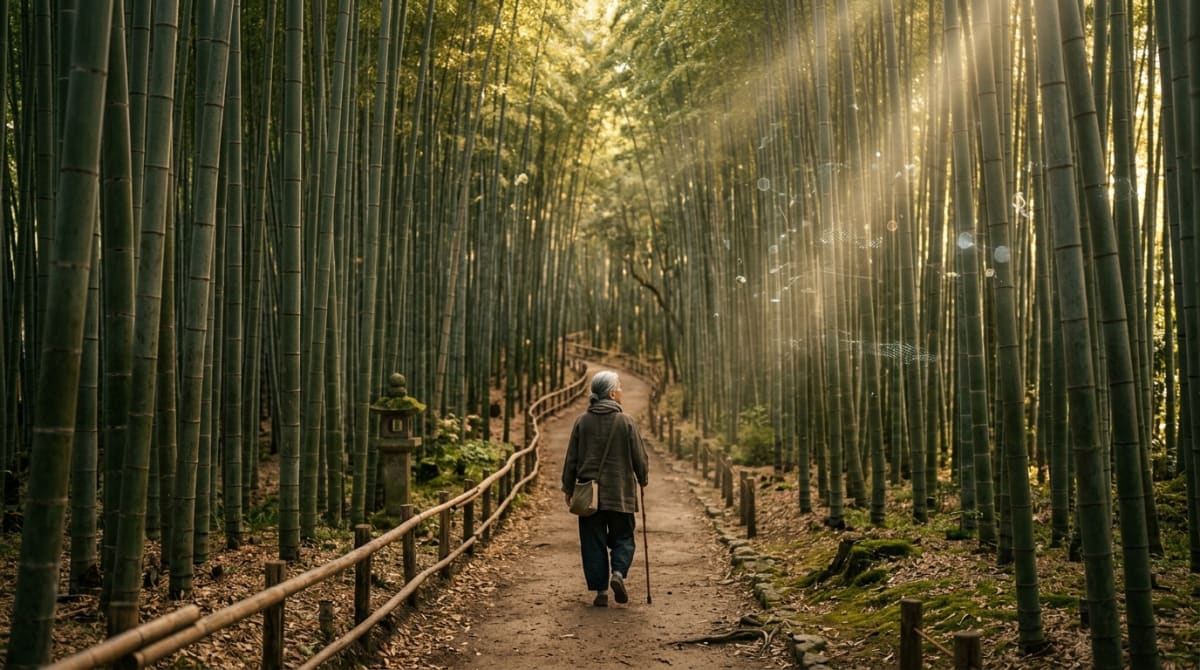
AI and crowd management technology do not make travel mechanical. Quite the opposite. Freed from the stress of standing in line for two hours, travelers can truly focus on the scenery and culture before them. Walking alone through a quiet bamboo grove. Chatting at a local eatery known only to residents. Feeling the stillness at a shrine as the sun sets. What technology aims to protect are these quintessentially Japanese moments of travel.
In 2026, Japan is becoming a rare place where the world's most advanced tourism technology coexists with cultural heritage spanning more than a millennium. One smartphone is all you need to sidestep the crowds and discover a Japan that is yours alone. That journey has already begun.