March 29, 20261 min169 views
Japan builds rockets and robots, yet still requires a personal stamp called 'hanko' for important contracts. Behind this seemingly outdated practice lies a profound philosophy of identity.
Read this article to earn +5 MTC
Lin, a tech entrepreneur from Singapore, was setting up a company in Tokyo.
Bank account, office lease, corporate registration. Everything was proceeding smoothly. Then, at the real estate office, just as she was about to sign the lease—
"Do you have your hanko?"
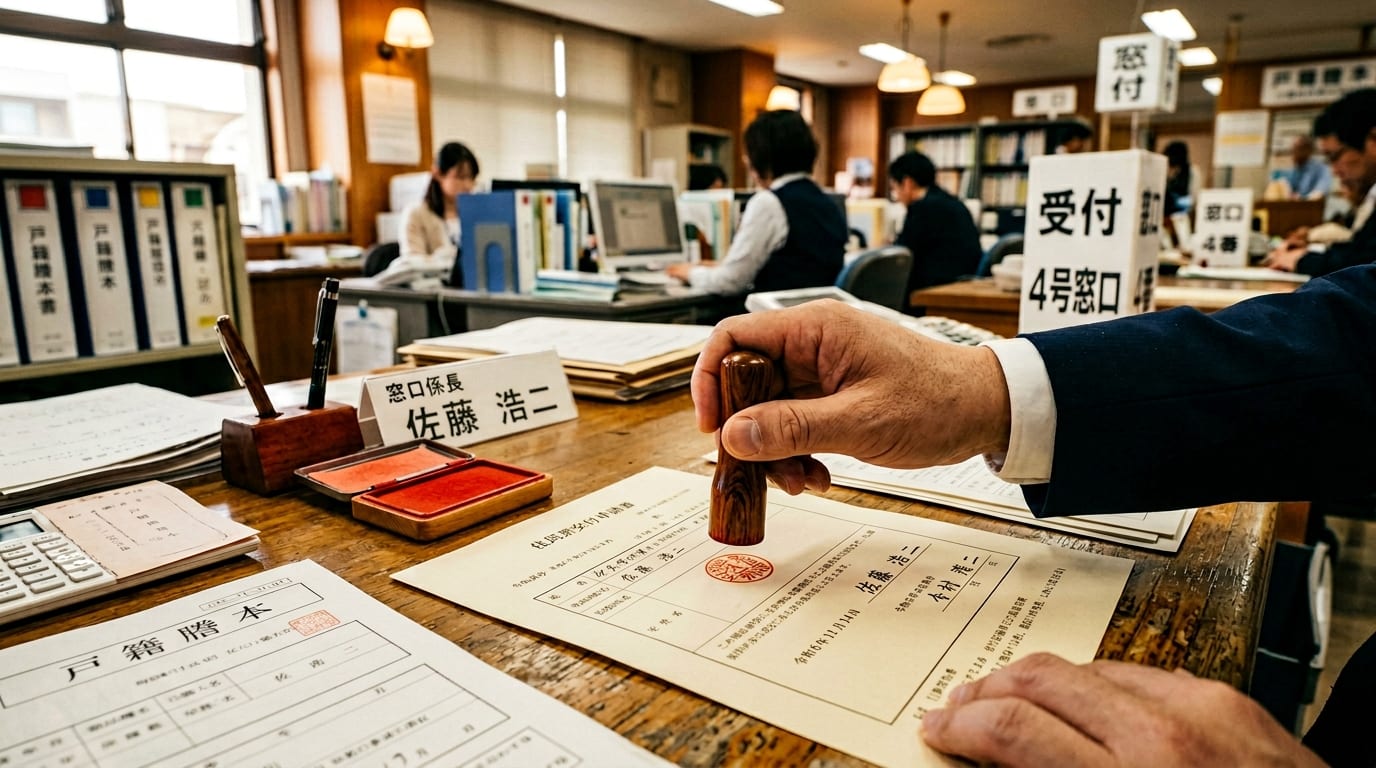
Lin couldn't believe her ears. In 2024 Tokyo, not only was digital signature rejected — even a handwritten signature wouldn't do. Without a small cylindrical stamp called a "hanko," the contract had no legal force.
Japan launches rockets, builds world-leading robots, and runs bullet trains on schedules measured in seconds. Many iPhone components are made in Japan. The fiber optics supporting global internet infrastructure are Japanese technology. Yet important documents require a tiny stamp that's been in use for hundreds of years?
Lin rushed to a hanko shop. When she said she wanted "LIN" carved, the craftsman suggested: "Roman letters are a bit... how about kanji?" It would take three days.
"Three days!? DocuSign takes three seconds!"
While waiting, Lin observed Tokyo. At a bank, a customer who forgot their hanko said "I'll come back" and left. At city hall, a couple stamped their marriage registration with hanko. At a real estate office, a family pressed their hanko onto the contract for their biggest purchase — a house.
During the 2020 COVID pandemic, "hanko commuting" became a social crisis. While remote work was encouraged, people packed into crowded trains solely to stamp documents at the office. The Digital Agency was established. "De-hanko" became government policy.
Yet many Japanese people kept using hanko.
Lin couldn't understand. It seemed like the ultimate inefficiency.
Three days later, Lin returned to the shop. Tanaka-san, the 72-year-old owner, opened a small paulownia wood box. Inside was a black water buffalo horn seal, beautifully carved with the character "林."
"Written as hayashi, read as Lin. Two trees in a forest. A beautiful character."
Tanaka-san explained the process. First, polish the stamp face flat. Then sketch the character in reverse. Then carve each stroke, one by one, with a chisel. Not machine-carved — hand-carved. Even with the same character "林," Tanaka-san's work produces a seal impression unique in the world.
"Signatures are different every time, right?" Tanaka-san said. "Your handwriting changes from morning to night. When you're tired, it deteriorates. But a hanko never changes. No matter your condition, it leaves the same impression."
Lin listened in silence.
"Do you know what a jitsuin is? The most important type of hanko. Registered at a government office. Used when buying a house, starting a company, making life's biggest decisions. Pressing your jitsuin declares: 'I am imprinting my very existence onto this decision.'"
Lin held the seal. It was surprisingly heavy.
"Think about it," Tanaka-san continued. "A signature is an 'action.' The motion of moving a pen. But a hanko is a 'physical object' that continues to exist. Even when you're not here, your hanko remains 'you' inside a safe. If you entrust your hanko to a representative, it means your alter ego is making the decision on your behalf."
That word caught Lin's attention. "Alter ego."
In Singapore, a DocuSign signature completes a contract. Efficient, rational, fast. But it is only "an act of that moment." After signing, the digital signature is stored on a server somewhere and vanishes from daily life.
A hanko continues to physically exist. In a drawer. In a paulownia box. Leaving the same impression every time, continuously proving its owner's existence. If a signature is "proof that I was here," a hanko is "proof that I continue to exist."
Lin ended up ordering three hanko: a mitomein for daily use, a ginkoin for banking, and a jitsuin for corporate registration. Total: 42,000 yen. More expensive than DocuSign's annual subscription.
On the train home, Lin opened the paulownia box and gazed at the seal. "林." Two trees. Her own name, shaped by a Japanese craftsman's hands into a form that exists nowhere else on Earth.
Back in Singapore, Lin told her entrepreneur friends:
"At first, I thought Japan was a tech powerhouse irrationally clinging to an outdated practice. But when I held that seal — hand-carved stroke by stroke by a 72-year-old craftsman — I understood. It wasn't about efficiency. Japanese people want to physically engrave the weight of their existence onto life's important decisions. There is something in that heavy black water buffalo seal that a three-second DocuSign click can never convey."