J-Times Editorial
Culture Desk
In Japan, a gentle “yes” can quietly mean “no,” and a pause can say more than any sentence. Meet honne and tatemae — not a mask to deceive you, but a quiet act of consideration that protects everyone’s dignity. Here’s how to read it with grace.
Read this article to earn +5 MTC
Honne and Tatemae: The Japanese Art of Reading the Air
You ask a Japanese colleague to join you for dinner. Their face lights up. "That sounds lovely — let me check my schedule." The date never comes. You weren't rejected coldly; you were declined kindly. And here's the part that surprises most newcomers: both of you were, in your own way, being polite.
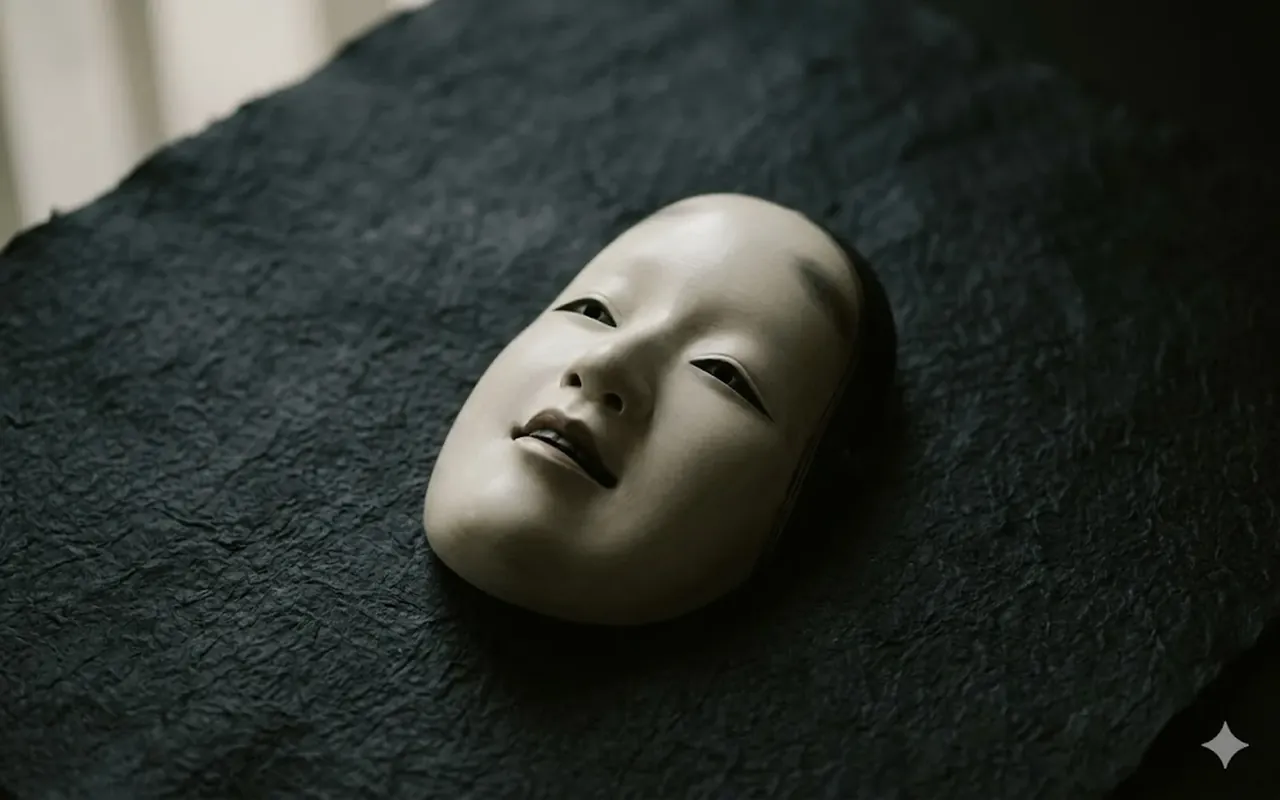
In Japan, the words people say and the feelings they hold are often two different things — and everyone knows it. Honne (本音) is your true, private feeling; tatemae (建前) is the gracious, public face you offer so the people around you stay comfortable. To a newcomer this can look like indirectness, even dishonesty. But once it clicks, you see it for what it really is: a quiet act of consideration for others (思いやり, omoiyari) — a way of protecting harmony (和, wa) so that no one loses face, including you.
TL;DR
- Honne = real feelings; tatemae = the public stance offered to keep things gentle and smooth.
- It isn't lying. It's a shared, mutually understood courtesy that spares everyone friction and embarrassment.
- The skill that ties it together is 空気を読む (kuuki wo yomu), "reading the air" — sensing what is felt but left unsaid.
なぜそうなったのか — Where honne and tatemae come from
Japan is what linguists call a high-context culture: a great deal of meaning lives in the situation, the relationship, and what is not said, rather than in explicit words. Several long-running forces pushed it that way:
- Confucian social ethics. Imported from the Asian mainland, Confucian thought prized hierarchy, role, and group order. Maintaining smooth relationships — and not shaming others publicly — became a moral good.
- Dense, interdependent living. For centuries most people lived in tight rice-farming villages (村, mura) where cooperation was survival. You could not afford open conflict with neighbors you'd depend on for the next harvest. Smoothing things over wasn't weakness; it was wisdom.
- The uchi/soto boundary. Japanese social life is organized around inside vs. outside (内/外, uchi/soto) — family and close group vs. everyone else. How directly you speak shifts with that boundary, and tatemae governs the "outside" register.
Out of this grew a quiet, generous bargain: say the thing that keeps the group at ease, and trust the other person to read your real meaning underneath. Notice what that bargain assumes — that the listener is attentive and kind enough to do the reading. Tatemae isn't a wall built to hide behind; it's a gift handed over, on the faith that it will be received with care.
歴史 / How the idea developed
- Pre-modern village & court life: Indirectness and role-appropriate speech become survival skills in interdependent communities.
- Edo period: A rigid status order makes "knowing your place" and speaking accordingly central to daily life.
- 20th century: As Japan urbanizes and builds its famous company culture, tatemae becomes essential lubrication in offices, schools, and neighborhoods.
- Today: The terms are everyday vocabulary. The flip side — failing to read the room — even has a slang label: KY (空気読めない, "can't read the air").
実際のところ — How it actually shows up
You'll most often meet tatemae as soft refusal. Direct "no" is rare; the no is encoded:
- "ちょっと…" ("That's a little…") — trailing off usually means no.
- "検討します" ("We'll consider it") — in business, often a polite decline.
- "難しいですね" ("That would be difficult") — also frequently no.
- An invitation met with vague enthusiasm but no concrete date is usually a gentle pass.
There's even a famous (half-joking) Kyoto trope: if a host offers you bubu-zuke (お茶漬け, a simple rice dish), it can be a subtle hint that it's time to leave. Locals laugh about how indirect it is — proof that even Japanese people navigate this consciously.
Here's the "aha." Picture a host who is quietly exhausted and ready for you to go. They have two choices. They can say, "It's getting late — please head home now," and watch your face fall. Or they can say, "Won't you stay for some bubu-zuke?" — and let you be the one who graciously says, "Oh no, I've kept you far too long, I should go." Same outcome. But in the second version, no one is wounded, and you get to leave as the considerate guest rather than the one who was shooed out. That is the whole logic of tatemae in a single bowl of rice: it hands the other person an exit with their dignity intact. Once you see that, the indirectness stops feeling evasive — it starts feeling tender.
How to handle it as a visitor:
- Listen for hesitation, not just words. Pauses, breath, and "umm" carry meaning.
- Offer easy exits. Phrase requests so the other person can decline without losing face ("No pressure at all, but…").
- Don't force a hard yes/no. Pushing for bluntness can feel aggressive.
- Match the register. With close friends (uchi), honne flows freely; in formal settings, expect tatemae.
ありがちな誤解 — Common misunderstandings
- "Tatemae means Japanese people are fake." No. It's a shared convention everyone understands — closer to politeness than deception. Both sides know honne exists underneath, and the effort of softening one's words is itself a form of respect for the listener. Calling it "fake" is a little like calling "How are you?" fake because you don't actually want a medical report.
- "They'll never tell me what they really think." They will — once you're inside the circle of trust (uchi), often over food and drink, where honne loosens.
- "This is unique to Japan." Every culture has public vs. private faces; Japan simply names the layers and refines the etiquette around them. (諸説あり on how "unique" it really is.)
- "Reading the air means staying silent." It means sensing the situation — sometimes the right move is to speak up gently, sometimes to hold back.
FAQ
Q. Is tatemae the same as lying? A. No. Lying intends to deceive for personal gain; tatemae is a mutually understood social courtesy meant to keep relationships smooth. The listener is expected to read the honne beneath it.
Q. How do I tell honne from tatemae? A. Watch for hedging ("a little difficult," "we'll think about it"), lack of concrete follow-up, and body language. Context and relationship closeness are your best guides.
Q. When do Japanese people show their honne? A. Usually with the in-group (family, close friends) and often in relaxed settings — a casual dinner or a drink after work (nomikai) famously loosens honne.
まとめ / Next reads
Honne and tatemae aren't a wall between you and Japanese people — they're the grammar of a culture that places others' comfort first. Once you stop hearing indirectness as evasion and start reading it as care, conversations get much easier — and something lovely happens. You realize the softness was never aimed against you. It was always making room for you.
In the end, learning to read the air is less about decoding a foreign code and more about a universal courtesy spoken in a Japanese accent: the wish that no one in the room should ever have to feel small.
- Related: The Complete Guide to Japanese Etiquette (Dos & Don'ts)
- Related: Why Do Japanese People Bow? The Meaning and Rules of Ojigi
- Compass (for JP readers): 海外から見た日本人のイメージ|「礼儀正しい」の実像
Sources: general references on high-context communication and Japanese social structure (uchi/soto, the concept of wa); Confucian influence on East Asian social norms. Treat the Kyoto bubu-zuke trope as cultural folklore (諸説あり). Add academic citations before publishing.
Written by
J-Times Editorial
Culture Desk