Train etiquette, shrine worship, onsen rules, chopstick taboos — 50 unspoken rules of Japan organized by situation. Read this before your trip and locals will treat you differently.
Read this article to earn +5 MTC
No one wants that "I can't believe I just did that..." moment while traveling in Japan. When to remove your shoes, how to behave on trains, hot spring etiquette, how to pray at shrines — Japan has countless unspoken rules. Knowing them dramatically changes how locals perceive you and elevates the quality of your trip. This article compiles insights from long-term foreign residents and travel experts, covering 50 unspoken rules organized by situation.
Train & Public Transport Etiquette — Silence Is the Ultimate Courtesy
Basic Rules Inside Trains
Japanese trains are among the quietest public transportation in the world. This isn't coincidence — it's the result of unspoken rules shared by all passengers.
1. Never talk on the phone. Virtually no one makes phone calls on Japanese trains. If you receive a call, don't answer — text back "I'm on the train" instead. This isn't a law, but making calls earns cold stares from surrounding passengers.
2. Watch for earphone sound leaks. Listening to music or podcasts is fine, but sound leaking from earphones is highly frowned upon. Keep the volume modest so others can't hear it.
3. Carry backpacks in front. During crowded times, wearing a backpack on your back takes up other passengers' space. When it gets crowded, hold your bag in front of you or place it at your feet.
4. Priority seating etiquette. Priority seats are for elderly, pregnant, disabled passengers, and those with small children. Many people avoid sitting there even when empty, though you can sit if it's vacant — just be ready to give it up immediately when someone who needs it appears.
5. Queue in line. Platforms have markings for boarding positions, and Japanese people form orderly lines. Cutting in line is one of the most disliked behaviors. Let exiting passengers off first before boarding.
6. Eating depends on the line. On Shinkansen and express trains, eating ekiben (station boxed lunches) is part of the culture. But eating on commuter trains should be avoided. Drinking water from a bottle is generally acceptable.
7. Women-only cars. During morning rush hours, some cars are designated "Women Only." Men accidentally boarding these cars face very awkward situations. Check for pink signage.
Shrine & Temple Etiquette — Worship That Shows Respect
Japanese shrines and temples are tourist attractions but also active places of worship. Knowing proper etiquette can even earn you appreciation from locals.
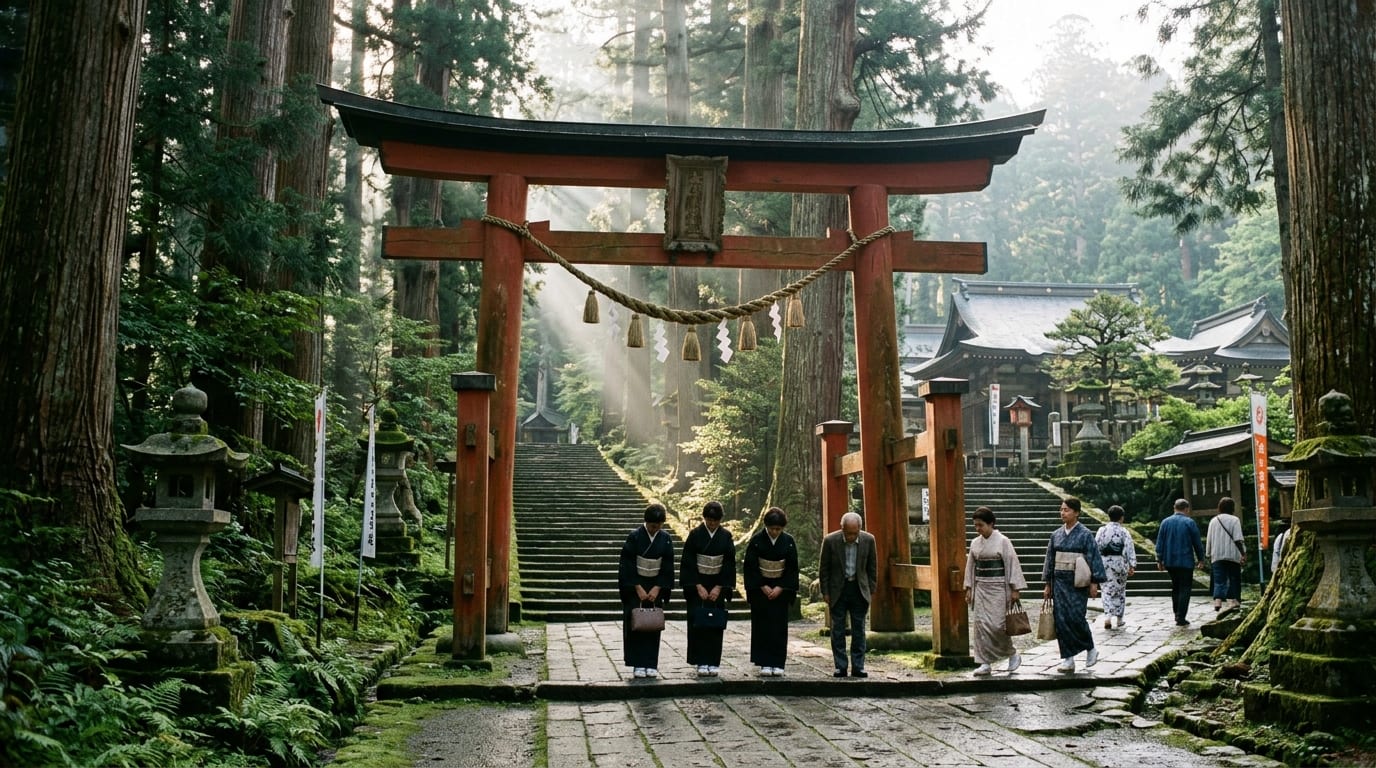
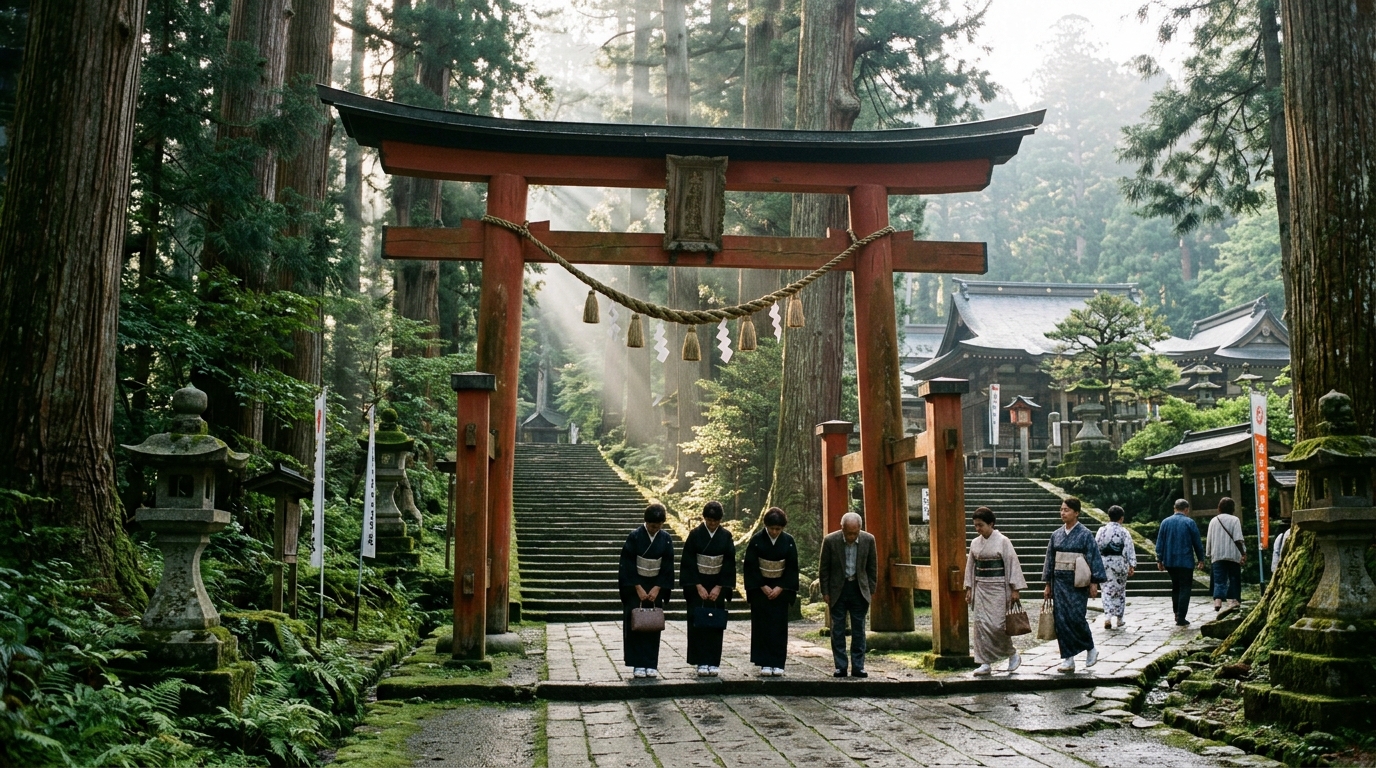
8. Bow before the torii gate. A slight bow before passing through a shrine's torii gate is proper etiquette. The torii marks the entrance to sacred ground, and your bow means "excuse me for entering."
9. Don't walk in the center of the path. The center of the approach is called "seichu" and is considered the path for the gods. Walk along the sides.
10. How to purify at the temizu-ya. Before worship, purify your hands and mouth at the water basin. Hold the ladle in your right hand and wash your left → switch and wash your right → switch again and pour water into your left hand to rinse your mouth → tilt the ladle to wash the handle. That's the proper order.
11. Two bows, two claps, one bow. At shrines, the basic prayer is: bow deeply twice → clap twice → make your prayer → bow deeply once. At Buddhist temples, don't clap — just place your palms together quietly.
12. Offering money. Toss a coin into the offering box, but not roughly. Place it gently. Five yen coins (go-en) are considered lucky because the word sounds like "connection" or "fate."
13. Check photography rules. Many main halls and sacred objects prohibit photography. Look for "No Photography" signs, and if unsure, ask "Shashin, daijoubu desu ka?" (Is photography OK?).
14. Goshuin-cho manners. If collecting temple/shrine stamps, prepare a proper goshuin-cho (stamp book). Asking for stamps in a regular notebook is considered disrespectful.
Hot Spring & Bathhouse Etiquette — Rules for Bathing Together
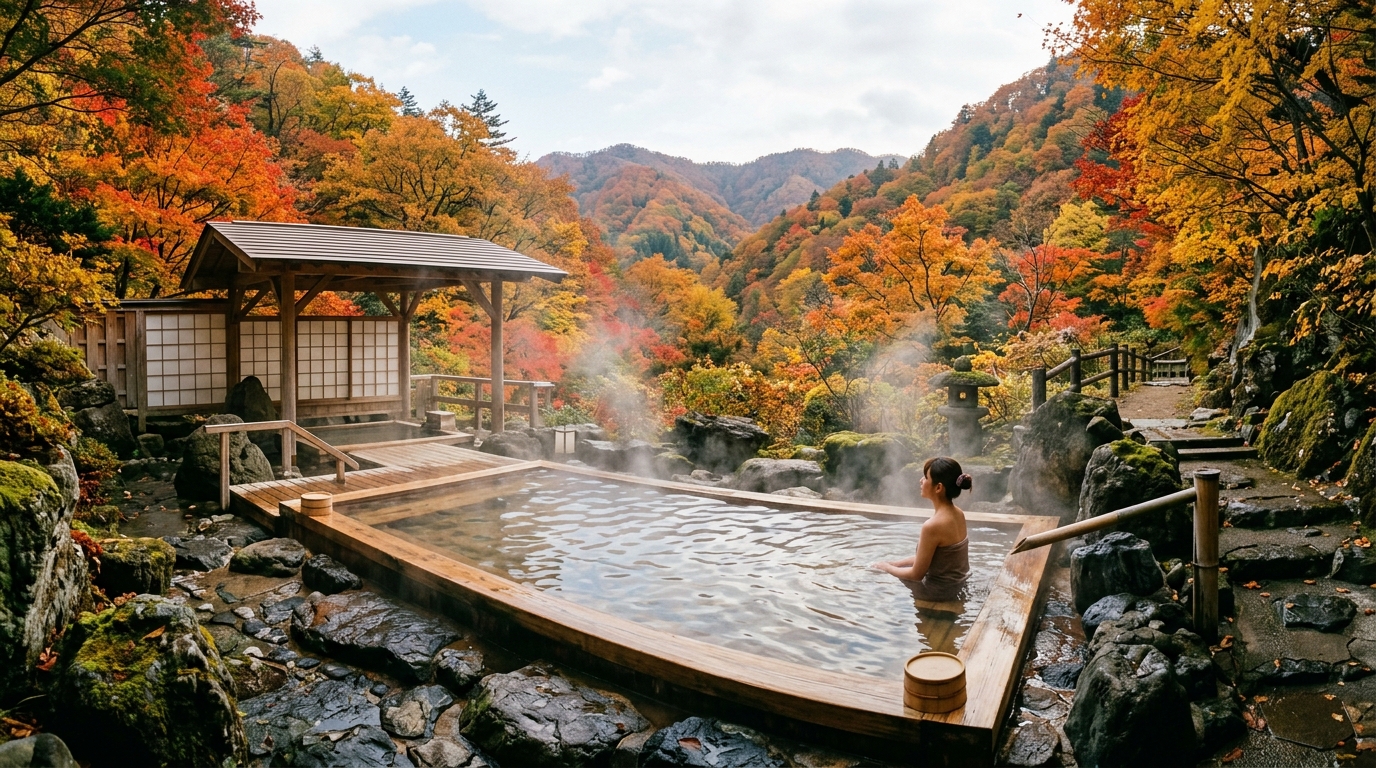
Onsen (hot springs) are the essence of Japanese culture, but there are rules that can cause panic if you don't know them.
15. Rinse before entering. Always pour water over yourself (kake-yu) before entering the bath. Wash your body in the shower area first. Using soap inside the bath is absolutely forbidden.
16. Keep your towel out of the water. You bring a small towel but never put it in the bath. The classic style is to fold it on top of your head. Leave the large bath towel in the changing room.
17. About tattoos. Many onsen facilities refuse entry to people with tattoos due to the historical association with organized crime. Recently, tattoo-friendly facilities are increasing, but check in advance or use a private bath (kashikiri-buro).
18. Gender separation. Most onsen are separated by gender (男湯 men's bath / 女湯 women's bath). Distinguish by the curtain (noren) color at the entrance — blue for men, red for women is typical. Mixed bathing exists but has become very rare.
19. Changing room behavior. Put your belongings in a locker and remove all clothing. Swimsuits are generally not allowed. Don't feel embarrassed — nudity at onsen is completely natural for Japanese people.
20. Don't soak too long. To prevent overheating, 15-20 minutes per soak is appropriate. The Japanese way is to get in and out repeatedly.
Restaurant & Dining Etiquette — Expressing Respect Through Food
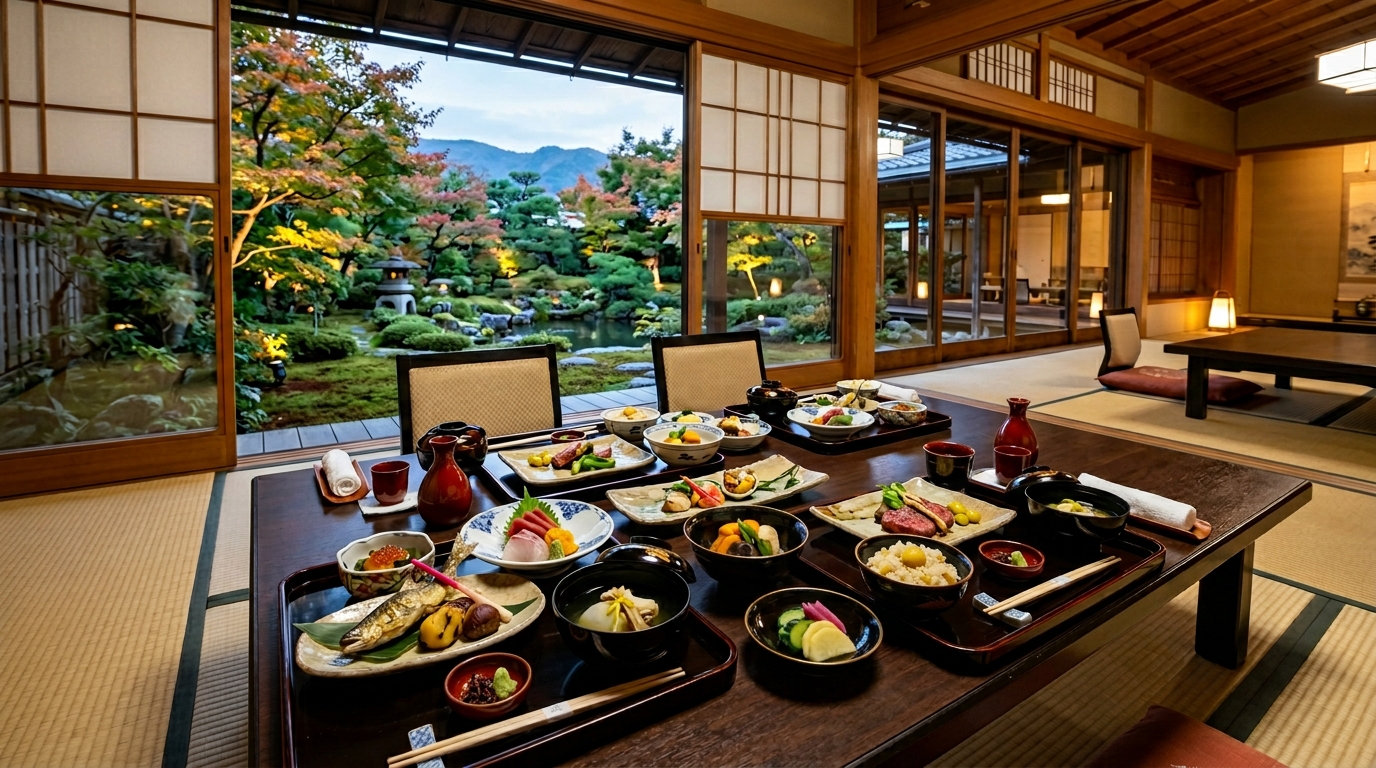
21. "Itadakimasu" and "Gochisousama." Before eating, put your palms together and say "itadakimasu" (meaning "I humbly receive this life/food"). After eating, say "gochisousama deshita" (meaning "it was a wonderful feast"). Just saying these words captures Japanese hearts.
22. Chopstick taboos. There are several absolute no-nos with chopsticks. "Sashi-bashi" (stabbing food), "watashi-bashi" (passing food chopstick-to-chopstick, reminiscent of bone-picking at cremation), "tate-bashi" (standing chopsticks upright in rice, resembling funeral offerings). "Watashi-bashi" and "tate-bashi" especially evoke funeral imagery and are deeply disliked.
23. Slurping noodles is OK. For ramen, soba, and udon, slurping loudly is proper etiquette. Making noise actually signals that you're enjoying the food. Drinking the soup to the last drop is also perfectly fine.
24. No tipping. Japan has no tipping culture. Tips aren't expected at restaurants, taxis, or hotels — offering one can actually cause confusion. The high quality of service comes from the spirit of "omotenashi" (hospitality), not from tips.
25. Otoshi (table charge). At izakaya, a small dish may arrive that you didn't order. This is "otoshi," serving as a table charge of around 300-500 yen. Some places let you decline it, but accepting it as part of izakaya culture is smoother.
26. Use serving chopsticks. Rather than taking from shared plates with your personal chopsticks, use the serving chopsticks (tori-bashi) or reverse your chopsticks (sakasa-bashi). This awareness has heightened since COVID.
27. Don't leave food. Finishing what you ordered is good manners. Avoid ordering more than you can eat. However, you don't need to force yourself to finish everything.
28. Pay at the register. Many Japanese restaurants process payment at the register (near the entrance) rather than at the table. The standard style is to bring your check to the counter.
Daily Life Etiquette — Small Knowledge, Big Impressions
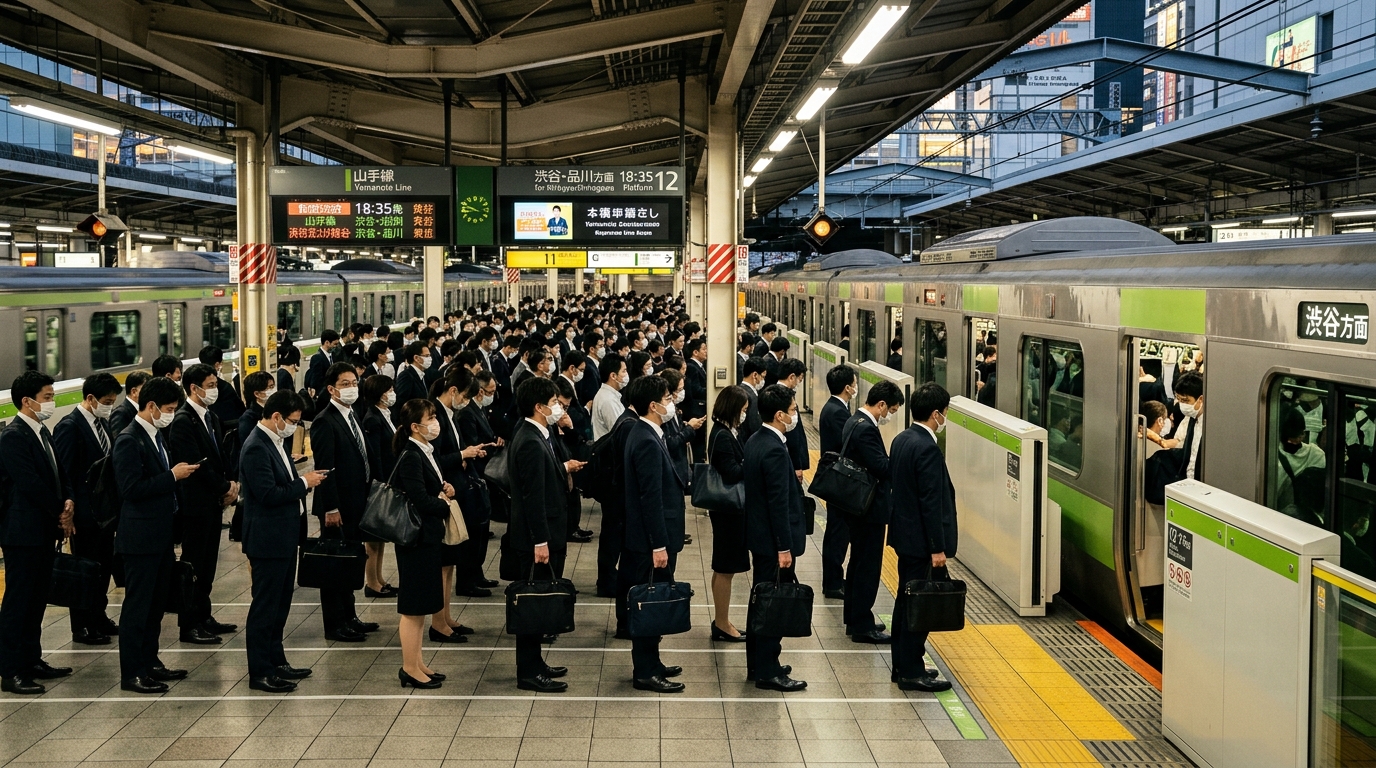
29. When to remove shoes. In Japan, shoes come off in many places: ryokan, some restaurants, temple interiors, and fitting rooms. A raised step is the sign for "remove shoes here." Make sure your socks don't have holes.
30. Slipper switching. Indoor slippers and toilet slippers are different. Switch to dedicated toilet slippers when entering the bathroom, and always switch back when leaving. Walking down the hallway in toilet slippers is a major faux pas.
31. The missing trash cans. Japanese streets have almost no trash cans — they were removed after a 1995 terrorist incident. The norm is to carry your trash with you. Convenience store bins are available, but dumping large amounts of garbage there is poor manners.
32. Escalator standing side. In Tokyo, stand on the left and keep the right side free. In Osaka, it's the opposite. Recently, campaigns promoting "don't walk, stand in two rows" are spreading.
33. Mask culture. Wearing masks for colds and allergies was common in Japan long before the pandemic, and has become even more established since. It's not mandatory, but wearing a mask on public transport and in crowded places makes a good impression.
34. Business card exchange. In business settings, present your card with both hands and receive with both hands. Don't immediately put received cards away — place them on the table and reference them during conversation.
35. Types of bowing. Japan has three types of bows: eshaku (15° for casual greetings), keirei (30° for standard greetings), and saikeirei (45° for deep gratitude or apologies). A 30° bow from travelers makes an excellent impression.
36. Blowing your nose. Blowing your nose in public tends to be avoided. The Japanese way is to sniff. If you must use a tissue, try to be as discreet as possible.
37. Walking while using your phone. Using your phone while walking is considered very rude in Japan. It's especially dangerous on station platforms. Stop and step aside before using your phone.
38. Umbrella etiquette. Fold wet umbrellas before entering stores, placing them in umbrella stands or plastic sleeves. Vinyl umbrellas feel disposable in Japan, but taking someone else's umbrella is theft.
Shopping & Convenience Store Etiquette
39. Handing over money. Place money on the tray (cash tray) rather than handing it directly. Using the tray is considered more polite.
40. Convenience store eat-in. When using a convenience store's eat-in space, telling the cashier "I'll eat here" may change the tax rate (reduced tax rate system).
41. Before trying on clothes. Always ask staff before trying on clothes. Many fitting rooms require removing shoes. If face covers are provided to prevent foundation stains, always use them.
42. Gift wrapping thoroughness. Japanese store clerks wrap items beautifully. Even if you're in a hurry, they'll take time for elegant wrapping unless you say otherwise. Say "Housou wa daijoubu desu" (wrapping is fine/not needed) if you're short on time.
Hotel & Ryokan Etiquette
43. Respect check-in times. Standard is 3:00 PM check-in, 10:00 AM checkout. Ryokan especially need advance notice of your arrival time because they prepare dinner.
44. Ryokan yukata. Ryokan provide yukata (light cotton kimono). It's OK to walk around the entire facility in your yukata, and in hot spring towns, strolling outside is also fine. Wrap it "right side first" (right panel against your body first). Left-first is for the deceased — never reverse it.
45. Futon setup. At ryokan, staff will lay out your futon during dinner. You don't need to fold it in the morning, but don't leave the area excessively messy.
Street Etiquette — Subtle Consideration
46. Photography consideration. Avoid taking direct photos of passersby. Photographing children without permission is especially problematic. When photographing food or scenery, be mindful not to include other customers.
47. Smoking rules. Many Japanese cities prohibit smoking on streets by ordinance. Use designated smoking areas. Since 2020, indoor smoking is also generally prohibited (except for heated tobacco rooms).
48. Bicycle rules. When using rental bikes, riding on sidewalks is generally prohibited (with some exceptions). Lights at night are mandatory. Drunk cycling is illegal and subject to fines.
49. Voice volume. Loud voices in public stand out prominently in Japan. In restaurants, trains, and hotel lobbies, aim for a volume that the next table can't hear.
50. The versatility of "Sumimasen." The most useful Japanese word is "sumimasen." It simultaneously means "excuse me," "I'm sorry," and "thank you." When in doubt, say "sumimasen" and you'll navigate most situations successfully.
Conclusion — Manners Are Expressions of Respect
These rules reflect Japan's culture of valuing respect and consideration for others. You don't need to master every single one. What matters is the intention to be considerate. With that attitude, even if you make mistakes, Japanese people will warmly accept you.
Bookmark this article for your trip preparation, and your time in Japan will be richer and more comfortable.