When are cherry blossoms? Best time for autumn foliage? When are the festivals? Your ultimate month-by-month guide to Japan with best events, recommended areas, crowd levels, and 2026 festival information.
Read this article to earn +5 MTC
Japan is one of the rare countries with four distinctly defined seasons. The same place offers completely different landscapes, food, festivals, and experiences depending on which month you visit. "When should I go to Japan?" — the answer depends entirely on what you're looking for. This article is your complete month-by-month guide to enjoying Japan at its best, including the latest 2026 event information, to help you time your trip perfectly.
Spring — When Japan Becomes the Most Beautiful Place on Earth
March: Early Spring Awakening & Plum Blossoms
March is when Japan awakens from winter. Plum blossoms (ume) begin blooming in early March in Tokyo. Plum blossoms have a stronger fragrance than cherry blossoms, and the plum groves at Yushima Tenjin and Kairakuen (Mito) are stunningly beautiful. With fewer tourists during this period, it's a hidden gem season to quietly experience Japan's spring.
By late March, the cherry blossom front starts from Kyushu and Shikoku. Fukuoka's Maizuru Park typically blooms around March 20th, heralding spring's arrival.
2026 Highlight: March 14-15 features the climax of "Omizutori" (Shuni-e) at Nara's Todai-ji Temple. Giant torches racing across the Nigatsu-do hall's stage create a spectacular fire festival that has continued for over 1,200 years.
April: Peak Cherry Blossom Season — Japan's Golden Month
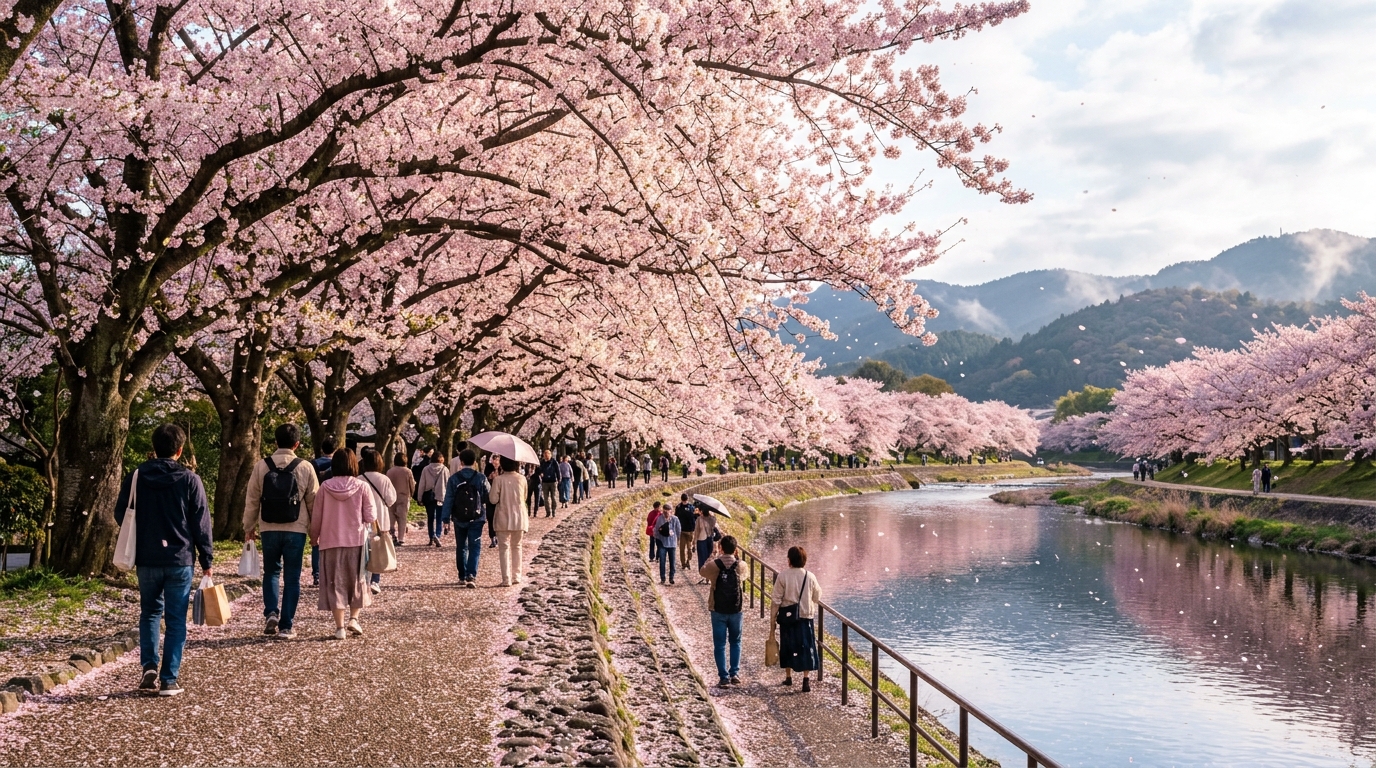
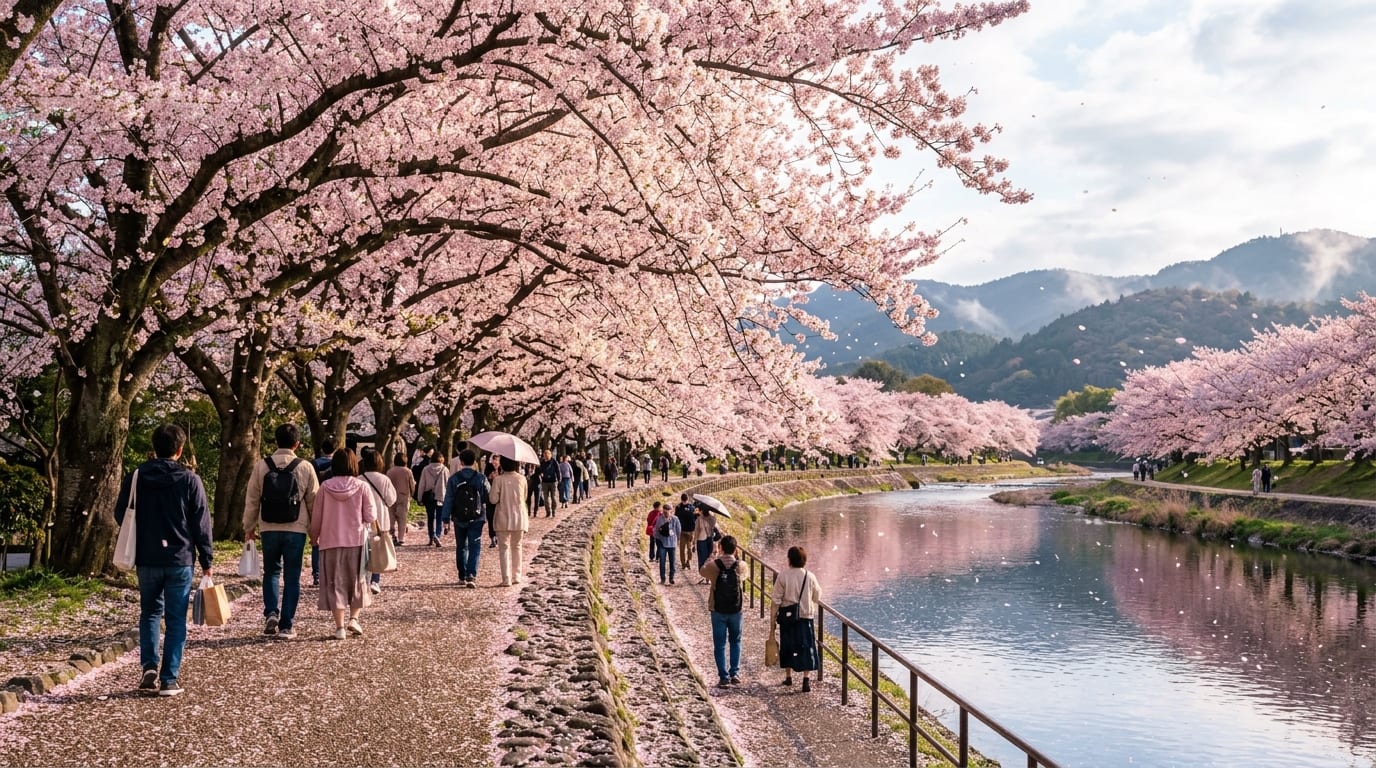
April is the "golden time" for Japan travel. Tokyo's cherry blossoms typically peak from late March to early April, with Ueno Park, Chidorigafuchi, and the Meguro River cherry trees being world-famous. In Kyoto, the Philosopher's Path, Daigo-ji Temple, and Arashiyama are the best cherry blossom spots.
Hanami Tips: Hanami (cherry blossom viewing picnic) is Japan's national pastime. Simply buy bento and beer from a supermarket or convenience store, spread a blue sheet under the cherry trees, and sit down. Natural interactions with locals will follow.
By mid-to-late April, the blossom front reaches Tohoku. Hirosaki Castle (Aomori) is known for its "flower rafts" (hanaikada) — petals floating on the moat — and is called "Japan's finest cherry blossoms." Just before Golden Week, this is a relaxed time to enjoy Tohoku's peak blooms.
May: Fresh Greenery & Golden Week
Early May is "Golden Week" (GW), Japan's major holiday period. The entire country goes into travel mode, so beware of crowds and price surges. Conversely, mid-to-late May after GW is a hidden gem timing when tourists drop dramatically.
May's fresh greenery makes Kyoto's Arashiyama bamboo grove, Oirase Gorge, and Kamikochi spectacular. In Hokkaido, cherry blossoms finally bloom in May, and Furano's lavender fields begin preparation.
2026 Highlight: May 3-5 brings the "Hakata Dontaku Port Festival" — Kyushu's largest festival with over 2 million participants, filling the streets with parades and dancing. May 15th features Kyoto's "Aoi Matsuri," one of the three great Kyoto festivals, with a procession in Heian-period costumes.
Summer — Festival & Fireworks Frenzy
June: Rainy Season & Hydrangeas
June is the "tsuyu" (rainy season). While considered off-season due to frequent rain, this period has its own unique beauty. Kamakura's Meigetsuin is famous as the "Hydrangea Temple," with blue hydrangeas lining both sides of the approach path. Kyoto's Mimurotoji Temple and hydrangeas along Hakone's mountain railway are equally magnificent.
The rainy season's advantage is fewer tourists. Hotel rates drop, and you can enjoy famous sites at leisure. With a folding umbrella and quick-dry clothing, the rainy season can be perfectly comfortable.
2026 Highlight: Hokkaido has no rainy season, making June ideal. Sapporo's "YOSAKOI Soran Festival" (early June) energizes the city with approximately 30,000 dancers.
July: Summer Festivals Begin & Beach Season Opens
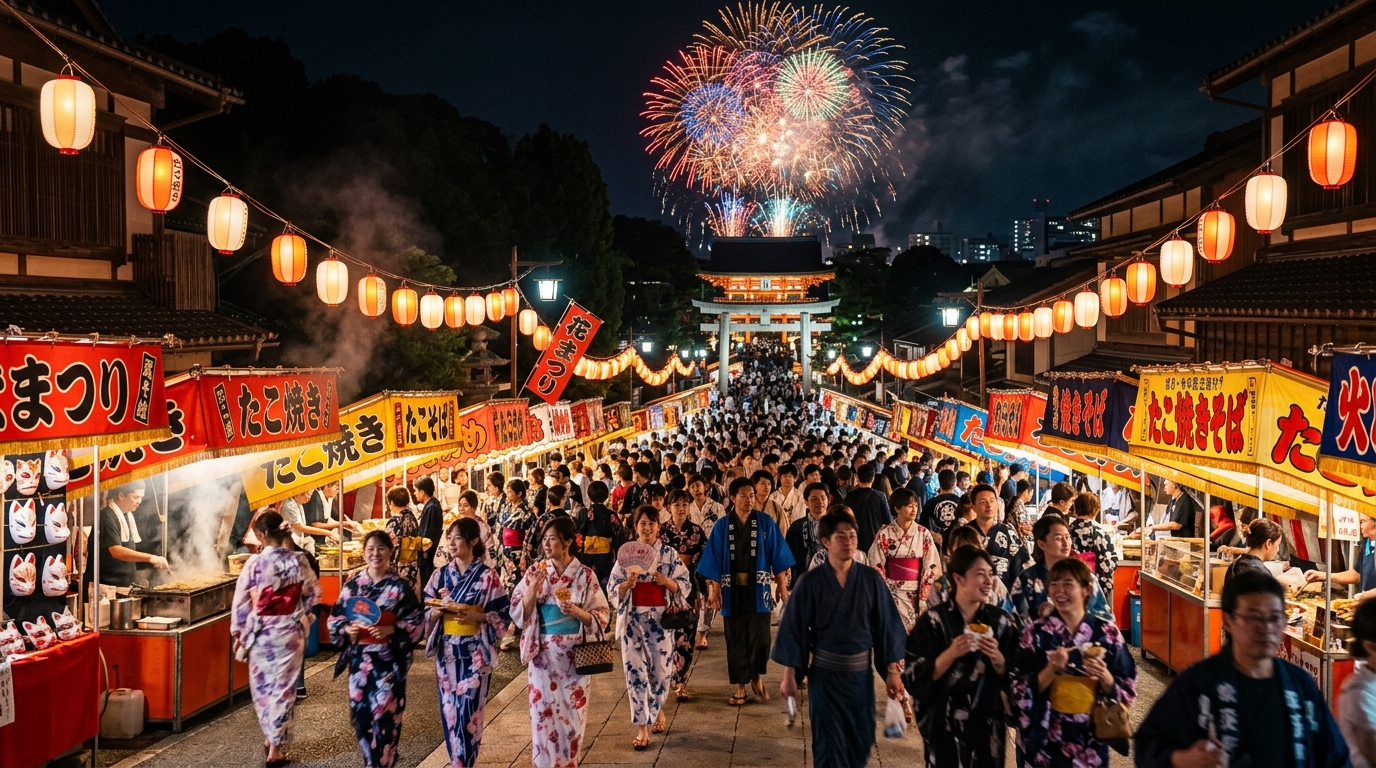
July marks the full start of Japan's summer festival season. Kyoto's "Gion Matsuri" (July 1-31, highlights on the 17th and 24th with float processions) is one of Japan's three greatest festivals with over 1,100 years of history. The sight of massive yamaboko floats processing through Kyoto's streets is breathtaking.
Osaka's "Tenjin Matsuri" (July 24-25) features over 100 boats on the Okawa River and 5,000 fireworks. Okinawa's beaches open, offering marine sports in emerald-green waters.
Fireworks Season: Fireworks festivals begin nationwide from late July. The Sumida River Fireworks (Tokyo, last Saturday of July) illuminates the downtown sky with approximately 20,000 fireworks.
August: Festival Climax & Bon Dancing
August brings Japanese festivals to their peak. The Aomori Nebuta Festival (Aug 2-7), Akita Kanto Festival (Aug 3-6), and Sendai Tanabata Festival (Aug 6-8) — Tohoku's three great festivals are concentrated in this period.
Obon (August 13-16): When Japanese welcome ancestral spirits home. Kyoto's "Gozan Okuribi" (Daimonji fire, Aug 16) features the character "大" lit on mountainsides in a mystical display. Shinkansen are crowded with Japanese returning home, but city hotels may have availability.
The Nagaoka Fireworks Festival (Niigata, Aug 2-3) launches "sanjakudama" shells reaching 650m in diameter — one of Japan's largest fireworks spectacles worth seeing once in a lifetime.
Autumn — Foliage & Harvest Flavors
September: Lingering Heat & Autumn's Arrival
Early September retains summer heat, but from mid-month onward, autumn arrives rapidly. Japan has a "moon viewing" culture, and on the harvest moon (September 27 in 2026), people offer dango rice dumplings and admire the moon.
Red spider lilies (higanbana) painting rice paddy borders crimson is an iconic autumn scene. Kinchakuda in Saitama fills with 5 million higanbana flowers, peaking mid-to-late September.
October: Autumn Foliage Front Begins & Fall Festivals
In early October, the autumn foliage front starts from Hokkaido's Daisetsuzan mountains. Sounkyo and Jozankei offer overwhelming autumn color. By mid-month, Nikko (Tochigi) and Hakone (Kanagawa) reach peak foliage.
2026 Highlight: October 7-9 brings Nagasaki's "Okunchi" featuring exotic dragon dances embodying Japanese-Chinese cultural fusion. October 22nd features Kyoto's "Jidai Matsuri," the last of Kyoto's three great festivals, with approximately 2,000 people in costumes from various historical periods.
November: Peak Foliage — Autumn's Golden Month
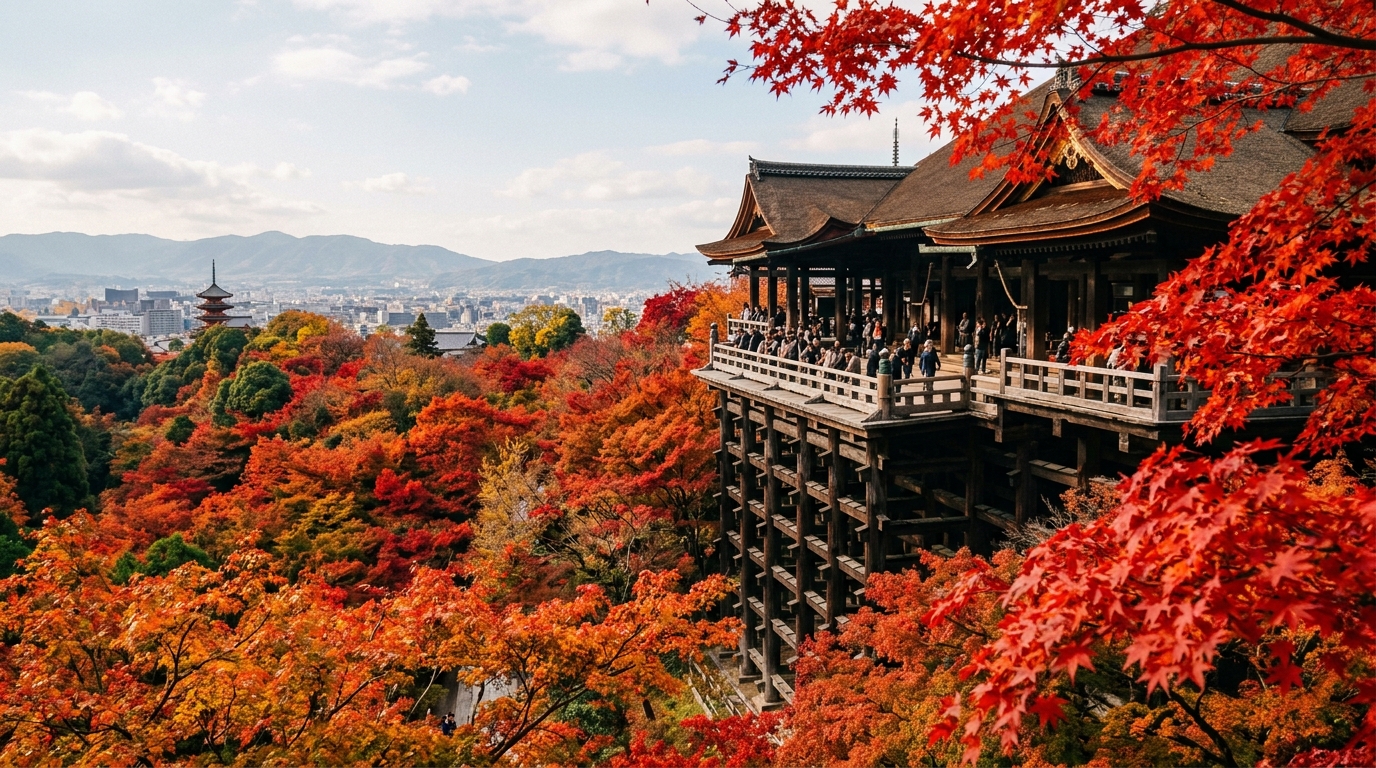
November is peak foliage season. Kyoto's best viewing is mid-November through early December. The sea of autumn colors seen from Tofuku-ji Temple's "Tsutenkyo Bridge" is one of Japan's most famous autumn landscapes. Kiyomizu-dera's illumination, Eikando's maples, and Arashiyama's Togetsukyo Bridge — you could never have enough days for Kyoto in autumn.
In Tokyo, the Meiji Jingu Gaien ginkgo avenue turns golden, creating a carpet of golden leaves. Peak viewing is late November to early December, creating a magical landscape in the heart of the city.
Foliage Viewing Tips: Peak timing depends heavily on temperature, so checking latest information is essential. The weathernews.jp autumn foliage channel provides real-time color status. Early morning visits are key to avoiding crowds. For Kyoto's popular spots, 7-8 AM is ideal.
Food Highlights: Autumn is Japan's culinary treasure trove. Matsutake mushrooms, Pacific saury (sanma), chestnuts, persimmons, new rice — seasonal dishes offer flavors exclusive to this time.
Winter — Snow Scenes & Illumination Fantasy
December: Illuminations & Christmas
December Japan offers world-class illumination displays. Kobe Luminarie, Tokyo Midtown, Ebisu Garden Place — entire cityscapes are wrapped in light. Japanese Christmas has become established as a romantic date occasion, with the unique tradition of eating cake and fried chicken.
On New Year's Eve, temples nationwide ring their bells 108 times ("Joya no Kane"), representing the 108 worldly desires to be purged as the new year is welcomed.
January: First Shrine Visit & Snow Landscapes
January 1-3 is "Hatsumode" (first shrine visit) season. Meiji Jingu (Tokyo) receives over 3 million visitors during the New Year's first three days. Fushimi Inari Taisha (Kyoto) and Kawasaki Daishi (Kanagawa) are also popular.
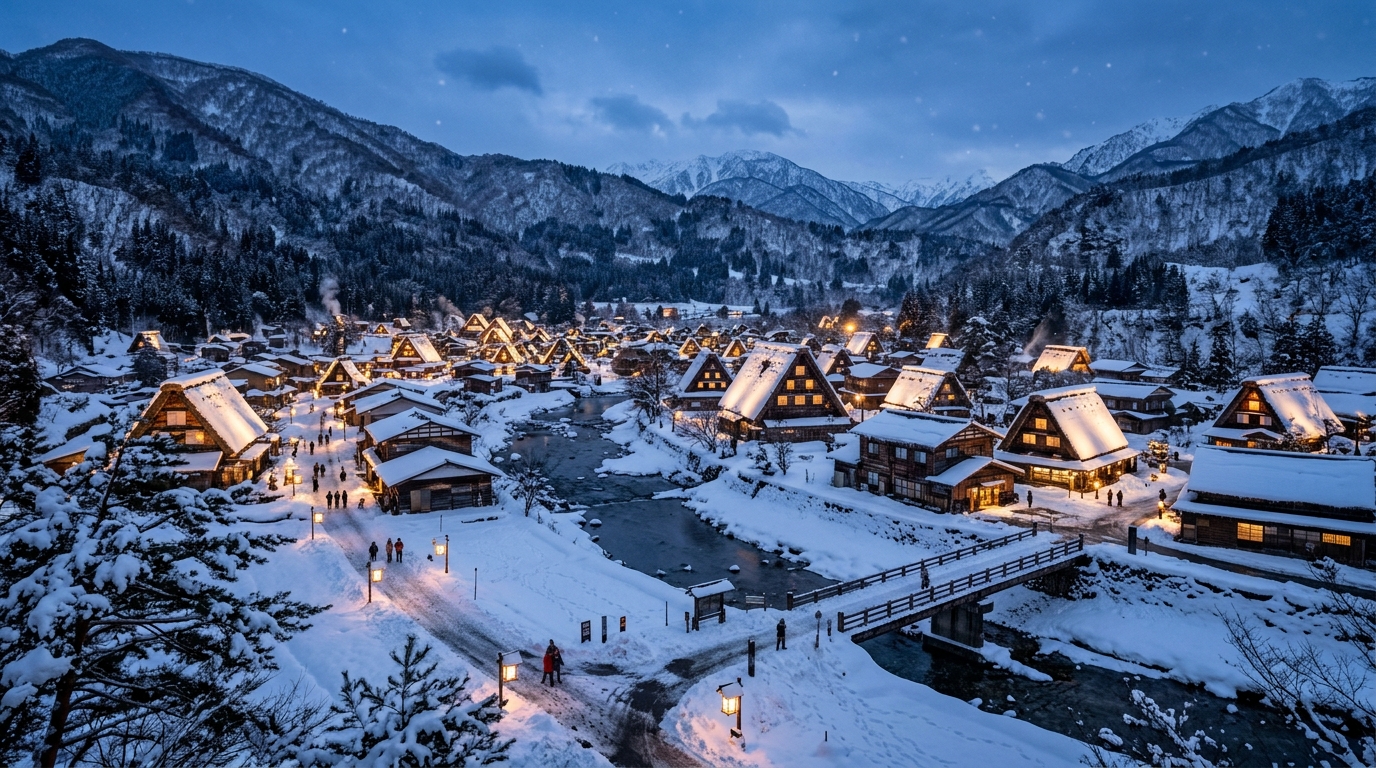
From mid-January, serious snow season begins. The Shirakawa-go illumination (specific dates in January-February, reservation only) is one of Japan's most beautiful winter scenes, with gassho-zukuri village bathed in light amid snow.
Hokkaido's Niseko, Nagano's Hakuba, Niigata's Echigo-Yuzawa — Japan's powder snow captivates skiers worldwide. As the holy land of "Japow" (Japan Powder), it draws international skiers every year.
February: Snow Festivals & First Plum Blossoms
The early February "Sapporo Snow Festival" features massive snow sculptures in Odori Park — a world-renowned winter celebration. In 2026, it's scheduled for February 4-11. Lake Shikotsu Ice Festival and Asahikawa Winter Festival run simultaneously, making all of Hokkaido a winter celebration.
Mid-to-late February brings early spring hints. The flying plum of Dazaifu Tenmangu (Fukuoka) begins blooming, raising expectations for spring. On Setsubun (February 3), temples and shrines nationwide hold bean-throwing ceremonies (Oni wa soto, fuku wa uchi).
Month-by-Month Best Season Quick Reference
| Month | Main Events | Recommended Areas | Crowd Level |
|---|---|---|---|
| January | Hatsumode, Snow | Tokyo, Hokkaido, Shirakawa-go | ★★★ |
| February | Snow Festival, Plum | Hokkaido, Kyushu | ★★ |
| March | Plum, Early Cherry | Kanto, Kyushu | ★★ |
| April | Cherry Blossoms (Peak) | Nationwide | ★★★★★ |
| May | Fresh Green, GW | Kyoto, Hokkaido | ★★★★ (GW) |
| June | Hydrangeas, Rainy | Kamakura, Kyoto | ★ |
| July | Gion Matsuri, Fireworks | Kyoto, Tokyo | ★★★★ |
| August | Tohoku Festivals, Obon | Tohoku, Nationwide | ★★★★ |
| September | Moon Viewing | Kanto, Kansai | ★★ |
| October | Foliage Front Starts | Hokkaido, Nikko | ★★★ |
| November | Peak Foliage | Kyoto, Tokyo | ★★★★★ |
| December | Illuminations | Tokyo, Kobe | ★★★ |
Trip Planning Points
Booking Timing: Hotels in Kyoto during cherry blossom season (April) and autumn foliage season (November) need to be booked 3-6 months in advance or options become extremely limited. Early booking is also essential for GW, Obon, and year-end/New Year holidays.
Off-Peak Timing: June (rainy season), late September to early October, and mid-January to early February are relatively uncrowded periods with lower hotel rates and relaxed sightseeing.
Climate Guide: Tokyo summers (July-August) exceed 35°C with 80%+ humidity. Heat stroke prevention is essential. Winters (December-February) are dry with clear skies — the air is crisp and Mount Fuji is at its most visible.
Japan's four seasons give travelers infinite choices. Rather than asking "when is the best season," ask "which season's Japan do I want to experience?" Use this guide to find your perfect timing.