WEF 2025 ranks Japan 118th of 146 countries — last among G7. Why economic participation 120th and political 113th persist, and the path forward shown by Recruit, Mercari, Uniqlo.
Read this article to earn +5 MTC
Japan Ranks 118th in Gender Equality — Why It's Not Changing, and Companies That Are
The Shock: Among G7, Japan Is the Only "Gender Backwater"
The World Economic Forum's "Global Gender Gap Report 2025" ranks Japan 118th out of 146 countries — by far the lowest among OECD developed countries. Compared to Germany (7th) and France (22nd) in the G7, Japan is overwhelmingly behind.
Specific scores (2025):
- Economic participation: 120th (especially severe in management roles)
- Political participation: 113th (women MPs: only 10.3%)
- Education: 72nd
- Health: 58th
By 2026, this hasn't fundamentally changed. Why does the world's #3 economy remain at gender-equality level 110+?
Why It's Not Changing — 5 Structural Causes
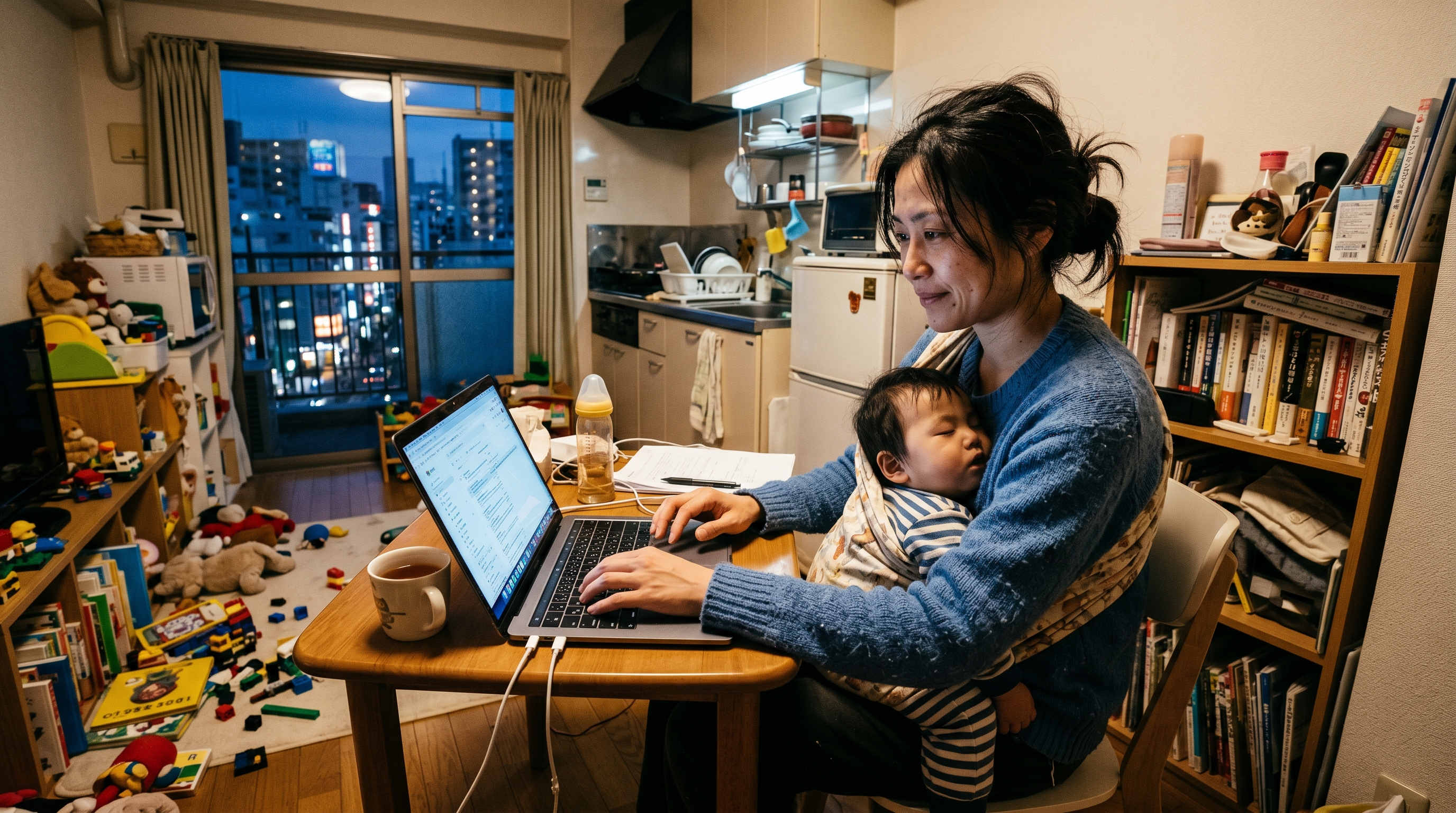
1. Society Designed Around the "Housewife Model"
Japan's pension, tax, and childcare systems all assume "husband earns, wife stays home." Spouse deductions, the "¥1.03M / ¥1.30M wall" — these structurally suppress women's work motivation.
2. Long-Hours and Transfer Culture
"Sacrifice for the company 24/7/365" is the path to promotion. Women constrained by pregnancy, birth, childcare are structurally pushed off the management track.
3. Low Male Parental Leave Uptake
In 2025, male parental leave uptake is 30% — lowest among developed countries. Compared to Sweden's 90% and Norway's 85%. The belief "housework and childcare are women's work" persists.

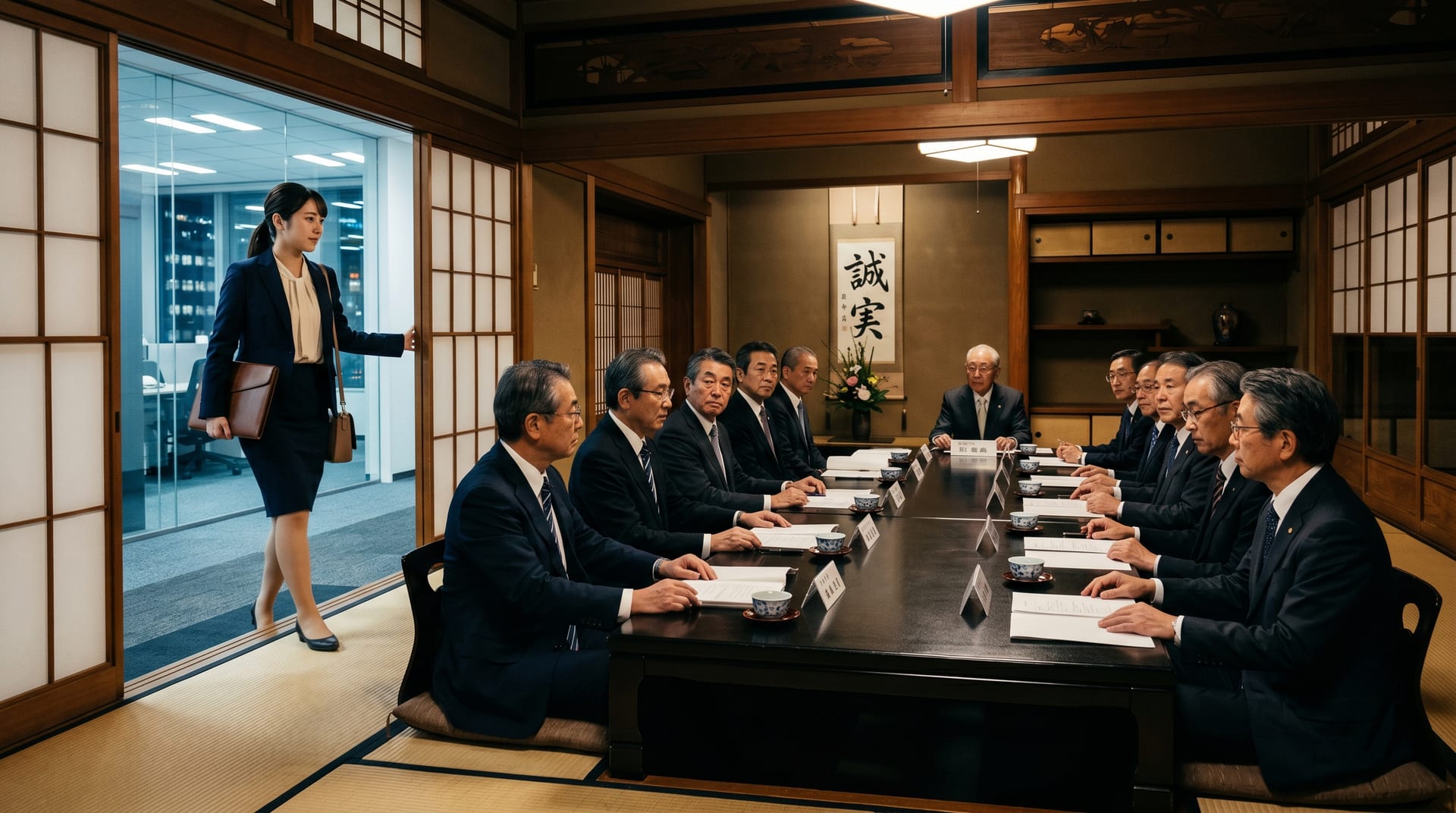
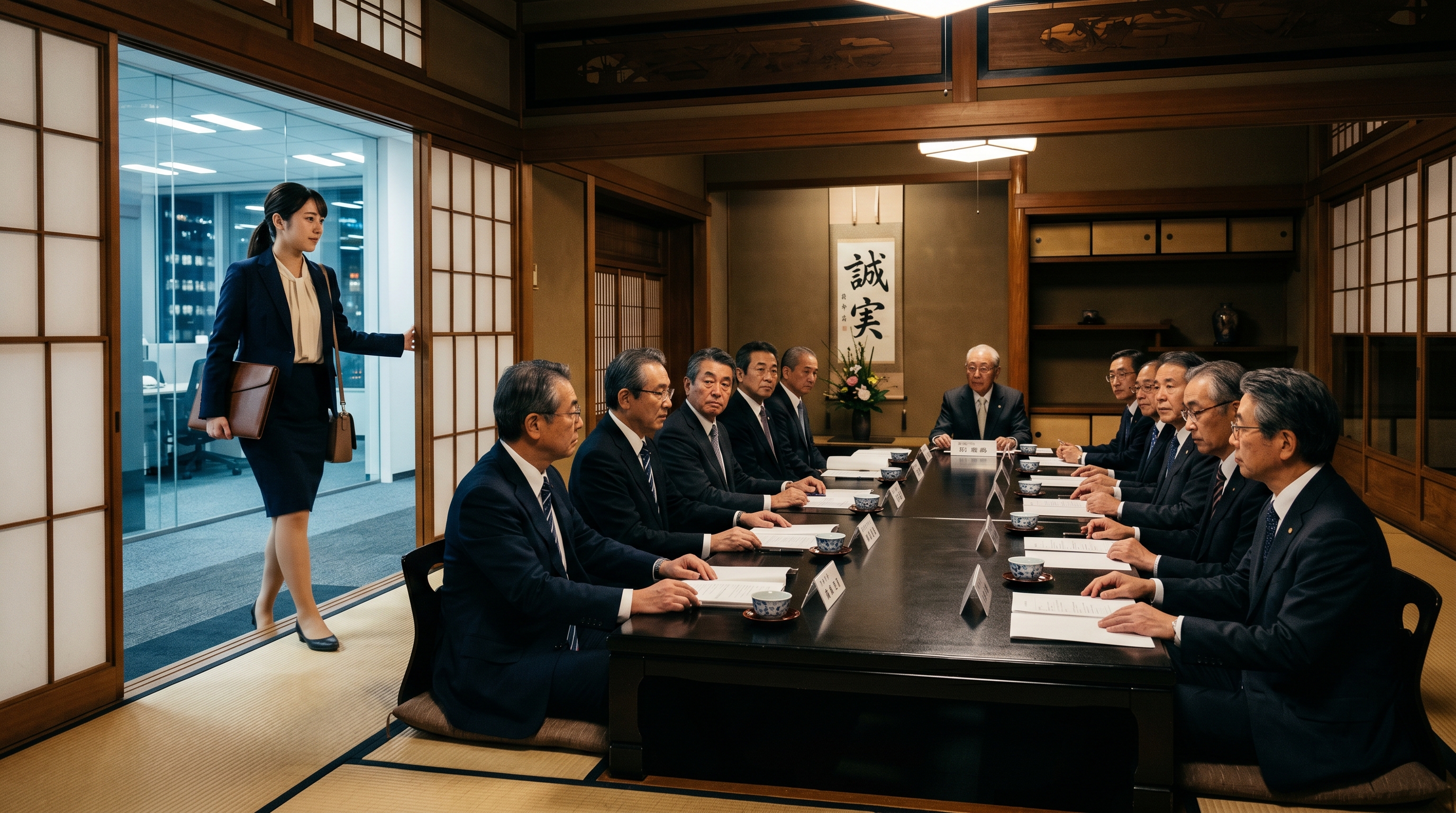
4. Boardroom Bias
Women on Japanese corporate boards: 15.5% (2025). Less than half EU's 34% average. Unconscious bias — "women are emotional," "they leave for childcare," "can't make tough decisions" — gets reproduced.
5. Lack of Role Models
Women see almost no senior peers they can identify with. This reproduces "don't aim higher."
What Japan Is Losing — The Massive Opportunity Cost
Economic Loss
Goldman Sachs estimates raising Japanese women's labor participation to Western levels would boost GDP 10-15% — roughly ¥50 trillion annual loss.
Talent Loss
Japanese women receive world-class education. OECD data shows women's university enrollment matches men's. Yet that talent goes unused.
Innovation Loss
Harvard Business School research shows companies with high female board representation have 20%+ better financial performance. Diversity reliably drives innovation.
What's Working — 5 Best-Practice Companies
1. Recruit: 35% Women Managers (2025)
Set numerical targets. Built training programs, mentorship, "return career" (rehiring departed women at senior levels).
2. Mercari: 45% Women on Board
Changed not just numbers but culture. Parental leave evaluated as "career maturation" not "interruption."
3. Uniqlo (Fast Retailing): 99% Return-from-Leave Rate
Systemized "women don't quit." Reduced-hours during childcare can still earn promotions.

4. CyberAgent: 45% Women Executives
"Childcare support stipend" for all employees. Male parental leave uptake exceeds 95%.
5. Baycurrent Consulting: 30% Women Partners
Strict meritocracy. Age, gender, childcare status irrelevant — only results matter.
5 Actions You Can Start Today
As an Individual:
- Speak up when you see inequality. Silence equals consent.
- Take parental leave (men) to create local role models.
- Actively sponsor women colleagues for opportunities.
- Split housework 50/50 with your partner.
- Get women into decision rooms — minimum one per meeting.
As a Manager/Executive:
- Set numerical targets — "someday" never happens.
- Audit interview questions — "marriage plans?" "children?" still happen.
- Institutionalize flexibility — remote, reduced hours, choice.
- Bias training for male managers — surface unconscious bias.
- Showcase women role models internally.

Closing — "Gender Equality Isn't a Moral Issue, It's an Economic One"
"Women's empowerment" isn't just a human rights issue. It's directly tied to Japan's economic survival.
Population decline, labor shortage, productivity stagnation — the biggest lever to solve all of them is "unleashing female labor."
In 2026, will Japan change, or be left behind in the global economy?
Your small step today builds Japan's future.