Step onto a Tokyo subway during rush hour and you'll notice something extraordinary — 300 people in total silence. Discover 'kuuki wo yomu' (reading the air), Japan's unspoken language that turns silence into respect.
Read this article to earn +5 MTC
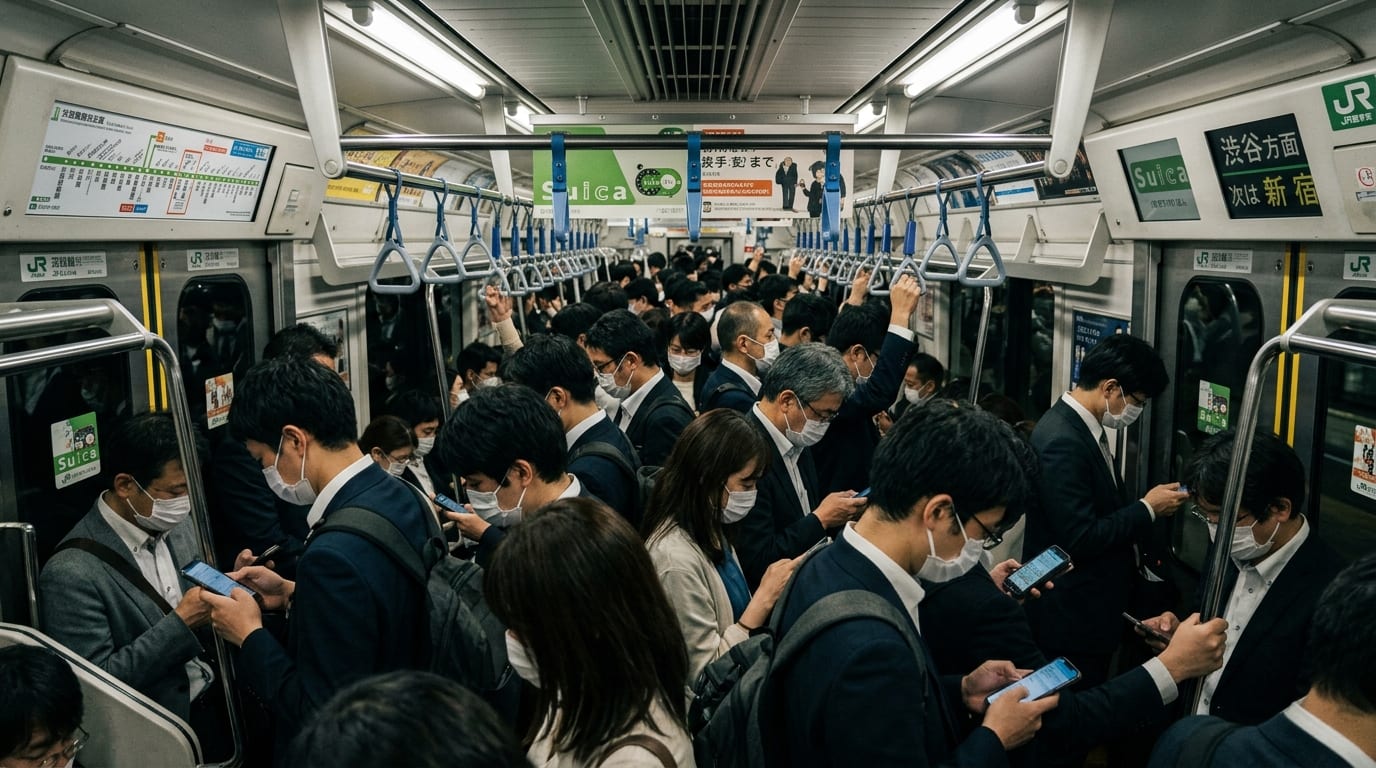
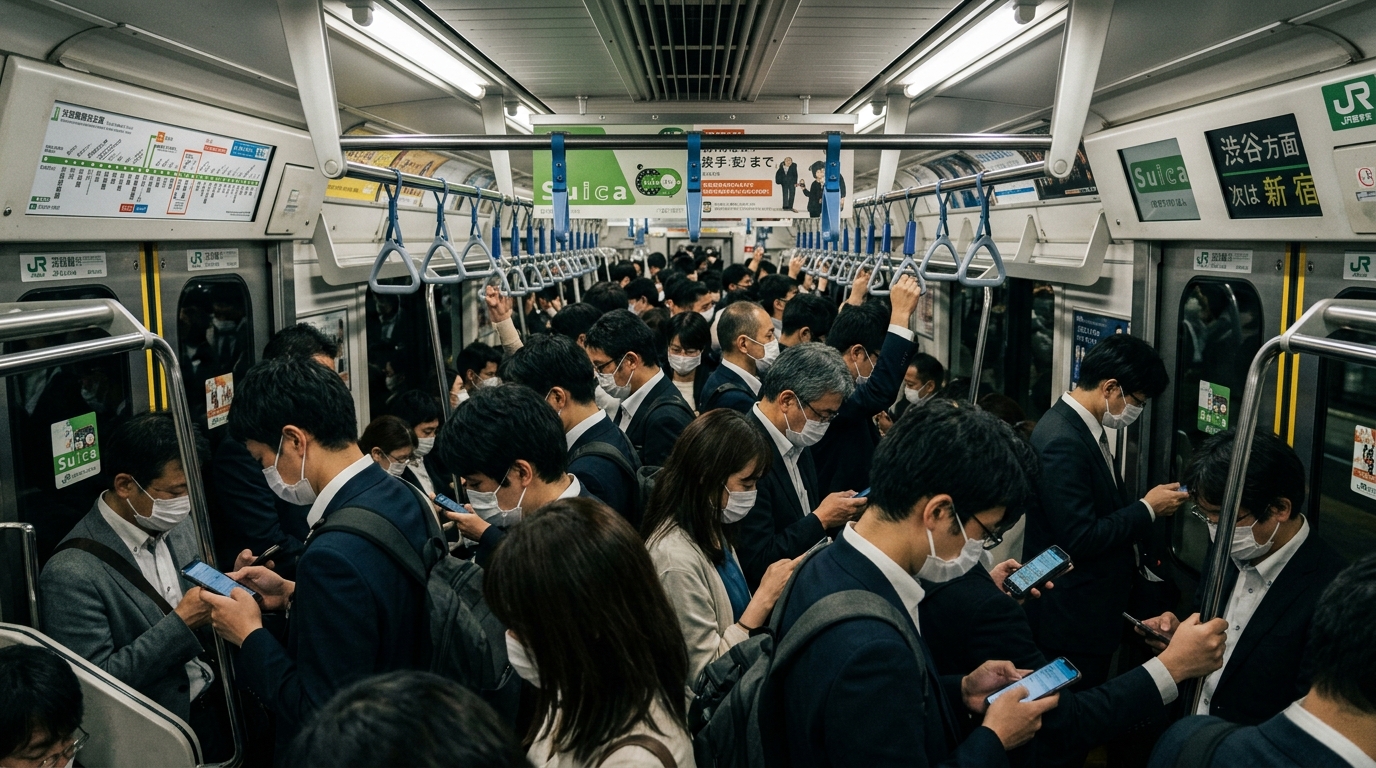
You step into a Tokyo subway car during evening rush hour. Three hundred people are packed shoulder to shoulder. The doors close. The train begins to move.
And you notice something that stops you cold.
It's silent.
Not just quiet — actually silent. You can hear the hum of the train, the soft click of wheels on rails, the occasional rustle of a newspaper. But no one is talking. No one is on a phone call. No one is playing music out loud. Three hundred people, compressed into one steel tube, choosing — collectively — not to make noise.
Welcome to the loudest unspoken rule in Japan.
The 1997 Revolution
The silence isn't ancient tradition. It's surprisingly modern.
In 1997, as mobile phones spread across Japan, NTT Docomo introduced a feature called "manner mode" — a specific silent setting designed for public spaces. Within two years, it became universal across all Japanese carriers. Trains and buses began playing announcements asking passengers to set phones to manner mode and refrain from calls.
The rule didn't come from government. It came from passenger complaints. Japanese commuters, already attuned to collective courtesy, revolted against the sudden intrusion of personal noise into shared space.
Within five years, silence had calcified into law-of-the-land. Today, making a phone call on a Japanese train isn't illegal — it's something worse. It's socially impossible.
Enter Kuuki wo Yomu (空気を読む)
To understand why the silence runs so deep, you have to understand one phrase: 空気を読む (kuuki wo yomu) — "reading the air."
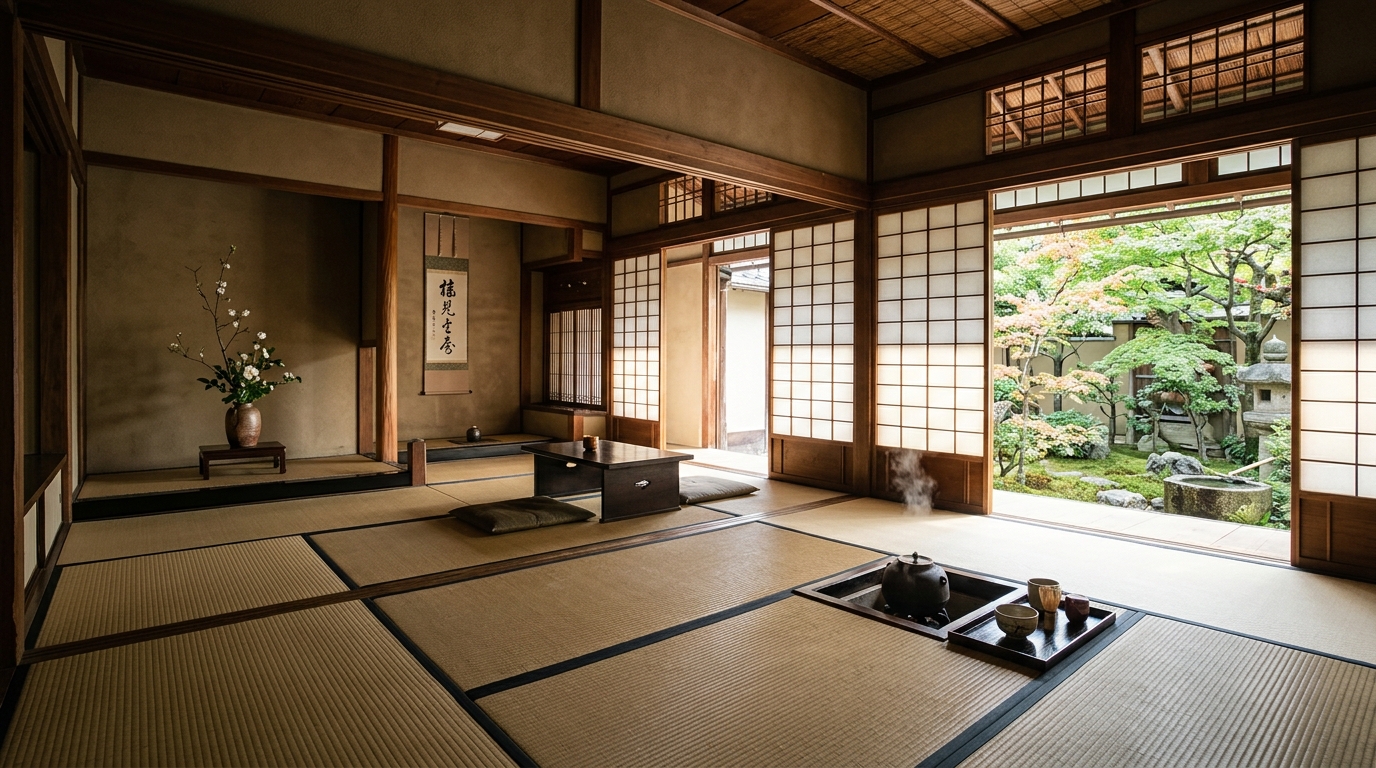
Kuuki wo yomu is the unspoken Japanese superpower of sensing the mood of a room and adjusting yourself to it without being told. It's the art of reading what isn't said.
In a meeting, when the boss goes quiet after someone's idea, a Japanese employee reads the air and understands: this idea has failed. In a restaurant, when the last customer notices staff starting to wipe tables at 9:55pm, they read the air and know it's time to leave. On a train, when 300 people are silent, you read the air and match their frequency.
The person who can't read the air has a name in Japanese — KY (ケーワイ), short for kuuki ga yomenai ("can't read the air"). It's one of the most devastating critiques in Japanese social life, more wounding than being called rude.
Silence as a Language
In Western cultures, silence often feels awkward. It's a void to be filled — with small talk, with apologies, with "how was your weekend?" Silence means something is wrong.
In Japan, silence is a language.
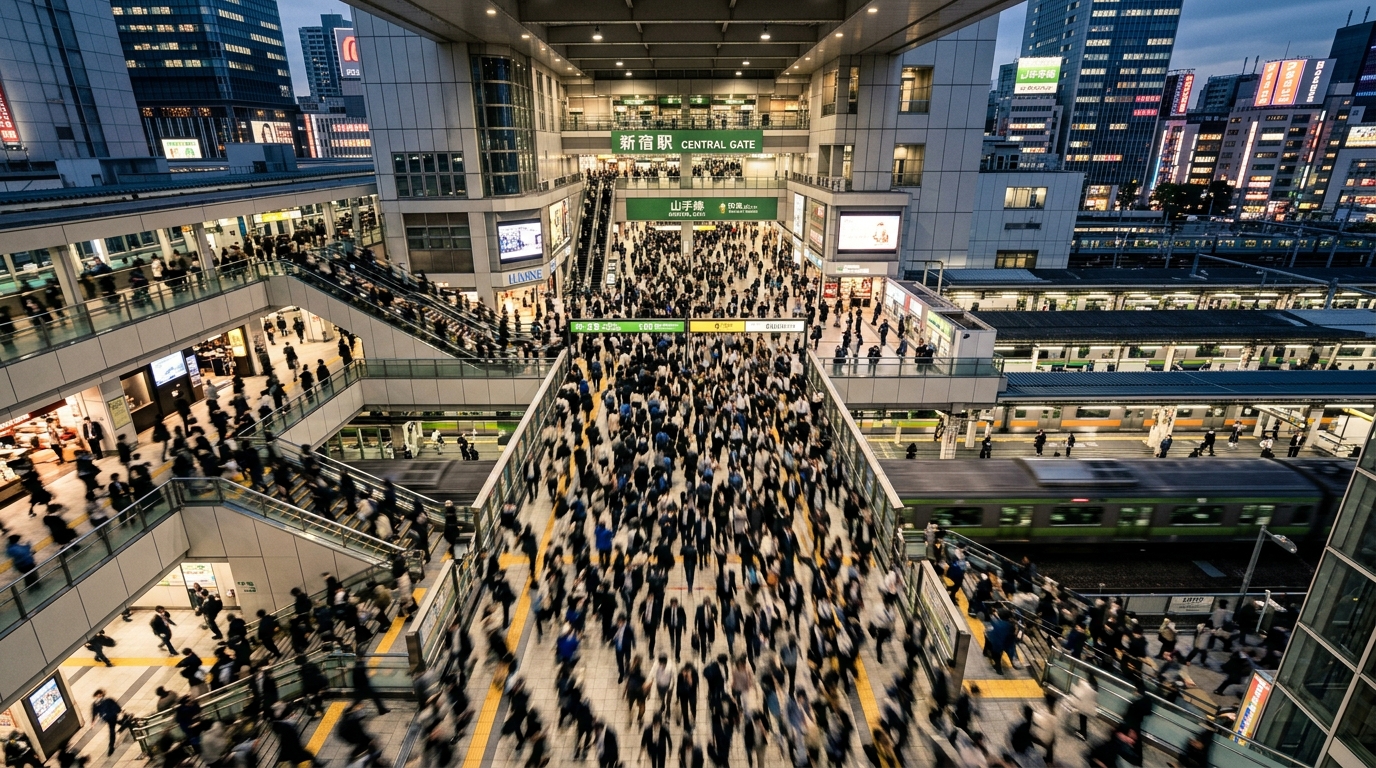
A pause after a question can mean careful consideration — respect for the weight of what was asked. A silence between two people sitting together can mean deep trust — there's nothing to fix, nothing to perform. A quiet restaurant full of solo diners isn't lonely; it's peaceful. People are savoring their food without the friction of performance.
Japanese has dozens of words for different kinds of silence: ma (間) — the meaningful pause between sounds in music or speech; chinmoku (沈黙) — heavy, contemplative silence; shijima (静寂) — the stillness of nature.
Silence isn't the absence of speech. It's its own form of speech.
Where You'll Notice It Most
If you're visiting Japan, you'll notice the silence in specific places:
Elevators. Japanese elevators are tomb-quiet. People face the doors, stare straight ahead, and wait. No small talk. No "how's your day?" to strangers.
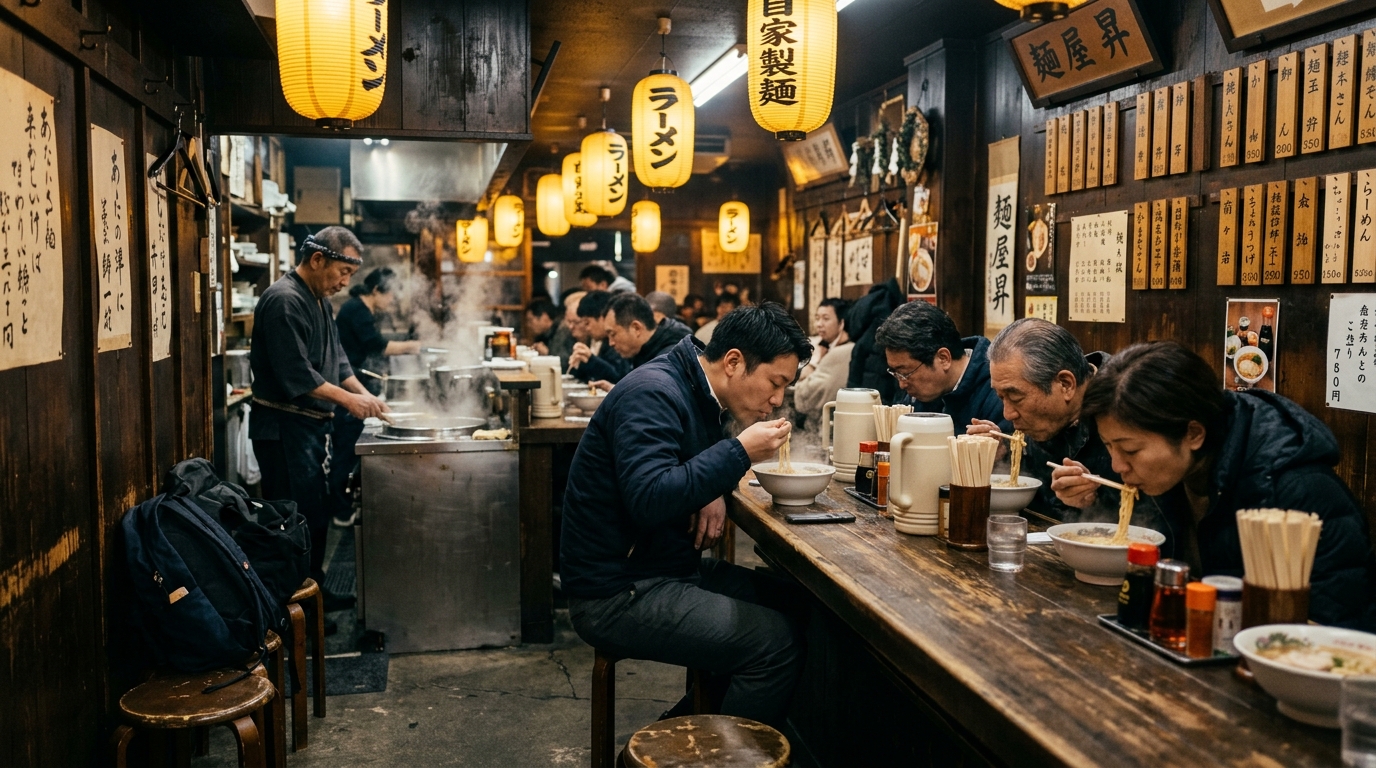
Ramen shops. Solo diners at counter seats eat intently, without conversation. In famous Tokyo ramen shops like Ichiran, you even sit in individual booths with privacy dividers — designed to remove any social obligation from the meal.
Cafés. Many cafés in Tokyo are designated "silent work spaces." Laptops, yes. Conversations, no.
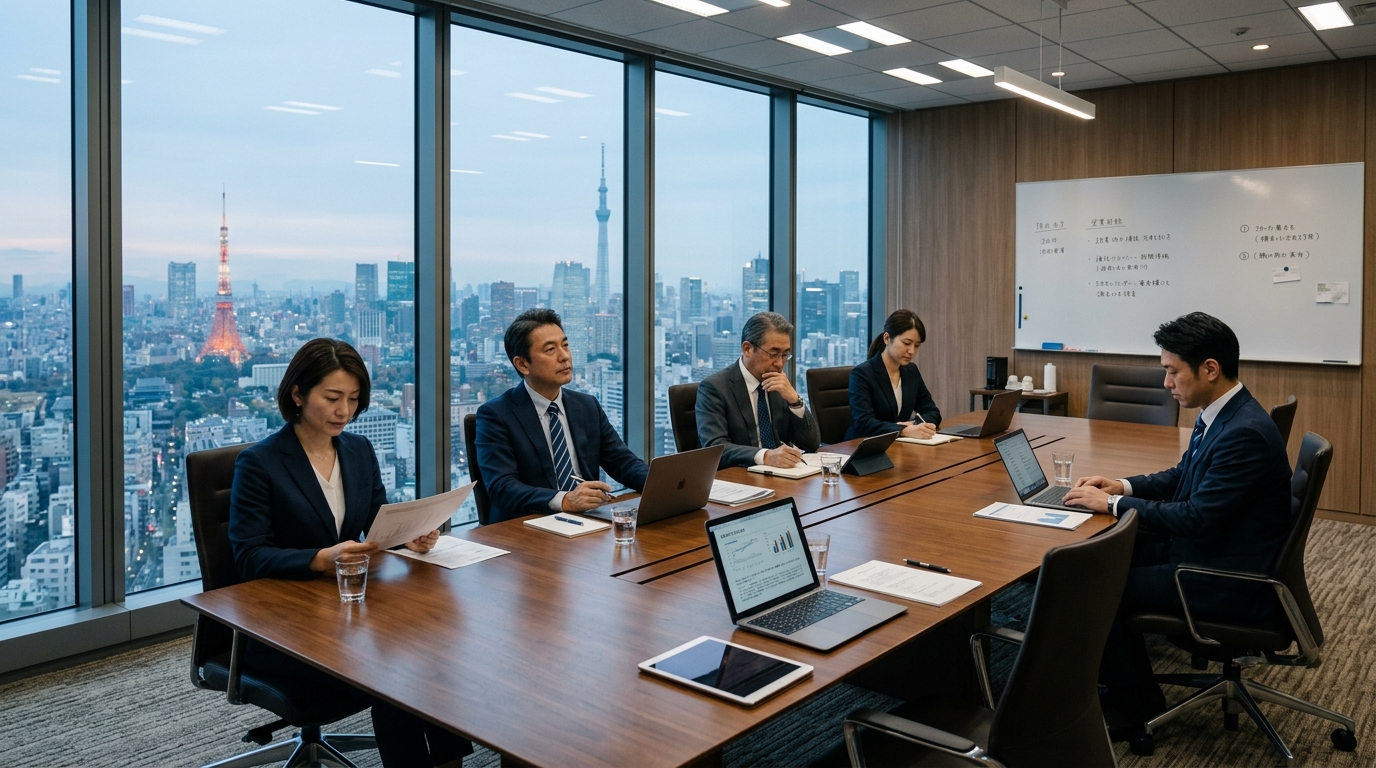
Meetings and meals with strangers. Periods of silence during business meals are normal and welcomed. They're not awkward pauses — they're signs that real thinking is happening.
How to Participate Without Faking It
The most common mistake inbound travelers make is to either (a) over-compensate by becoming nervous and whispery, or (b) refuse to adjust and become "that loud foreigner."
Neither is necessary.
The simplest rule: match the room's volume. If a train car is silent, don't be the loud one. If a restaurant is lively, don't whisper. Japanese silence isn't about being quiet always — it's about being calibrated to context.
And one more thing: if you do slip up — take a call on the train, speak too loudly in a temple — don't over-apologize. Nod, lower your voice, move on. Japanese people appreciate the calibration far more than performative regret.
The Deeper Gift
In a world where most public spaces are getting louder — TVs in every airport, music in every restaurant, phone calls in every elevator — Japan's commitment to silence feels like a radical act of care.
It's an acknowledgment that shared space is sacred. That your peace, even for a 20-minute train ride, matters more than my need to share what I had for lunch.
The next time you step onto a Tokyo subway and feel the hush settle over you, don't rush to break it.
Stand still. Breathe. Read the air.
You're already in a conversation.