
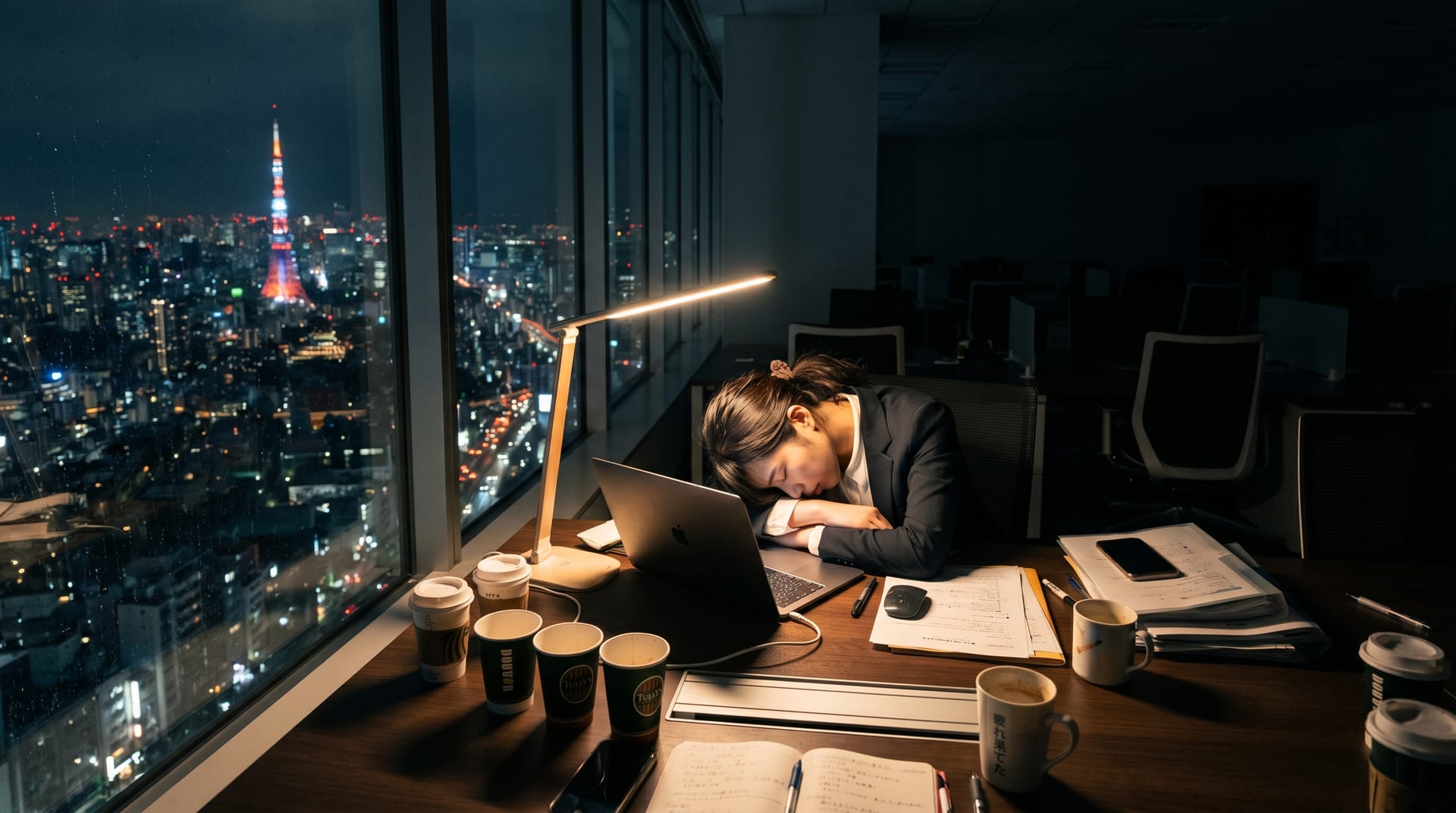
Japan ranks last in OECD 33-country sleep survey at 7h 22m. Why we don't sleep, what we're losing, and 5 things you can change tonight.
Read this article to earn +5 MTC
Japan Has the Lowest Sleep Time in the World — Here's Why, and What We're Losing
The Shocking Fact: Japan Sleeps the Least
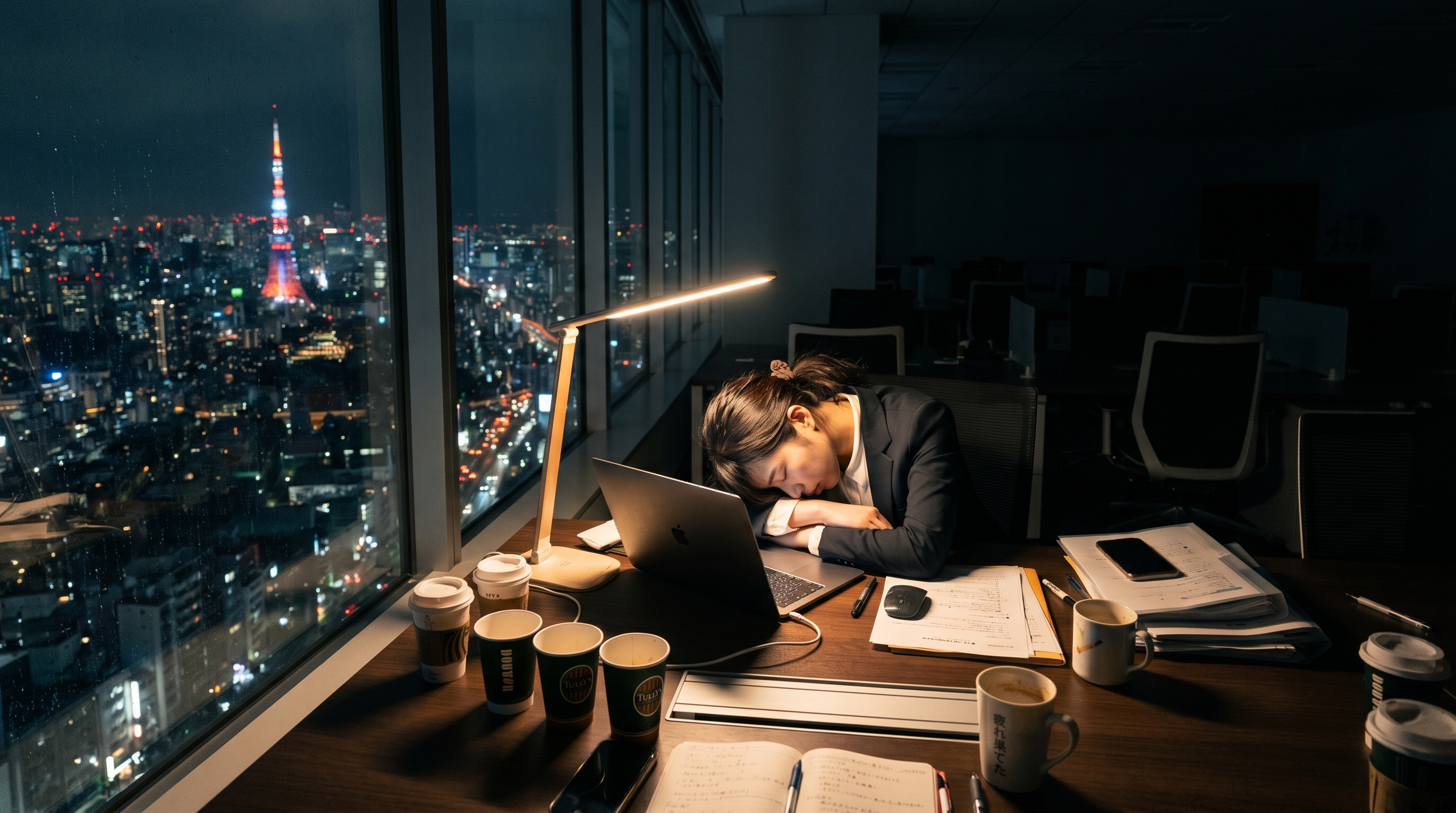
According to the latest OECD survey across 33 countries, the average Japanese person sleeps 7 hours 22 minutes per night — by far the shortest of any developed nation.
The OECD average is 8 hours 26 minutes. Japanese people are living with over an hour less sleep than the global average.
Sleep Time by Country (OECD Survey)
| Country | Average Sleep |
|---|---|
| South Africa | 9h 13m |
| China | 9h 2m |
| United States | 8h 51m |
| France | 8h 33m |
| OECD Average | 8h 26m |
| Korea | 7h 51m |
| Japan | 7h 22m (last) |
Why is Japan alone in this extreme? And what are we losing?
5 Structural Reasons We Don't Sleep
1. Long Work Hours + Crushing Commutes
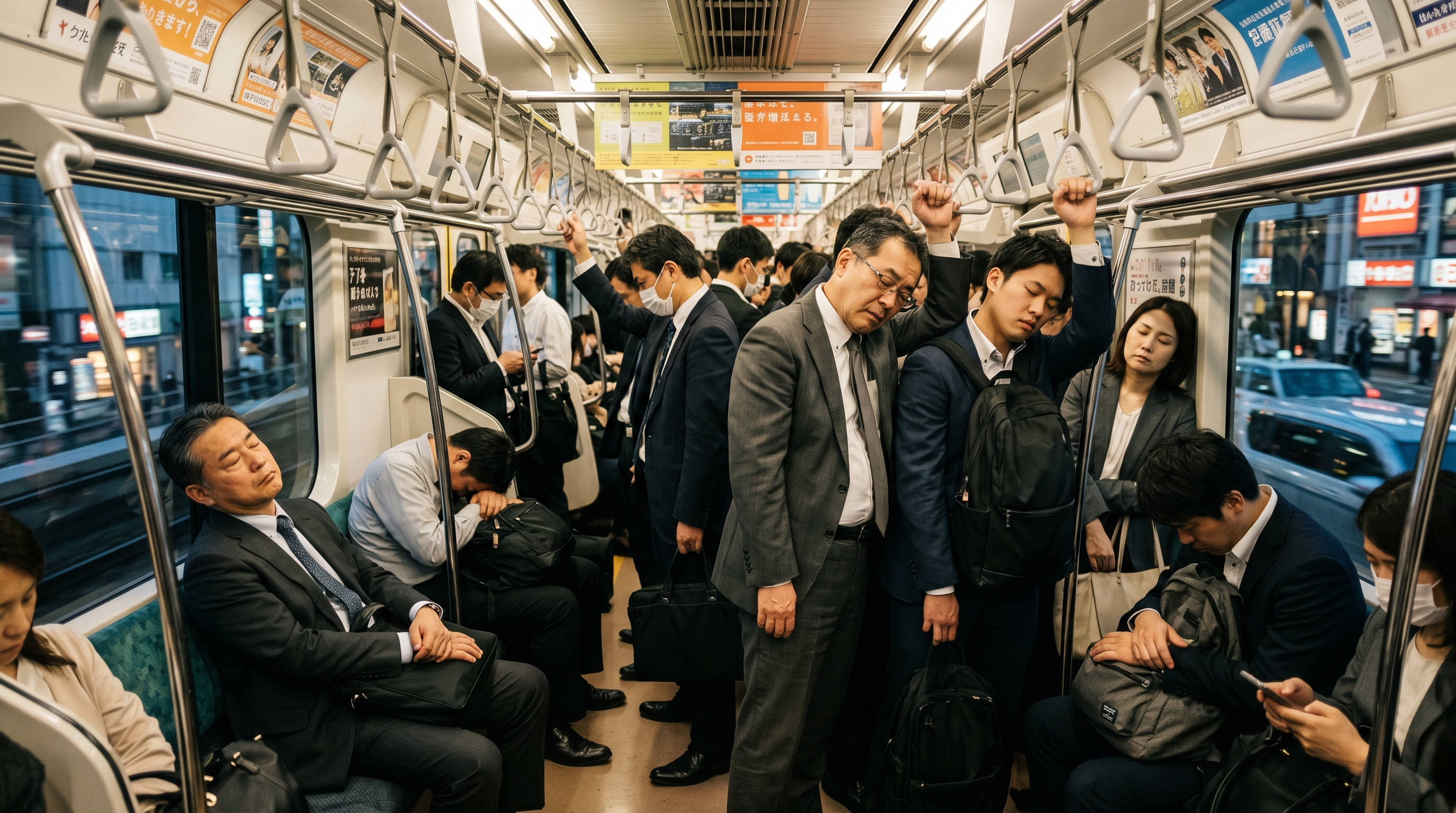
Japanese work hours significantly exceed global averages, but worse is unpaid overtime and commute times. Tokyo's average one-way commute is 68 minutes — among the world's longest, eating directly into time at home.
2. Nighttime Smartphone Use
Japanese government surveys find over 95% of Japanese use smartphones within an hour of bedtime. Blue light suppresses melatonin and delays sleep onset. The "scroll-to-sleep" habit destroys sleep quality.
3. The "Not Sleeping = Virtue" Culture
Since the famous 1980s commercial slogan "Can you fight 24 hours?", Japanese society has equated not-sleeping with diligence. In many Japanese companies, "the person who works late = the dedicated employee" remains an unspoken evaluation criterion.

4. Lunch Breaks Too Short for Naps
While Western countries embrace siesta culture and afternoon coffee naps, Japanese companies offer a standard 60-minute lunch — too short to actually nap.
5. The Crisis for Working Parents
Especially severe for parents: childcare, housework, work — all juggled at once, with personal sleep time being the first to go.
What We're Losing — The Hidden Massive Cost
Health Costs
Chronic sleep deprivation dramatically increases risk of: dementia (up 40%, US NIH study), heart attack (up 48%), depression (doubled), weight gain and diabetes.
Economic Costs
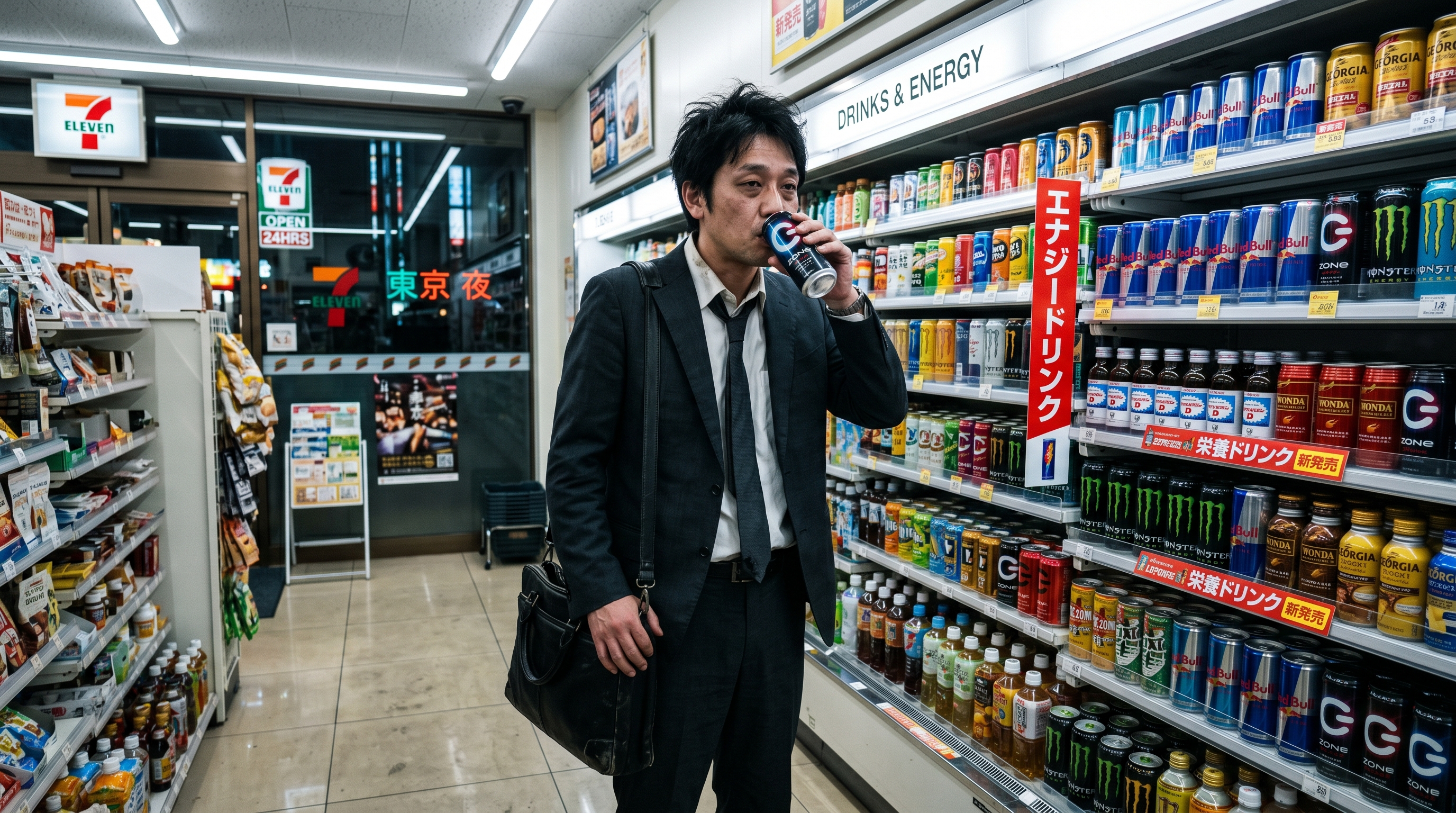
The RAND Corporation estimates Japan loses ¥15 trillion annually to sleep deprivation — about 3% of GDP. Lost productivity, increased sick days, early retirement, higher healthcare costs.
Personal Life Costs
Most importantly: creativity drops 30%, emotional regulation impaired, relationships deteriorate, learning ability declines.
Solutions — 5 Things You Can Change Tonight
1. Bath 90 Minutes Before Bed
Stanford sleep research proves this is the optimal timing. Falling deep body temperature triggers rapid sleep onset.
2. No Phone in the Bedroom
Charge your phone in the living room. Studies show this alone adds 30+ minutes of sleep.
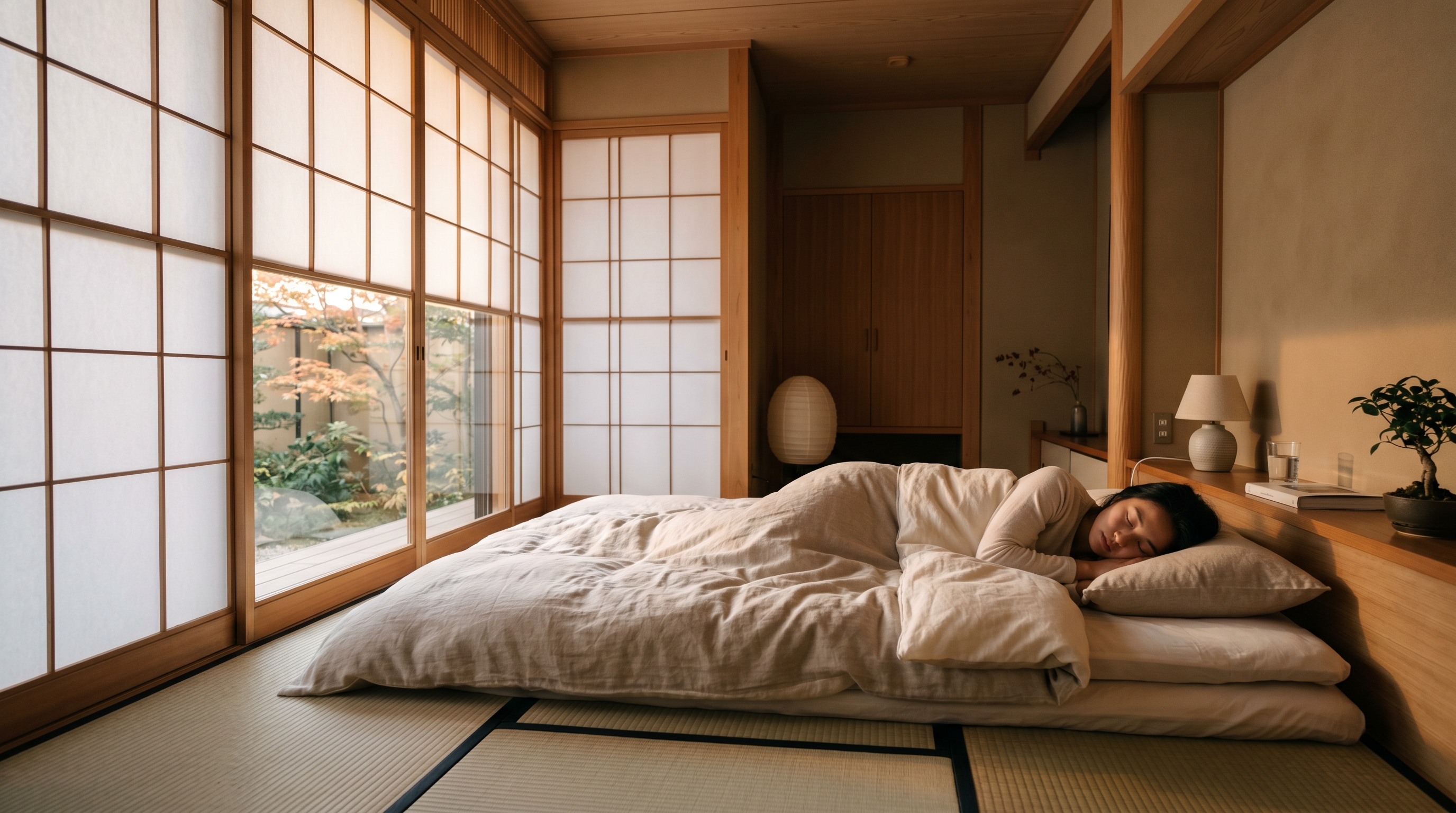
3. Take a 15-Minute Power Nap
NASA research shows 26-minute naps improve performance by 34%. Major Japanese companies (GMO Internet, Rakuten) have introduced nap policies.
4. Fix Your Bedtime
The body clock depends more on consistent bedtime than wake time. Same bedtime daily — including weekends — produces the best sleep quality.
5. Treat Sleep as a Promise to Yourself
Most important: stop seeing sleep as something you "have to do" and start seeing it as the highest-leverage investment in your life quality.
Closing — The Courage to Abandon "Virtuous Sleeplessness"
Changing Japan's overall structure takes time. But your individual choice can change tonight.
The era of "fighting 24 hours" is over. The next era belongs to "those who invested in sleep."
Tonight, go to bed an hour earlier than usual. Tomorrow, you might experience the best performance of your life.