
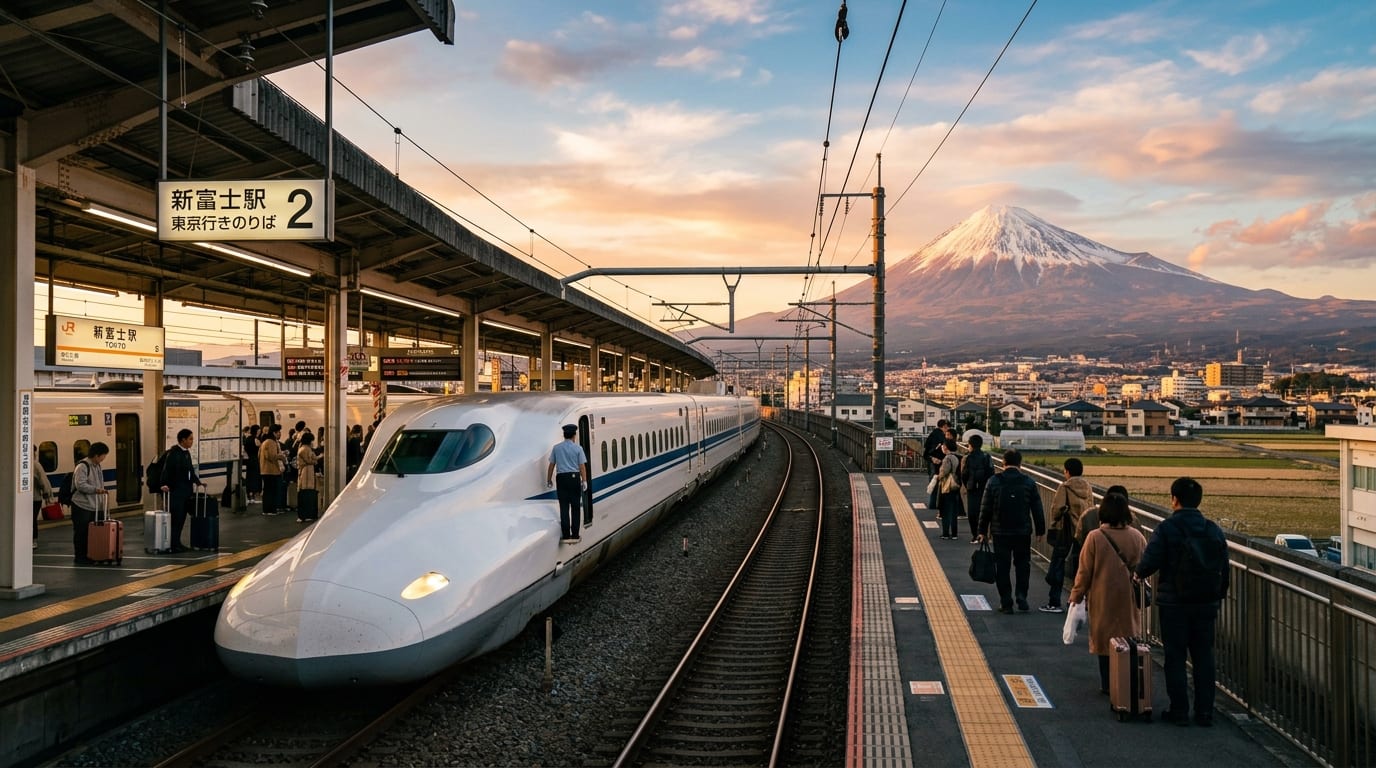
Which JR Pass should you buy? How does Suica work? Tips for Shinkansen seats? What to do when rural buses don't come? The ultimate guide to mastering Japan's transportation with 2026 fares and pass info.
Read this article to earn +5 MTC
"Japan has the world's most convenient transportation" is a common saying, but understanding the full picture isn't easy. Too many JR Pass options to choose from, uncertainty about IC cards, Shinkansen seat reservation tips, the reality of rural buses running once per hour — the transportation barriers facing first-time Japan travelers are surprisingly high.
This article breaks down Japan's transportation system into three categories — urban, intercity, and rural — for complete mastery. Including the latest 2026 fares and pass information, here's everything you need to travel Japan smartly, affordably, and comfortably.
Shinkansen — Complete Guide to Japan's Bullet Train
Shinkansen Basics
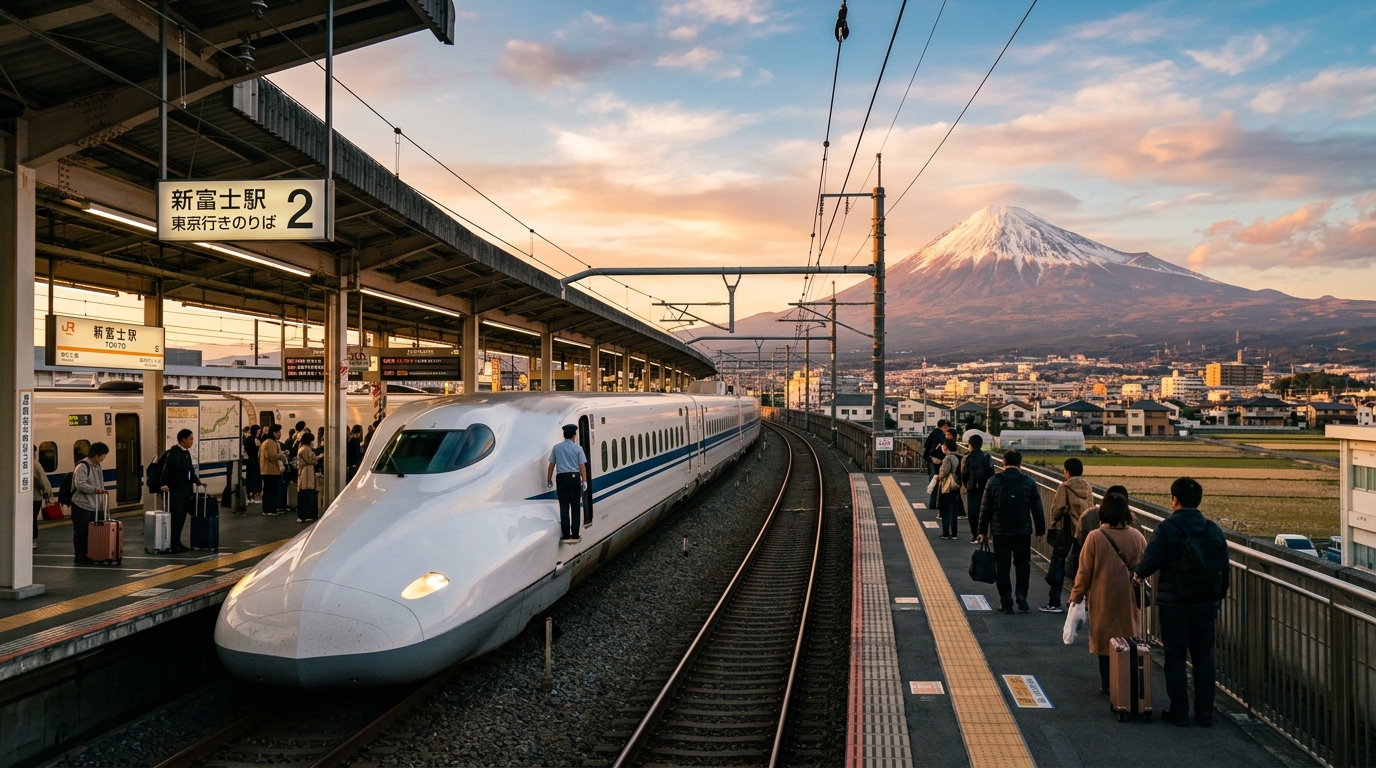
The Shinkansen is the king of intercity travel in Japan. The "Nozomi" connects Tokyo and Osaka in just 2 hours 22 minutes at speeds up to 320km/h — when you factor in airport transit time, it's effectively the fastest way to travel. And it boasts an astonishing on-time rate of over 99%.
Major Routes & Travel Times:
| Route | Time | Regular Fare (Reserved) |
|---|---|---|
| Tokyo → Osaka | 2h 22min | ~¥14,720 |
| Tokyo → Kyoto | 2h 15min | ~¥14,170 |
| Tokyo → Hiroshima | 3h 50min | ~¥19,760 |
| Tokyo → Kanazawa | 2h 28min | ~¥14,580 |
| Tokyo → Sendai | 1h 32min | ~¥11,410 |
| Tokyo → Shin-Hakodate-Hokuto | 3h 58min | ~¥23,430 |
Seat Types & How to Choose
Shinkansen offers three seat types: "Non-reserved" (no reservation needed but no guaranteed seat), "Reserved" (guaranteed assigned seat), and "Green Car" (first-class equivalent with spacious seats and quiet atmosphere).
Smart Seat Selection Tips:
- For Mount Fuji views on the Tokaido Shinkansen, request the right side (Seat E) in the direction of travel
- Avoid the middle seat (B) in three-seat rows
- Power outlets are at window seats (A & E) and the first/last rows
- Nozomi non-reserved cars are cars 1-3 only. Board at terminal stations (Tokyo/Shin-Osaka) for the best chance of getting a seat
Shinkansen Etiquette
Keep quiet inside the train. Phone calls aren't prohibited but should be made in the deck area (between cars). Ideally, inform the person behind you before reclining, though many people recline without asking.
JR Pass — The Foreign Traveler's Ultimate Weapon
Japan Rail Pass (Nationwide)
The JR Pass is an unlimited ride pass exclusively for foreign tourists, covering all JR lines including Shinkansen. 2026 prices:
| Duration | Ordinary | Green Car |
|---|---|---|
| 7 days | ¥50,000 | ¥70,000 |
| 14 days | ¥80,000 | ¥110,000 |
| 21 days | ¥100,000 | ¥140,000 |
Note: Nozomi and Mizuho trains are NOT available. Hikari, Sakura, and Kodama trains are included. Tokyo to Osaka via Hikari takes about 2 hours 50 minutes (about 30 minutes longer than Nozomi).
JR Pass Break-Even Point:
- Tokyo-Kyoto round trip alone is ¥28,340 → With the 7-day pass (¥50,000), adding other trips easily makes it worthwhile
- If making multiple day trips from Tokyo, it's definitely worth it
- For Tokyo-only stays, skip it (IC cards are more convenient for city travel)
Regional Passes
If the nationwide pass feels expensive, regional passes offer great value:
JR East Pass (Tohoku Area): ¥20,000 for 5 days of unlimited Shinkansen and express trains in the Tokyo-Tohoku area. Perfect for day trips to Nikko, Sendai, Akita, and Aomori from Tokyo.
JR West Pass (Kansai Area): Just ¥2,400/day for unlimited rides in the Kyoto-Osaka-Kobe-Himeji-Nara area. Ideal for intensive Kansai exploration.
JR Kyushu Pass (All Kyushu): ¥16,000 for 3 days covering all Kyushu Shinkansen and express trains. Efficiently connects Fukuoka, Nagasaki, Kumamoto, and Kagoshima.
IC Cards (Suica, PASMO, ICOCA) — Urban Travel Essentials
What Are IC Cards?
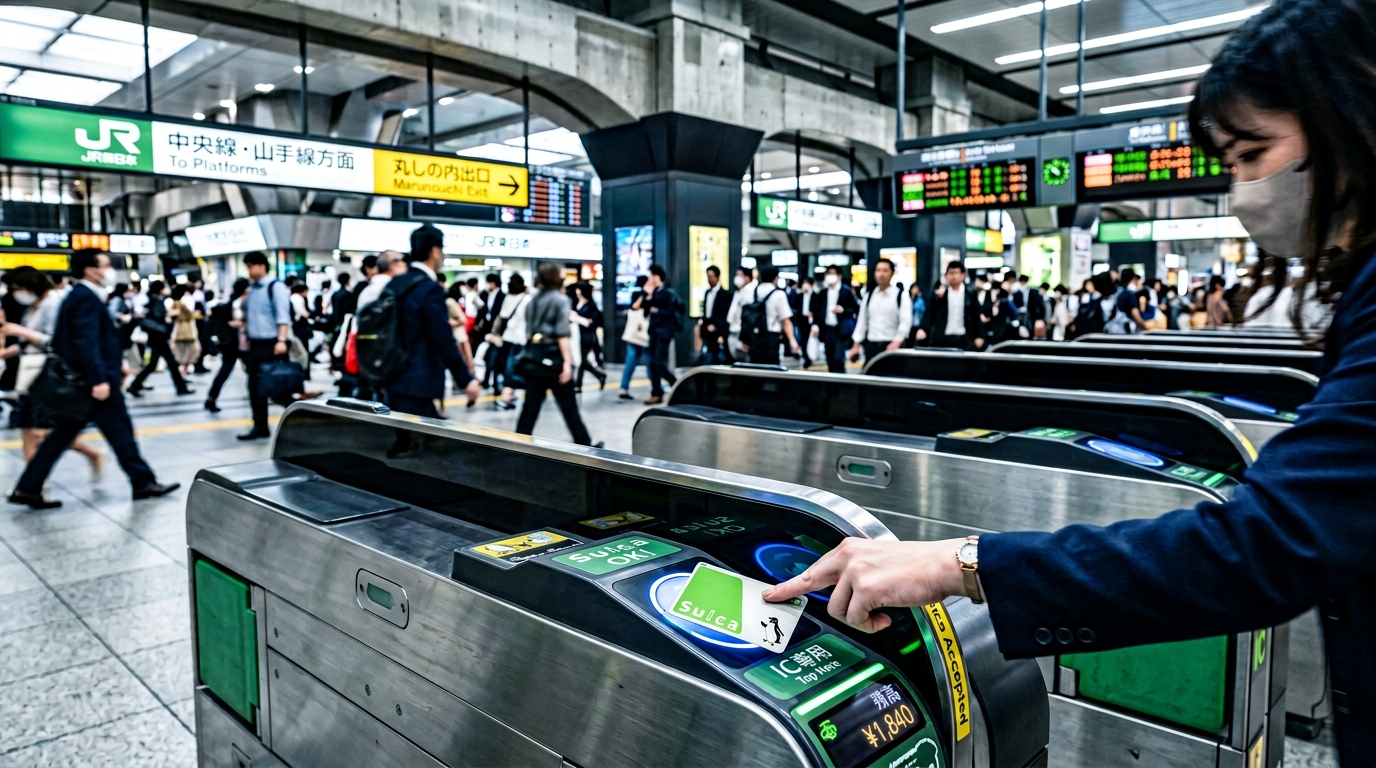
IC cards are Japan's prepaid transit cards. Simply tap at the gate to ride trains and buses, and they also work at convenience stores and vending machines. The main cards are:
- Suica — JR East (Tokyo area)
- PASMO — Private railways & subway (Tokyo area)
- ICOCA — JR West (Osaka/Kyoto area)
Good news: As of 2026, all IC cards work nationwide through mutual compatibility. Just one card covers virtually all trains and buses across Japan.
Apple Pay / Google Pay Suica
You don't need a physical card — add Suica to your smartphone. Set up Mobile Suica via Apple Pay or Google Pay, and your phone becomes your transit pass. Top-ups are instant through the app, making it the most convenient option for foreign travelers.
Setup Steps:
- iPhone: Wallet app → Transit Card → Suica → Choose amount and top up
- Android: Google Pay → Transit → Suica → Add new card
Note: Some rural lines and small bus companies don't accept IC cards. Always carry a small amount of cash.
Navigating Tokyo's Subway
Tokyo's subway is operated by two companies: Tokyo Metro (9 lines) and Toei Subway (4 lines). Transfers can be complex, but Google Maps or the NAVITIME app will find the optimal route.
Money-Saving Passes:
- Tokyo Metro 24-Hour Ticket: ¥600 for unlimited Tokyo Metro rides for 24 hours. Pays for itself in just 3 rides.
- Tokyo Subway Ticket (Foreigners Only): ¥800/24h, ¥1,200/48h, ¥1,500/72h for unlimited Tokyo Metro + Toei Subway. Available at airport counters.
Rural Transportation — Solving the "Bus Isn't Coming" Problem
The Rural Reality
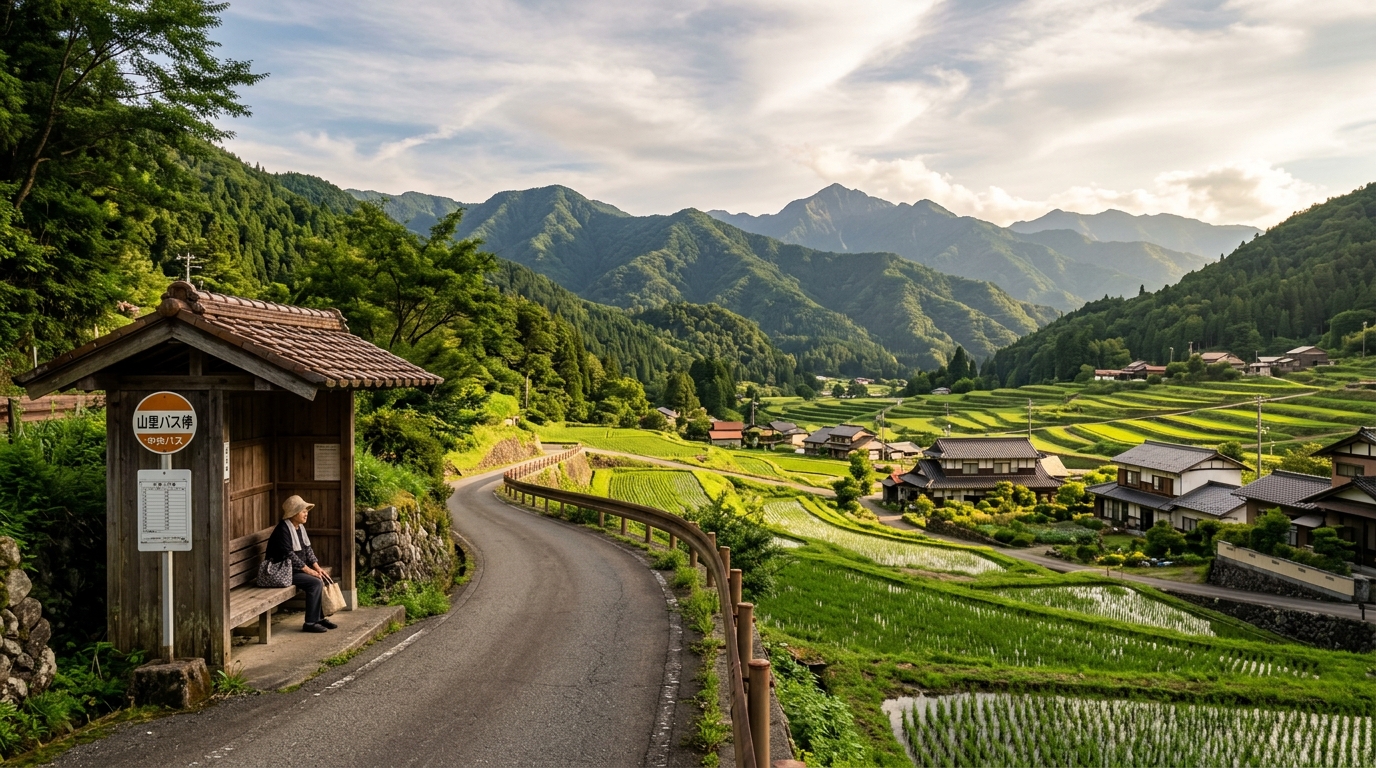
While trains come every 5 minutes in Tokyo and Osaka, rural areas are a completely different story. Local trains may run once per hour, buses once every two hours. Pre-checking timetables is absolutely essential when planning rural trips.
Recommended Timetable Apps:
- Google Maps: Excellent for Japanese public transit with real-time delay information
- NAVITIME: Japan-made transit app covering rural bus routes
- Yahoo! Transit: Japan's most-used transit search (limited English support)
Rental Cars — A Game Changer
Rental cars dramatically increase your freedom in rural Japan. Japanese rental cars are relatively affordable at around ¥5,000-8,000 per day, with kei cars (mini cars) starting from ¥3,000.
Rental Car Notes:
- International Driving Permit (IDP) required. Must be from a Geneva Convention country. Obtain before departure
- Drive on the left, right-hand steering. Takes adjustment unless you're from the UK or Australia
- Expensive highway tolls. Tokyo to Osaka costs about ¥13,000. Choose cars with ETC (automatic toll payment) for discounts
- Parking: City parking is expensive (¥600-1,500/hour in central Tokyo). Rural areas are usually free
- Gasoline: Both self-service and full-service available. Self is cheaper. Regular gas is about ¥170/L (2026)
Taxis
Japanese taxis are safe and clean but relatively expensive. Base fare is ¥500-750, then approximately ¥300 per kilometer. However, sharing among 3-4 people can make it comparable to trains.
Useful Tips:
- Doors open automatically. Don't try to open them yourself
- Giving a nearby landmark as your destination works better than an address
- Late night surcharge (10:00 PM - 5:00 AM) adds 20%
- The "GO" app enables ride-hailing (English supported)
Airport to City Center Access
Narita Airport → Central Tokyo:
- Narita Express (N'EX): ~60 min, ¥3,250. JR Pass eligible
- Keisei Skyliner: ~36 min (to Nippori), ¥2,570. Fastest option
- Limousine Bus: ~90 min, ¥3,200. Convenient with heavy luggage
- Budget: Keisei Access Express ~70 min, ¥1,270
Haneda Airport → Central Tokyo:
- Tokyo Monorail: ~13 min (to Hamamatsucho), ¥500
- Keikyu Line: ~11 min (to Shinagawa), ¥300. Cheapest and fastest
Kansai International Airport → Osaka/Kyoto:
- Haruka Express: ~75 min to Kyoto, ¥2,900 (JR Pass eligible)
- Nankai Rapi:t: ~38 min to Namba, ¥1,450
- Limousine Bus: ~60 min to various Osaka locations
Ultimate Money-Saving Techniques
1. Seishun 18 Kippu (Seasonal)
Unlimited rides on JR local trains (excluding Shinkansen/express) for 5 days at ¥12,050. Just ¥2,410 per day to go anywhere in Japan. Limited sale and usage periods (aligned with school vacation seasons). Takes longer, but perfect for those wanting to enjoy scenery on a leisurely journey.
2. Overnight Buses
Budget overnight buses from Tokyo to Osaka start at around ¥2,000. Willer Express and JR Bus operate major routes. Choose 3-row independent seats for comfortable sleep. Book via Willer, Rakuten Travel, or Bus Hikaku Navi.
3. LCCs (Budget Airlines)
Peach, Jetstar, and Spring Japan offer Tokyo-Osaka from ¥3,000 and Tokyo-Fukuoka from ¥5,000. Even cheaper during sales. Watch out for baggage restrictions.
4. Early Bird Discounts
JR's "Hayatoku" tickets and EX Reservation's early booking discounts offer up to 35% off Shinkansen fares. For example, Tokyo-Osaka drops from ¥14,720 to approximately ¥10,000. Requires booking 21 days in advance.
Transportation Comparison Table
| Route | Shinkansen | Airplane | Overnight Bus | Car |
|---|---|---|---|---|
| Tokyo→Osaka | 2h22m / ¥14,720 | 1h10m+airport / ¥8,000~ | 8h / ¥2,500~ | 6h / ¥8,000+tolls |
| Tokyo→Sendai | 1h32m / ¥11,410 | 1h+airport / ¥10,000~ | 5h / ¥2,000~ | 4h / ¥6,000+tolls |
| Tokyo→Kanazawa | 2h28m / ¥14,580 | N/A | 7h / ¥3,000~ | 5h / ¥7,000+tolls |
| Osaka→Fukuoka | 2h22m / ¥15,600 | 1h15m+airport / ¥6,000~ | 9h / ¥3,000~ | 6h / ¥9,000+tolls |
FAQ
Q: Is the JR Pass really worth it? A: A Tokyo-Kyoto round trip plus one day trip makes the 7-day pass worthwhile. Skip it for Tokyo-only stays.
Q: Where can I buy Suica? A: At JR station ticket machines (¥500 deposit). Physical cards may be limited since 2024. Mobile Suica is recommended.
Q: Is Google Maps accurate for transit in Japan? A: Very accurate in Japan, with real-time delay information.
Q: Can I use credit cards in taxis? A: Major taxi companies accept them. Individual taxis may be cash-only.
Q: Can I rent bicycles? A: Major cities have bike-sharing (Docomo Bike Share, etc.). Easy to rent via app, starting from ¥165 per ride.
Japan's transportation system offers world-class convenience, but mastering it all requires a bit of knowledge. Keep this guide handy during your travels and move freely throughout Japan.