The ultimate guide to experiencing Japanese philosophy in Kyoto — from Ryoan-ji's rock garden to centuries-old tea rooms. Seven ancient ideas, one city, physically preserved for 1,200 years.
Read this article to earn +5 MTC
In the previous article "Why Japan Knows Something About Living That the Rest of the World Is Just Discovering," we introduced seven Japanese philosophies that the world is rediscovering.
Here's what that article didn't tell you: all seven of them are physically concentrated in a single city.
That city is Kyoto.
Built 1,200 years ago, surviving earthquakes, wars, and modernization, Kyoto continues to captivate travelers from around the world in the 21st century. Travel + Leisure magazine readers have repeatedly voted Kyoto the "Best City in the World."
So why Kyoto — not Paris, not New York?
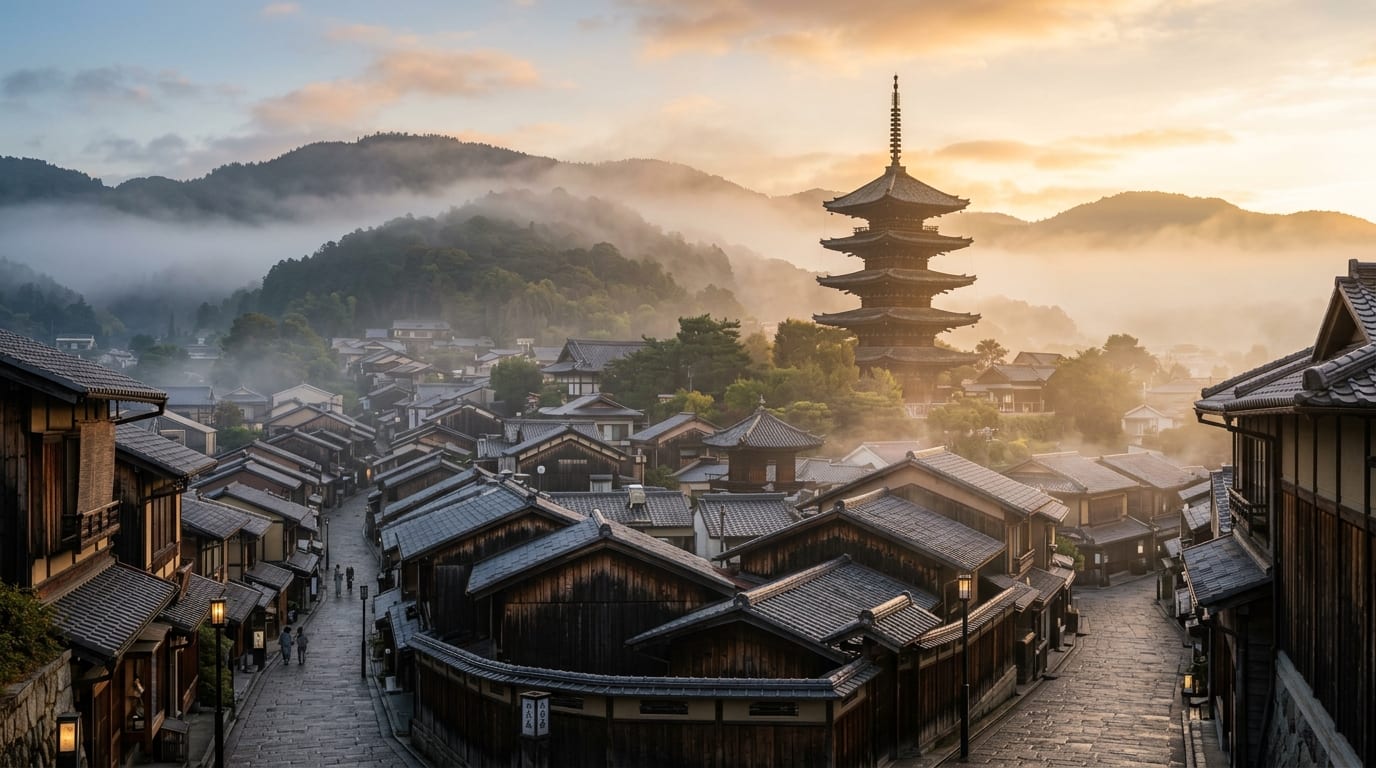
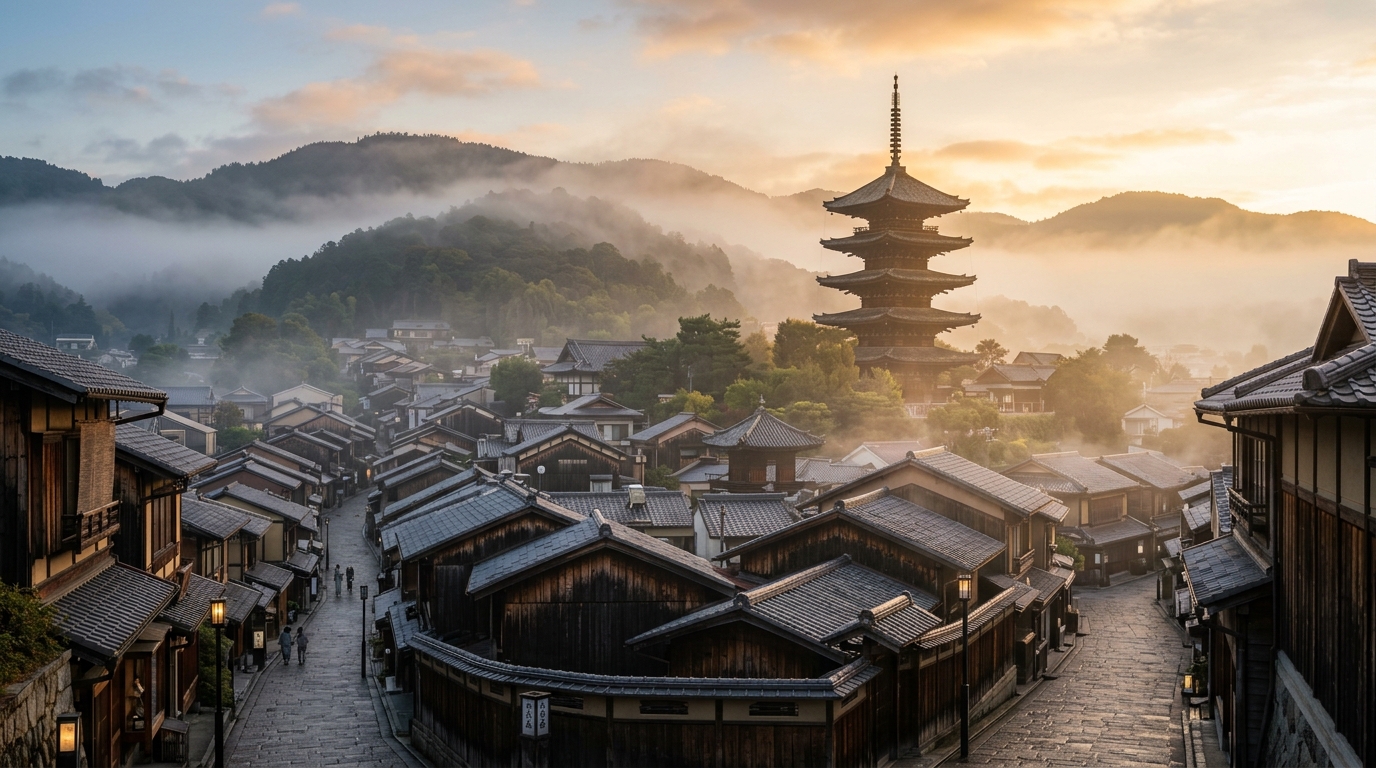
The answer is simple. Kyoto isn't a tourist destination. It's the world's largest living philosophy book, refined over 1,200 years.
This article explores how Japanese philosophy is physically embedded in Kyoto, and where travelers can actually experience it.
Wabi-Sabi — What Moss-Covered Stone Gardens Teach Us
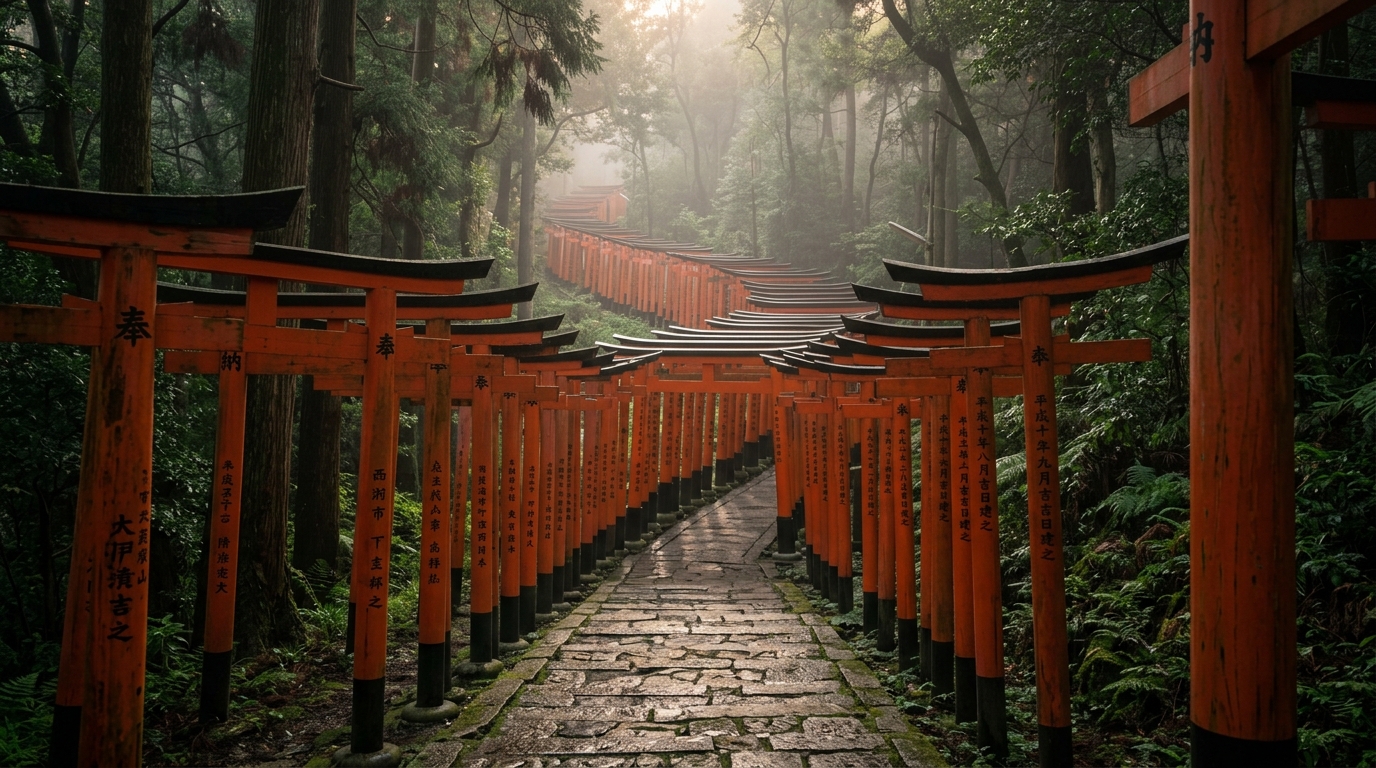
Kyoto contains over 1,600 temples and shrines. In almost all of them, you can encounter wabi-sabi in physical form.
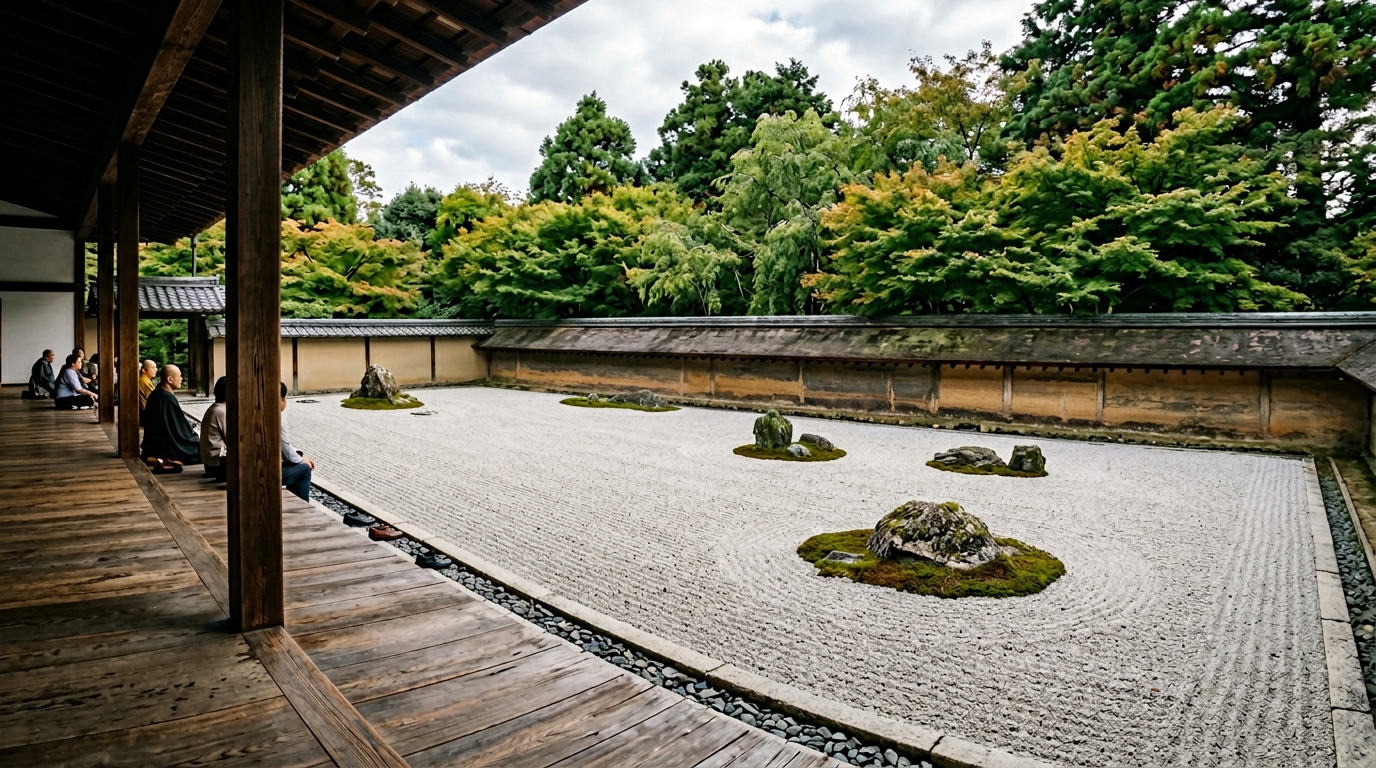
At Ryoan-ji Temple's stone garden, fifteen rocks are arranged in a sea of raked white gravel. No matter which angle you view them from, at least one rock is always hidden behind another. You can never see them all at once. "Beauty exists precisely because it cannot be fully seen" — this is the essence of wabi-sabi.
At Saiho-ji (Moss Temple), over 120 species of moss blanket the grounds, with the passage of time itself elevated into an aesthetic principle. Finnish garden designer Markku Hakala said in a 2025 interview: "Visiting Saiho-ji, I finally understood. Aging is not decline. It is approaching completion."
Standing before the Wind and Thunder Gods screen at Kennin-ji, you'll notice that 400 years of faded pigment and yellowed paper have actually elevated the work's dignity.
Here is Kyoto's first lesson: time is not the enemy. It is the greatest collaborator.
Ichigoichie — The Tea Room as a Time Machine
The phrase ichigoichie ("one time, one meeting") originates from the 16th-century tea master Sen no Rikyu's disciple, Yamanoue Soji, who wrote: "Treat every encounter as if it were once in a lifetime."
Step into a Kyoto tea room and your body will understand why this phrase was born.
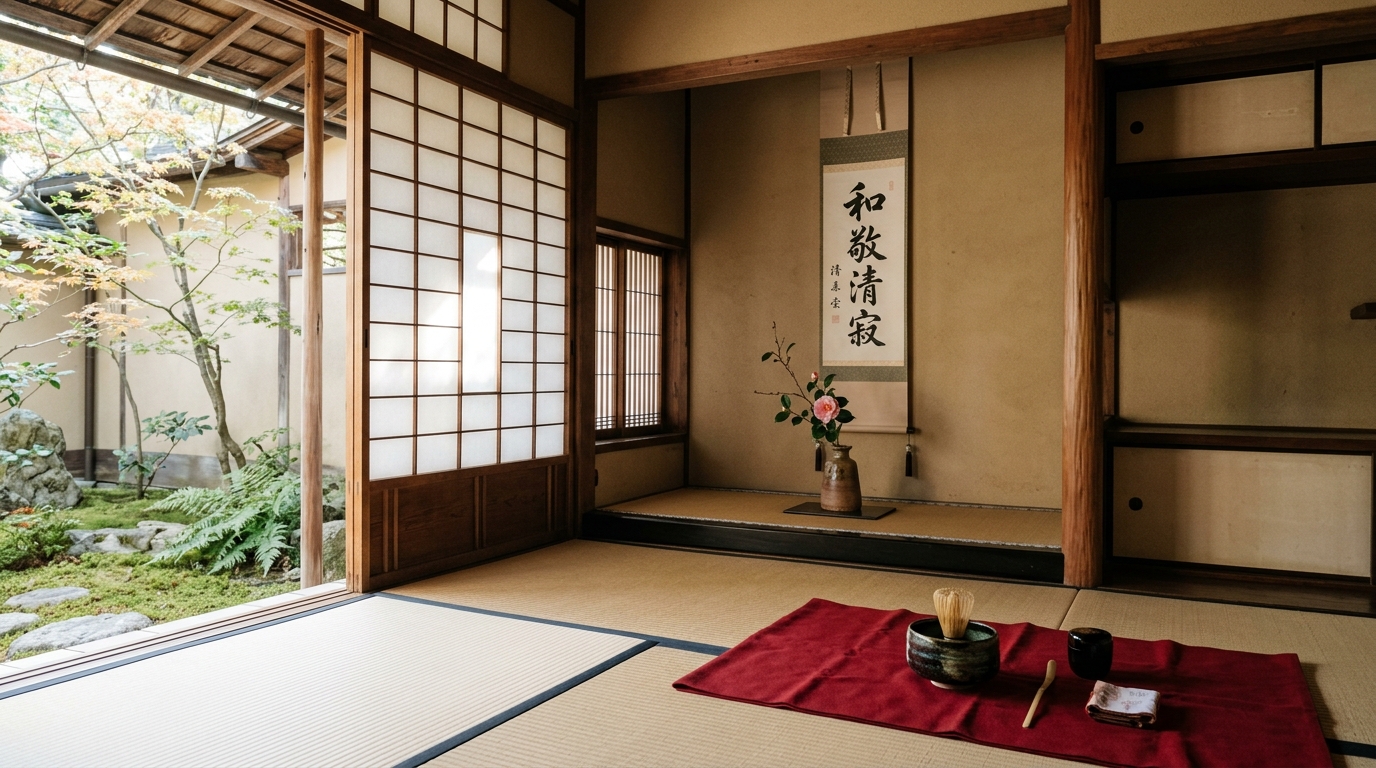
A tea room entrance — the nijiriguchi — measures just 66 centimeters square. Regardless of social rank or status, everyone must bow to enter. Inside lies a 4.5-tatami mat room. Only natural light. The only decoration is a single hanging scroll in the alcove and a single flower.
What happens in a modern brain inside this space is remarkable.
A 2025 study from Kyoto University found that subjects who spent 30 minutes in an authentic tea room showed a 37% average reduction in cortisol (the stress hormone), along with a significant increase in theta brain waves associated with focused attention. Stronger than any "digital detox resort" marketing can promise.
Recommended experiences:
- Formal tea ceremonies at Omotesenke or Urasenke schools (advance booking required)
- Tea room experiences in renovated Nishijin townhouses
- Zen meditation plus matcha at Ryosoku-in, a sub-temple of Kennin-ji
Shimatsu — The Kyoto Art of "Using Things to the End"
Anyone who has trained in a long-established Kyoto restaurant knows this phrase by heart: "Shimatsu shite, kibatte, teineini" — "Use everything fully, strive diligently, do it with care."
Shimatsu means taking responsibility for things from beginning to end. Don't waste ingredients. Treat tools with respect. Weave relationships carefully. This is the foundational ethic of Kyoto's merchants.
Kyoto's sustainability credentials are world-class. The 2026 UN report on Sustainable Tourism showed that despite being an ancient city, Kyoto generates only 54% the food waste per tourist of Tokyo, and just 38% of Paris.
The reason is simple. Kyoto's home-style cuisine, obanzai, was originally a culture of repurposing leftovers. Radish leaves are stir-fried with soy sauce. Kombu kelp used to make dashi is transformed into tsukudani. The starchy water from washing rice is used to clean floors. This has continued for over a millennium.
Kyo-yasai (Kyoto's heritage vegetables) are also products of shimatsu culture. Kujo leeks, Shogoin turnips, Kamo eggplants — all were selectively bred to make the most of Kyoto's cramped basin geography. The embodiment of "knowing what is enough."
Fueki-Ryūkō — Change to Stay the Same
Walking Kyoto, you notice something strange. Duck into the alleyways and you'll find traditional townhouses unchanged since the Edo period. Step back onto the main streets and you're at the global headquarters of Uniqlo, Kyocera, and Nintendo.
This contradiction is Kyoto's essence.
The haiku master Matsuo Basho articulated the philosophy of fueki-ryūkō — to preserve what is unchanging, you must constantly change.
Nintendo was founded in 1889 as a small company making hanafuda playing cards in Kyoto. 135 years later, it's a global gaming powerhouse — but its headquarters remain in Kyoto. Kyocera founder Kazuo Inamori once said, "Kyoto has a deep capacity to welcome the new."
Kyoto's legacy companies are "long-established" yet perpetually innovative:
| Company | Founded | Example of Innovation |
|---|---|---|
| Toraya | 1526 | Global wagashi expansion, vegan product line |
| Shoyeido | 1705 | Incense-based wellness products |
| Ippodo Tea | 1717 | Globalizing matcha as a premium brand |
| Zohiko | 1661 | Fusion of traditional lacquerware with modern design |
Preserve = essential value / Change = mode of expression.
Kyoto has been practicing this equation for 1,200 years.
3 Recommended Routes for Travelers
If you want to experience Japanese philosophy in Kyoto, here are three suggested routes.
[Half-day] Philosopher's Path + Ginkaku-ji Walk the path where Kyoto University professor Kitaro Nishida used to contemplate, then visit Ginkaku-ji, the Muromachi-period embodiment of wabi-sabi. Duration: 3 hours.
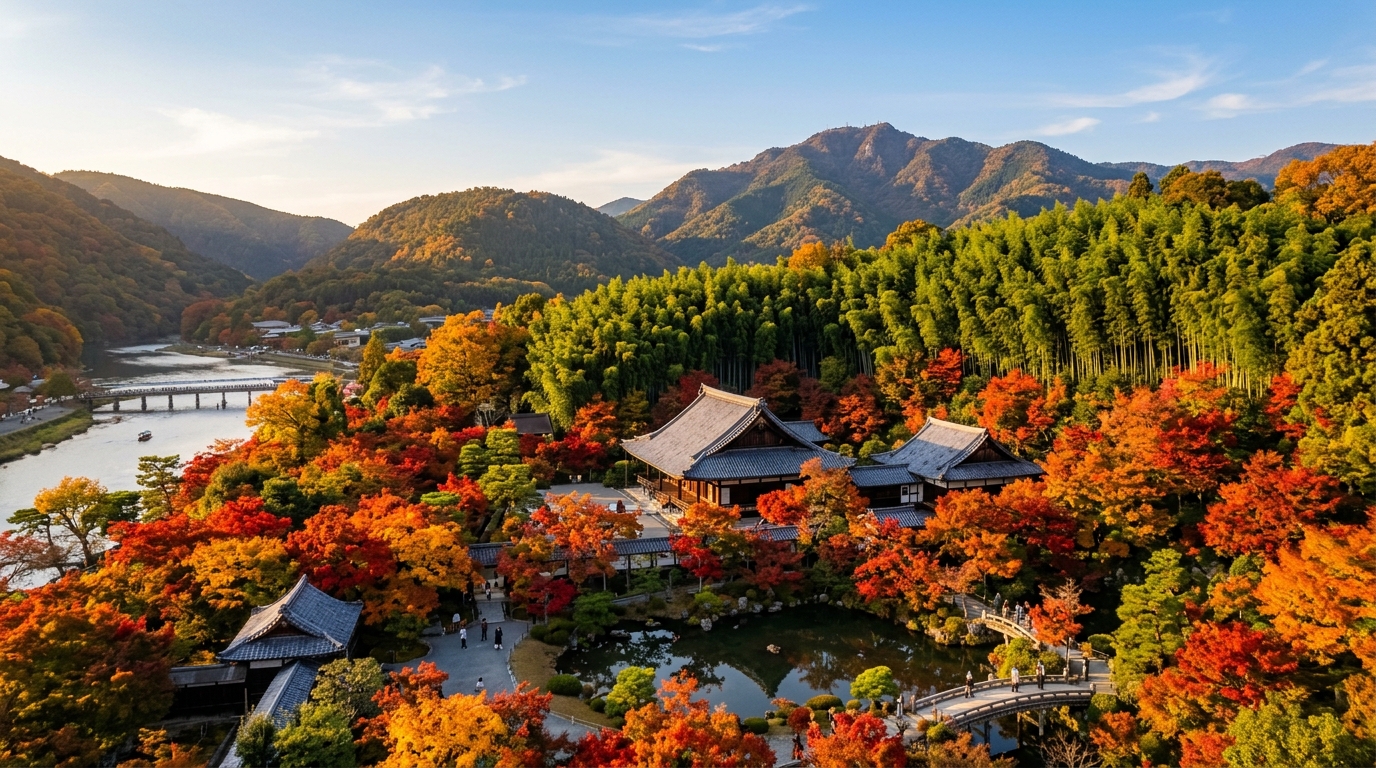
[Full-day] Arashiyama + Moss Temple Tenryu-ji, the bamboo grove, Togetsukyo bridge, and the reservation-only Saiho-ji (Moss Temple). Experience the aesthetic sensibility of Heian aristocracy where nature and architecture merge.
[Two-day] Higashiyama + Uji Tea Training Day one: Kiyomizu-dera, Yasaka Shrine, Kodai-ji, Kennin-ji. Day two: full tea-picking and hand-grinding experience in Uji. The ultimate program for learning ichigoichie with your whole body.
What Kyoto Shows the Future
Here's a telling fact. In the 2025 UN SDG City Rankings, Kyoto placed first globally in "Cultural Sustainability." Meanwhile, it ranked near the bottom for "Economic Growth."
That is precisely Kyoto's choice.
Instead of chasing GDP or population growth, Kyoto selects value that will still matter 1,200 years from now — and this consistent posture is what draws thoughtful travelers from around the world.
If Paris is the City of Light, Kyoto is the City of Time.
On your next visit to Kyoto, forget the bucket list for a moment. Instead, savor one moss-covered stone, the grain of one piece of aged wood, one minute of silence in a tea room. Savor a single "point."
In that moment, you'll realize: you're not sightseeing. You're practicing philosophy.
And after you return home, that feeling will continue to quietly transform your daily life.
This is the greatest souvenir Kyoto has been offering the world for 1,200 years.
Related Reading
To go deeper into the philosophies Kyoto embodies, check out our companion articles:
- [7 Japanese Life Philosophies] The science behind ikigai, wabi-sabi, shinrin-yoku, kaizen, oubaitori, mono no aware and ma.
- [Koji, Umami & the Soul of Japan] The fermentation philosophy still guarded by Kyoto's legacy restaurants.
Kyoto is where all of these are still alive.