Mt. Fuji isn't just Japan's tallest peak. It's a national religion, a UNESCO cultural site, and a 12,000-year volcano with 1 million pilgrim history.
Read this article to earn +5 MTC
The Mind-Bending Story of Mt. Fuji: How a Mountain Became a National Religion
A Mountain That's More Than a Mountain
You think you know Mt. Fuji. The perfect cone. The cherry blossoms. The Hokusai prints.
But Mt. Fuji isn't just Japan's highest mountain. It's a national religion, a national identity, and arguably the most spiritually significant geographic feature on Earth — at 3,776 meters of accumulated meaning.
This is its real story.
How Mt. Fuji Became Sacred (Started With Fear)
Until the 1700s, Mt. Fuji was an active volcano. The last major eruption: 1707 (the Hoei eruption), which buried Edo (Tokyo) in volcanic ash for two weeks.
Ancient Japanese didn't see Mt. Fuji as beautiful — they saw it as terrifying. A force of destruction worshipped to be appeased.
Shinto religion has a concept: spirits dwell in things, especially powerful natural features. Mt. Fuji wasn't just home to a god — it was a god itself.
The mountain's name "Fuji" likely comes from the Ainu word "huci" (fire deity) or from "fushi" (immortality). Either way, the name encodes deep mystic meaning.
The Religion Built Around Mt. Fuji: Fujikō
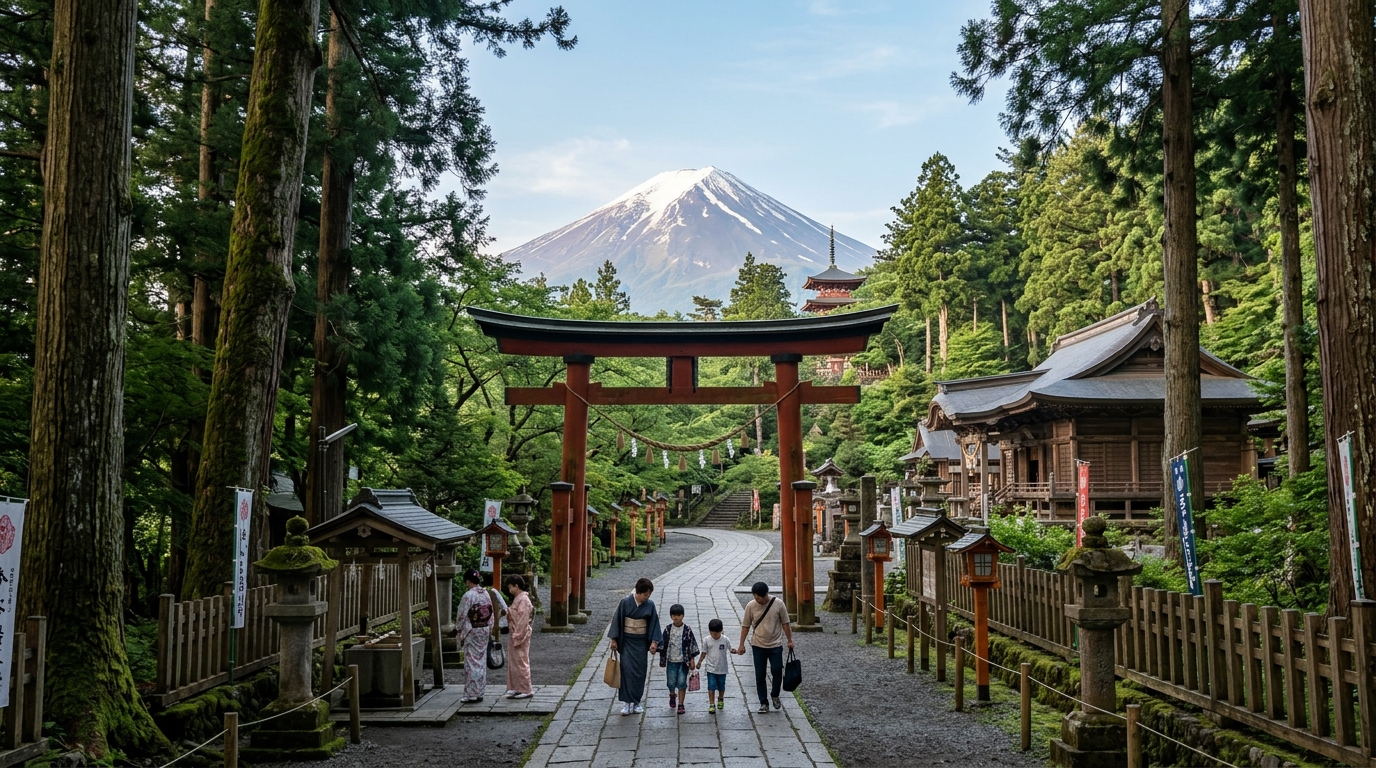
In the 1500-1600s, a religious sect formed: Fujikō (Fuji Confraternity).
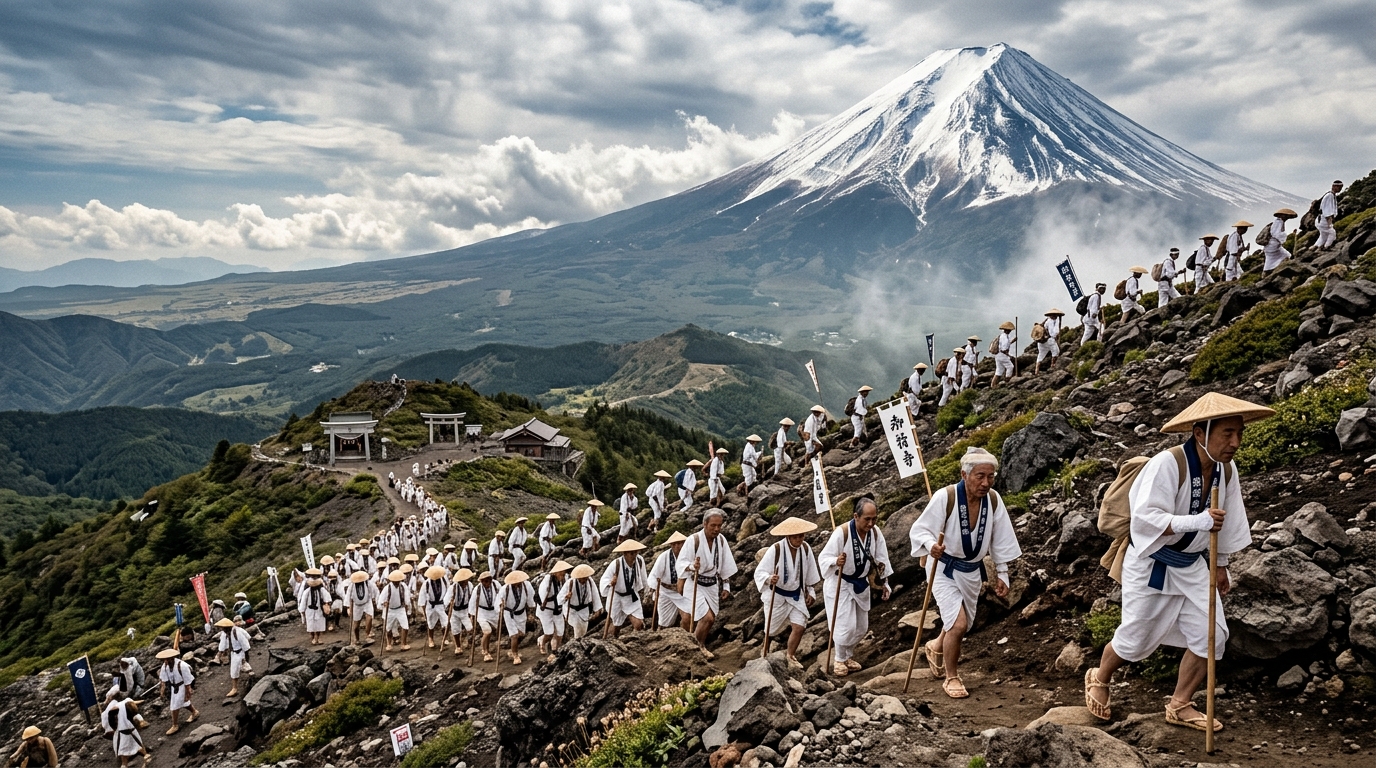
Members believed that climbing Mt. Fuji was a path to enlightenment. By 1700, hundreds of thousands of Japanese were undertaking pilgrimages, often barefoot, dressed in white, with walking sticks blessed at shrines.
The pilgrimage was so popular that smaller "Mt. Fuji replicas" called fujizuka were built across Tokyo for those who couldn't make the actual climb. Many of these miniature mountains still exist in city parks today — usually a few meters tall, sacred mountains in disguise.
By the time Edo (Tokyo) had 1 million people in 1800, the city had over 50 fujizuka. Climbing them was considered spiritually equivalent to climbing the real mountain.
Mt. Fuji as Visual Identity
In 1830, artist Katsushika Hokusai completed his masterwork: "Thirty-Six Views of Mt. Fuji" — the print series that includes the famous "Great Wave off Kanagawa."
This series did something revolutionary: it took Mt. Fuji from religious icon to national symbol. Suddenly, every Japanese person had Mt. Fuji in their visual vocabulary, regardless of religion.
When Western visitors started arriving in the 1850s, they too became enchanted. Vincent van Gogh, Claude Monet, and Edgar Degas all collected Hokusai prints. Mt. Fuji became Japan's global brand image before the term existed.
The Mountain in WWII and Postwar Japan
During WWII, Mt. Fuji served as a powerful military symbol — appearing on propaganda posters, war savings bonds, and military insignia.
After Japan's defeat in 1945, Mt. Fuji's symbolism shifted. Instead of military strength, it became the symbol of eternal Japan — the unchanging foundation that survived war, occupation, and rebuilding.
When the Tokyo Olympics opened in 1964, the opening ceremony featured Mt. Fuji as Japan's symbol of resilient peace. The same imagery returned at the 2020 Tokyo Olympics.
Modern Mt. Fuji: A Crisis of Sacredness
In the 2010s, Mt. Fuji faced a problem: too many tourists.
By 2025, 400,000 climbers annually attempt the ascent during the brief 2-month climbing season. Trash piled up. Trails eroded. The sacred mountain risked becoming a theme park.
In 2024, Yamanashi Prefecture imposed:
- Climbing fee: ¥4,000 per person
- Daily limit: 4,000 climbers
- Required reservation system
These measures sparked controversy. Some argued: "Mt. Fuji belongs to Japan and the world, you can't gate it." Others argued: "It's sacred, you can't let it be destroyed."
This tension is unresolved.
Mt. Fuji's Hidden Powers Most People Don't Know
1. Mt. Fuji Is Still Active
Geologists classify Mt. Fuji as "dormant, not extinct." The next major eruption is considered statistically overdue. A Japanese government simulation estimates: an eruption similar to 1707 would cause ¥2.5 trillion in damages and disrupt all of Tokyo.
2. Mt. Fuji Has Three Mountains Inside
The Mt. Fuji you see is actually built on top of two earlier mountains that erupted and were buried. So you're really looking at three mountains stacked.
3. The "Diamond Fuji" Phenomenon
On certain days at sunrise or sunset, the sun perfectly aligns with the summit, creating a "diamond" effect at the peak. People travel from across Japan to photograph it. The phenomenon happens only a few times a year at specific viewpoints.
4. Climbing Mt. Fuji Is Easier Than You Think
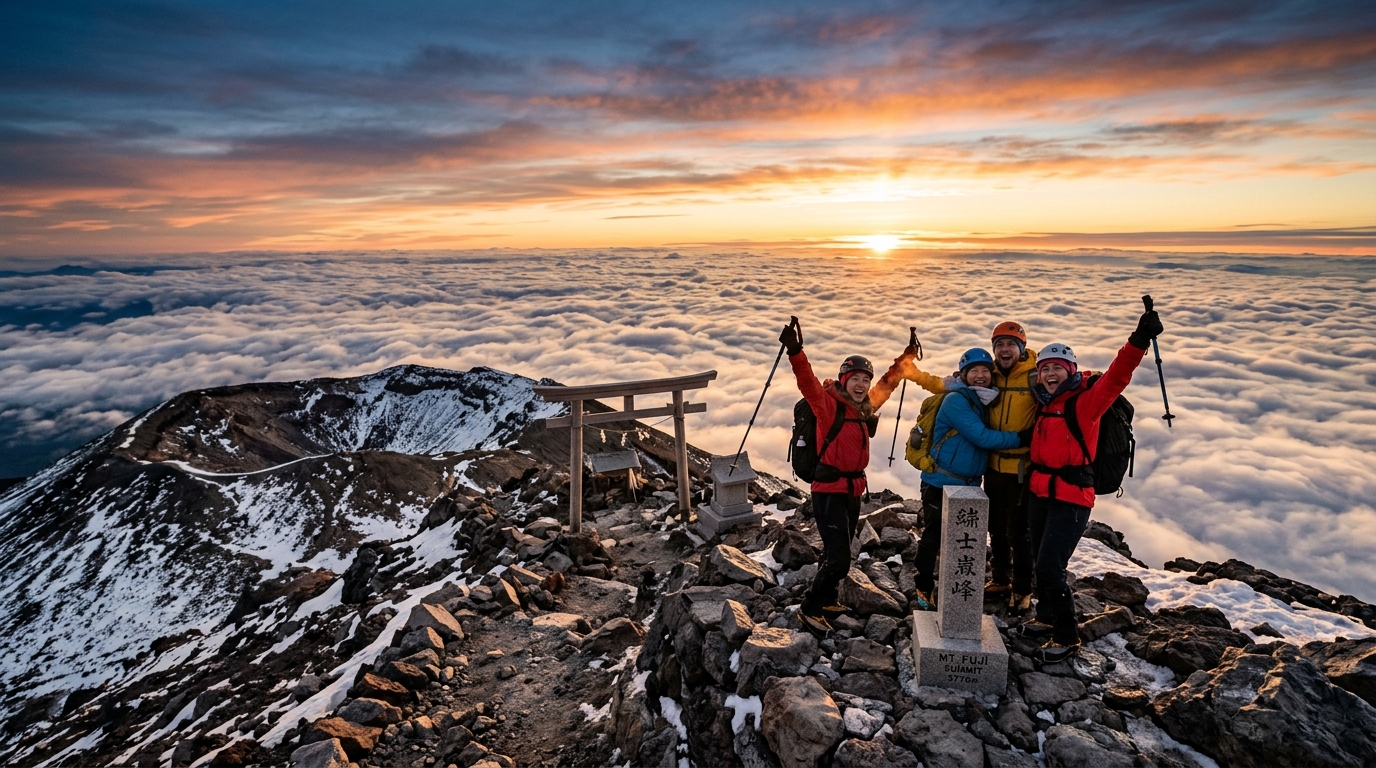
The climb takes 5-7 hours up, 3-5 hours down. No technical climbing skills needed. The trails are well-maintained. About 30% of climbers are international tourists.
The challenge is altitude: oxygen drops 30% near the summit. Many climbers experience headaches and nausea.
5. Mt. Fuji Is a UNESCO World Heritage Site (Cultural, Not Natural)
In 2013, Mt. Fuji was inscribed as a UNESCO World Heritage Site — but in the Cultural category, not Natural. UNESCO's reasoning: Mt. Fuji's significance comes primarily from its cultural and religious meaning, not just its natural beauty.
Why Mt. Fuji Matters for Anyone Who Visits
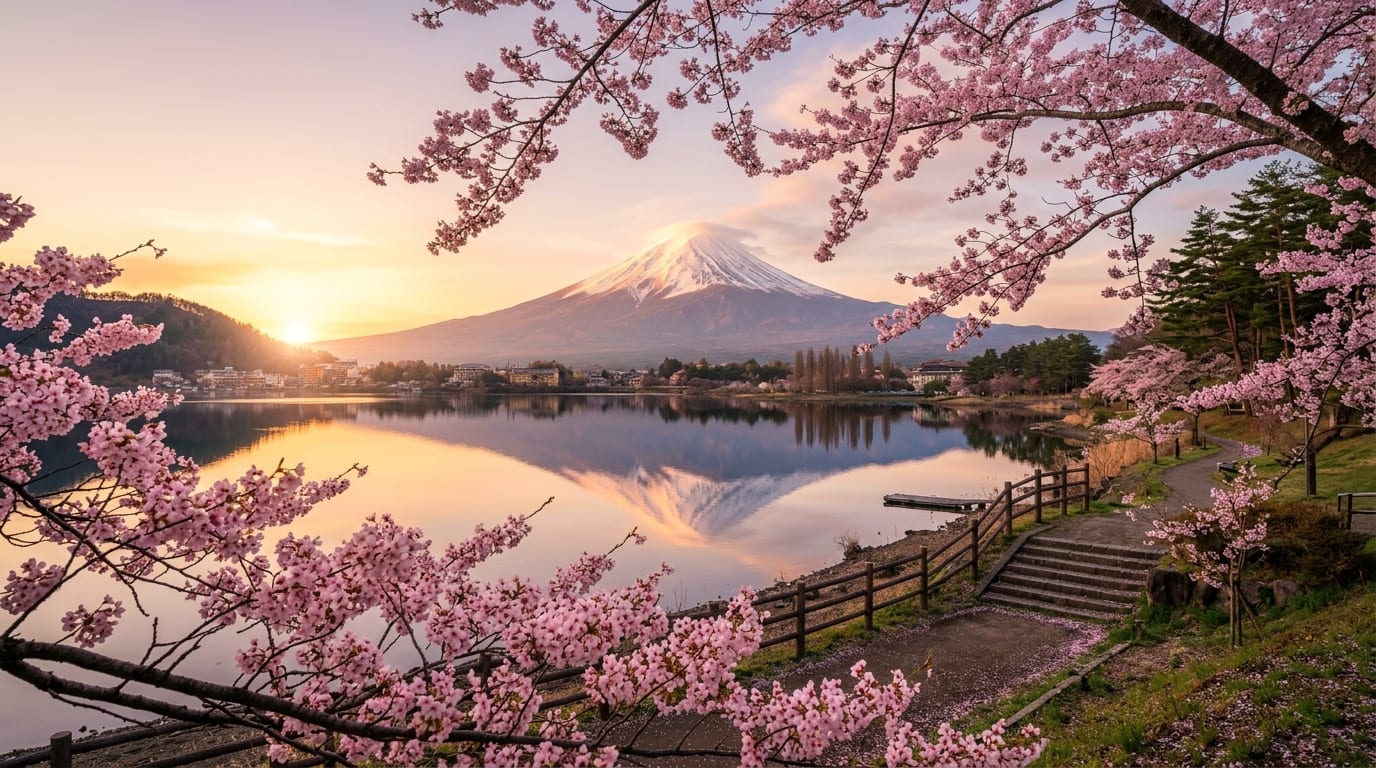
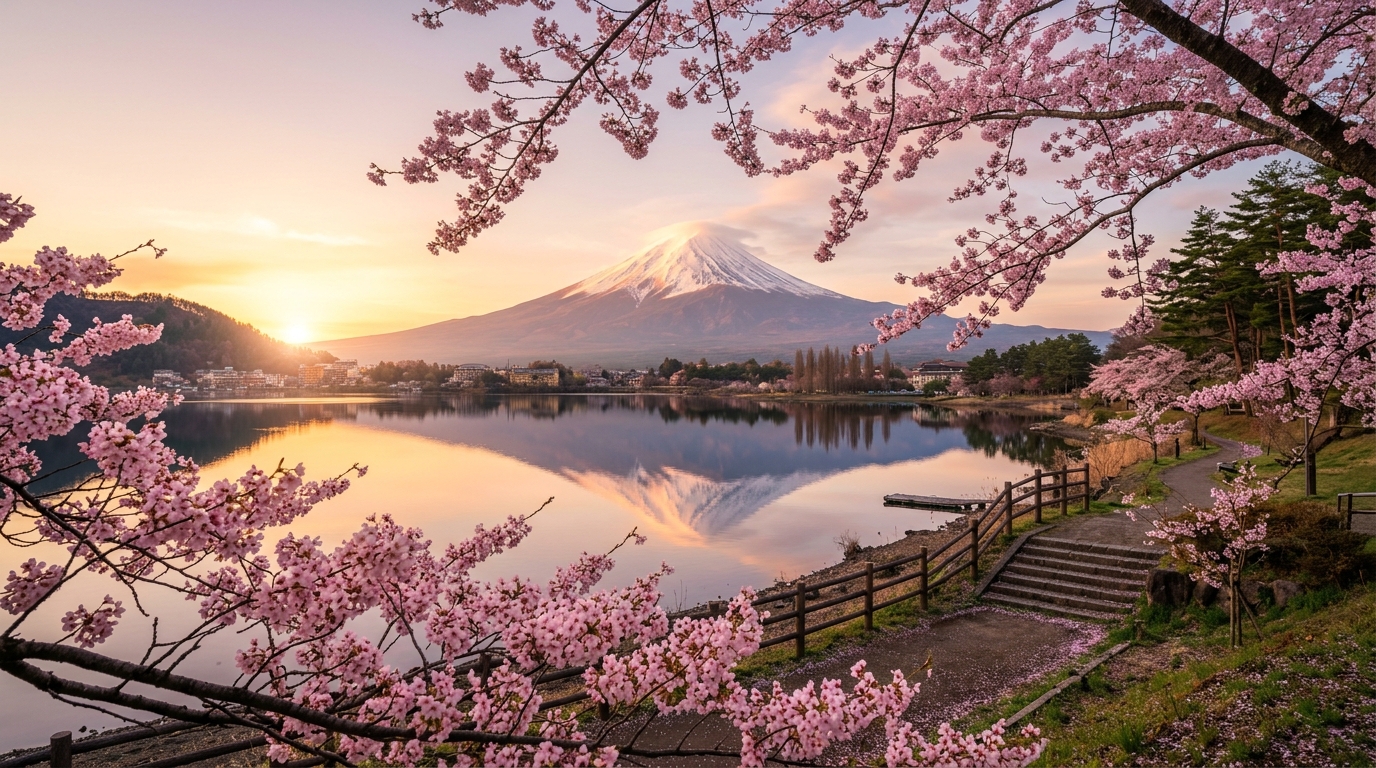
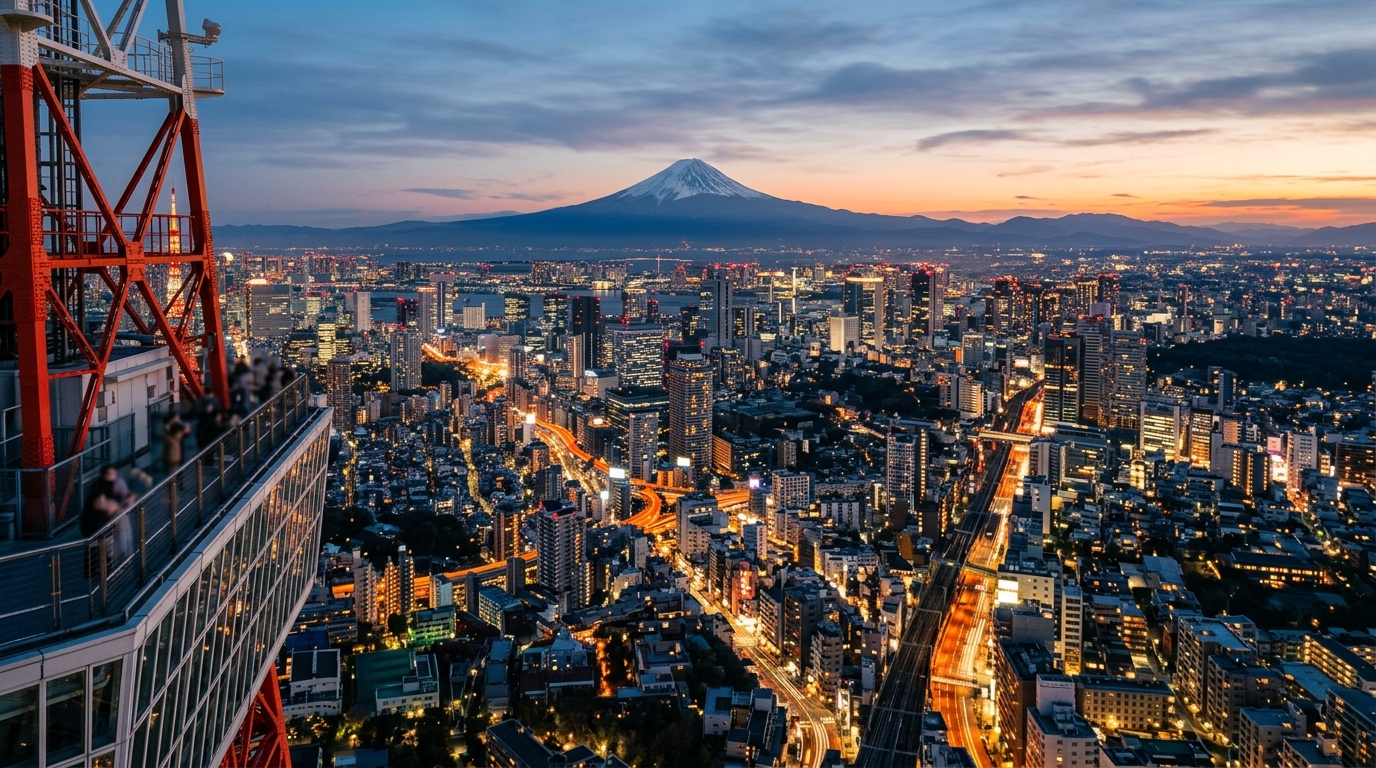
When you see Mt. Fuji from a Shinkansen window, or from a Tokyo skyscraper at dusk, or from the shore of Lake Kawaguchi at dawn — you're not just looking at a mountain.
You're looking at:
- A 12,000-year-old volcano
- A million pilgrimages
- A national religion's holy site
- The visual identity of a 125-million-person nation
- The symbol of post-war reconstruction
- A meditation on the relationship between humanity and earth
Most visitors photograph Mt. Fuji and move on. But once you know its story, the mountain becomes something else: a teacher.
It teaches that beauty can come from destruction. That a nation can find identity in geography. That the sacred and the commercial can coexist (uncomfortably). That a single object can hold a thousand meanings.
When you next see Mt. Fuji, take 60 seconds and just look. You're seeing more than a mountain. You're seeing how a culture made meaning out of geology.
That's the real story.