Japanese people didn’t split the year into four seasons — they split it into 72. Discover the sensibility the 24 solar terms and 72 micro-seasons built over 1,200 years.
Read this article to earn +5 MTC
The Japanese didn't divide the year into 4 seasons. They divided it into 72.
When foreigners hear this, they are surprised. Many Japanese people are equally surprised.
"Spring, summer, autumn, winter" — this four-way division we learned in school is actually an extremely crude way of looking at seasons in Japanese culture. Until the Edo period, Japanese people experienced the year through 24 "sekki" (solar terms), further subdivided into 72 "kō" (micro-seasons) — living in rhythm with nature's changes that unfolded every five days.
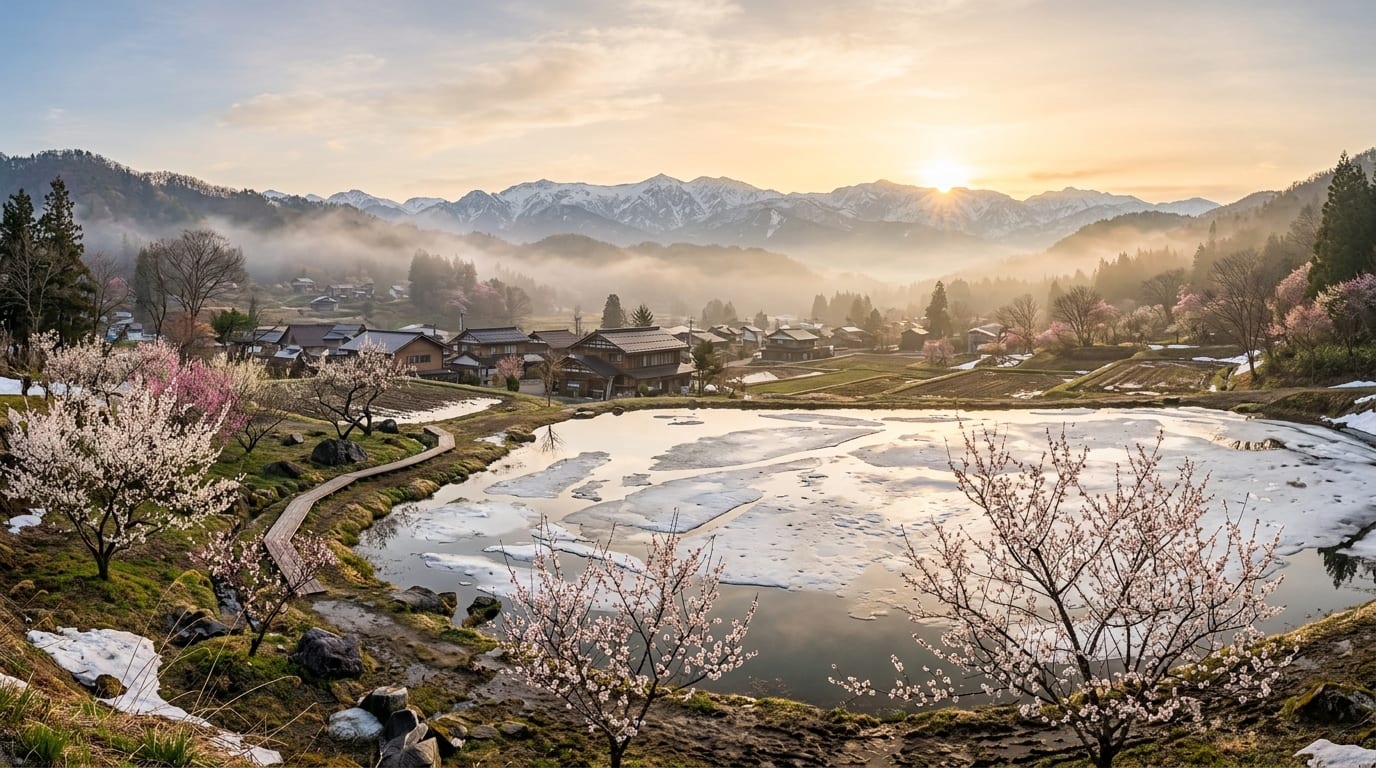
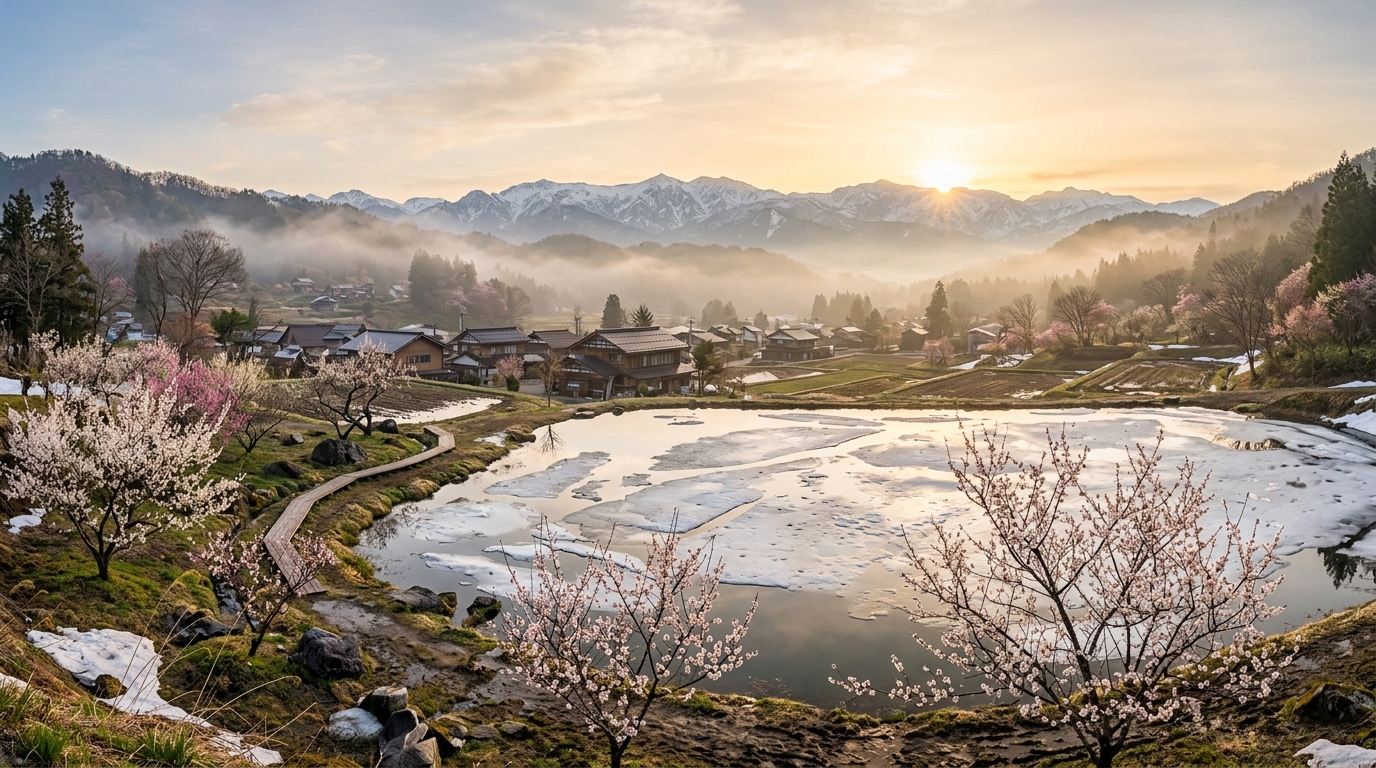
For example, in early February there is Harukaze kōri o toku ("East wind melts the ice") — the wind blowing from the east begins to thaw the frozen water. Mid-February is Uguisu naku ("Warblers begin to sing") — the bush warblers start calling from the mountains. And late February is Uo kōri o izuru ("Fish leap from the cracked ice") — fish emerge through cracks in the retreating ice.
Within a single month, three delicately distinct "seasons" coexist.
This is the world of saijiki. A culture that perceives one year as 72 seasons — a sensibility of time unparalleled in any other civilization.
The Origin of Saijiki and the 24 Solar Terms
Saijiki (歳時記) is a reference book of seasonal words (kigo) used in haiku. Organized into five sections — spring, summer, autumn, winter, and New Year — it contains tens of thousands of seasonal words, each explained alongside the sensations associated with its time of year.
But the essence of saijiki goes far beyond a haiku dictionary. It is a lexicon of the Japanese worldview, giving a name to every moment in the year.
The origins trace back to China's 24 solar terms (二十四節気). This calendrical system, created for agriculture in pre-Han China, divided the sun's position along the ecliptic into 24 equal parts and named each one. Risshun, Usui, Keichitsu, Shunbun — these 24 solar terms were introduced to Japan in the Nara period, and by the Heian period they were embedded in the annual court ceremonies.
In the Edo period, the Japanese calendar scholar Shibukawa Harumi created the Jōkyō-reki calendar in 1685, rewriting the Chinese 72 micro-seasons to match Japan's climate. For example, the oddly specific Chinese season Dassai gyo ("Otters offer fish to the gods") was replaced with the more intuitive Japanese Sōmoku mebae izuru ("Plants and trees begin to bud").
The 24 solar terms and 72 micro-seasons became the shared language through which Japanese people have conversed with nature for over 1,200 years.
Why Only Japan Has 72 Seasons — How Geography Created This Sensitivity
Every country in the world has four seasons. So why did only Japan develop a seasonal sensitivity so refined that it subdivides the year into 72 parts? The answer lies in the geographic peculiarities of the Japanese archipelago.
Japan stretches across 25 degrees of latitude (N 20° to N 45°) as a long arc-shaped island chain, with about 73% of its land area covered in mountains. According to a 2025 World Meteorological Organization (WMO) report, Japan holds one of the highest "meteorological diversity indices" in the world — its seasonal variation in temperature, humidity, and precipitation is about 1.7 times greater than countries at similar latitudes.
Three factors drive this diversity.
First, its position between the Eurasian continent and the Pacific Ocean. In winter, dry cold winds from the Siberian high absorb moisture over the Sea of Japan, producing some of the world's heaviest snowfall on the Japan Sea coast. In summer, moist southern winds from the Pacific high collide with the central mountain spine of Honshu, triggering localized torrential rain. On the same day, Niigata may be buried in snow, Tokyo sunny, and Naha in short sleeves — such is an ordinary winter day in Japan.
Second, the unique phenomenon of tsuyu, the rainy season. From late May through mid-July, the collision of the Okhotsk air mass and the Pacific air mass creates a stationary front, bringing daily rain for weeks. Among temperate regions, only Japan, Korea, and South China experience this "fifth season" that is neither spring nor summer.
Third, the double transition period of April and October. Around the spring and autumn equinoxes, temperature, humidity, and wind direction shift dramatically on a weekly basis. It is precisely this gradient of change that gave birth to the idea of "a season with a new name every five days."
In other words, Japan's 72 micro-seasons are not poetic invention. They are an ultra-high-resolution weather observation system developed for survival by people living on the most meteorologically volatile archipelago on earth.
The Complete Picture of the 24 Solar Terms
The 24 solar terms are divided every 15 degrees of the sun's position. As the sun moves 15 degrees along the ecliptic (as viewed from Earth), the next solar term begins. In other words, the season changes its name roughly every 15 days.
Below is the full list. Even many modern Japanese don't know them all, yet these terms still appear daily in weather forecasts and seasonal greetings.
| # | Solar Term | Reading | Approx. Date | Meaning |
|---|---|---|---|---|
| 1 | Risshun | りっしゅん | Feb 4 | Beginning of spring |
| 2 | Usui | うすい | Feb 19 | Snow turns to rain |
| 3 | Keichitsu | けいちつ | Mar 6 | Insects emerge from soil |
| 4 | Shunbun | しゅんぶん | Mar 21 | Spring equinox |
| 5 | Seimei | せいめい | Apr 5 | All things pure and clear |
| 6 | Kokuu | こくう | Apr 20 | Rain that nurtures grain |
| 7 | Rikka | りっか | May 6 | Beginning of summer |
| 8 | Shōman | しょうまん | May 21 | All things begin to fill |
| 9 | Bōshu | ぼうしゅ | Jun 6 | Time to plant rice |
| 10 | Geshi | げし | Jun 21 | Summer solstice |
| 11 | Shōsho | しょうしょ | Jul 7 | Heat intensifies |
| 12 | Taisho | たいしょ | Jul 23 | Hottest of the year |
| 13 | Risshū | りっしゅう | Aug 8 | Beginning of autumn |
| 14 | Shosho | しょしょ | Aug 23 | Heat subsides |
| 15 | Hakuro | はくろ | Sep 8 | White dew on grasses |
| 16 | Shūbun | しゅうぶん | Sep 23 | Autumn equinox |
| 17 | Kanro | かんろ | Oct 8 | Cold dew descends |
| 18 | Sōkō | そうこう | Oct 23 | Frost begins |
| 19 | Rittō | りっとう | Nov 7 | Beginning of winter |
| 20 | Shōsetsu | しょうせつ | Nov 22 | First light snow |
| 21 | Taisetsu | たいせつ | Dec 7 | Heavy snow begins |
| 22 | Tōji | とうじ | Dec 22 | Winter solstice |
| 23 | Shōkan | しょうかん | Jan 6 | Cold intensifies |
| 24 | Daikan | だいかん | Jan 20 | Coldest of the year |
What's striking is that the four "beginning" terms — Risshun, Rikka, Risshū, Rittō — come about six weeks earlier than modern intuition. Risshun, the beginning of spring, falls on February 4, when snow is still falling in many regions. Yet ancient Japanese defined spring's beginning as "the moment the depths of cold pass, and daylight begins imperceptibly to lengthen."
Not the visible snowscape, but the invisible shift in light. This is the subtlety of Japanese seasonal awareness.
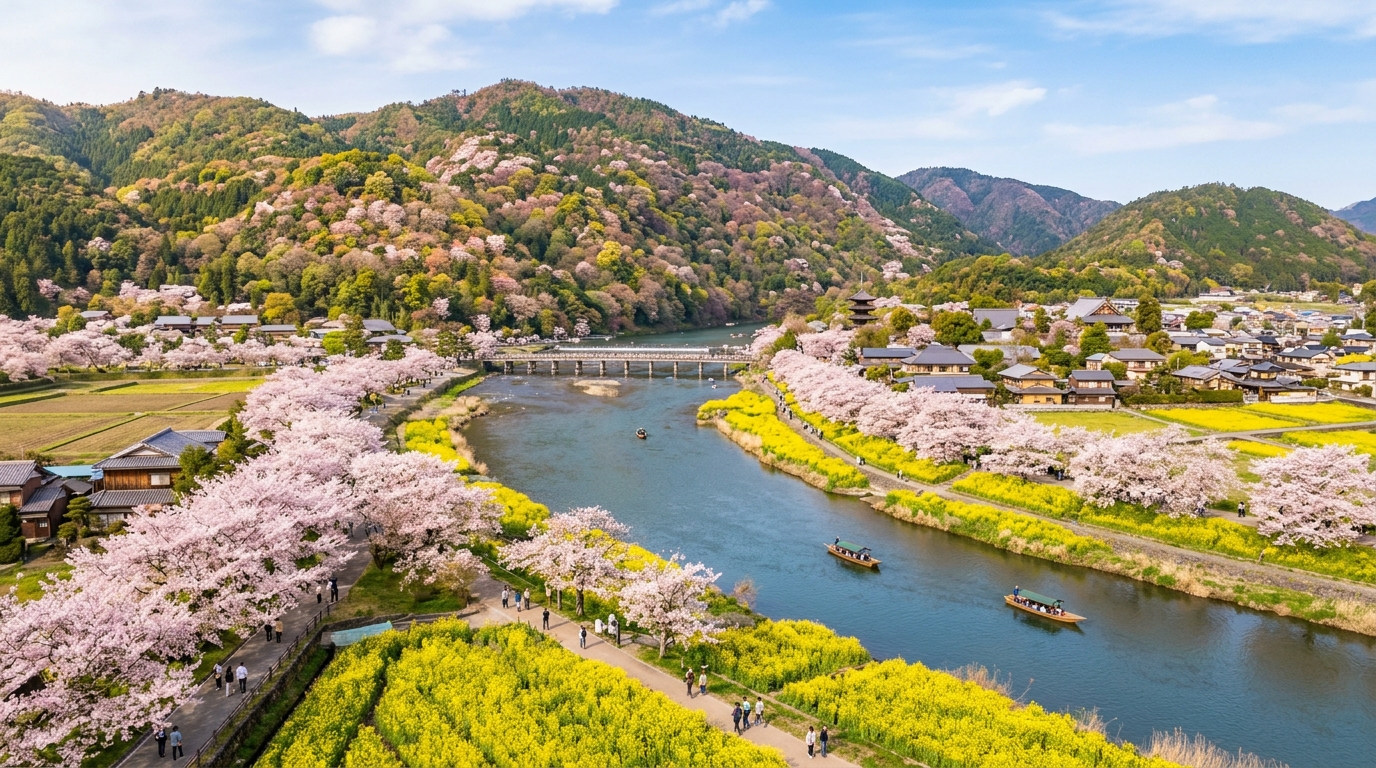
The 72 Kō — Seasons That Change Every Five Days
Further subdividing each solar term into three gives us the 72 kō (micro-seasons). Each solar term lasts about 15 days, split into an early, middle, and late phase. In other words, the name of the season changes roughly every five days.
Here are the three micro-seasons within Risshun (Feb 4–18) as an example:
| Kō | Reading | Period | Meaning |
|---|---|---|---|
| Harukaze kōri o toku | はるかぜ こおりを とく | Feb 4–8 | East wind melts the ice |
| Uguisu naku | うぐいす なく | Feb 9–13 | Warblers begin singing in the mountains |
| Uo kōri o izuru | うお こおりを いずる | Feb 14–18 | Fish leap from the cracked ice |
Let's look at other examples. The late phase of Shōman in late May and early June is Mugi no toki itaru — "The wheat ripens to gold." The early phase of Hakuro in early September is Kusa no tsuyu shiroshi — "White dew first appears on grasses."
The defining feature of the 72 kō is that they name not abstract seasons, but concrete phenomena perceptible to the five senses. Shifts in wind, birdsong, insect movement, plant changes, water states, the quality of light — each is recognized as its own independent "season."
This is no coincidence. Japan's geographical conditions — long north-to-south, mountainous, ocean-surrounded, with dramatically distinct seasons — cultivated this extraordinary sensitivity.
Haiku and Kigo — A 17-Syllable Universe Born from 72 Seasons
The spirit of saijiki crystallized most perfectly in haiku. Within just 17 syllables (5-7-5) — the shortest fixed poetic form in the world — a kigo, or seasonal word, must always appear. This single word summons an entire season and scene into the reader's mind.
Modern major saijiki contain about 25,000 kigo. Under the five categories of spring, summer, autumn, winter, and New Year, each word is classified into seven subsections: time, astronomy, geography, daily life, events, animals, and plants.
Three examples illustrate the power of kigo.
Matsuo Bashō (1689, Oku no Hosomichi):
Stillness — the cicada's cry seeping into the rocks
The kigo here is semi (cicada) — a summer word. A single syllable evokes the sticky summer heat of Risshakuji Temple in Yamagata, the midsummer sun, the cicada song echoing off cliffs, and the strange silence at the heart of it all. A kigo is a compressed file in a haiku.
Yosa Buson (circa 1773):
Rapeseed flowers — the moon in the east, the sun in the west
The kigo nanohana (rapeseed flower) is a mid-spring word (mid-March to early April). The poem captures the brief, specific moment at dusk when, above a yellow canola field, the setting sun and the rising full moon appear simultaneously in opposite directions. Change the kigo to "sunflower" and the entire scene and emotion collapse.
Kobayashi Issa (1819):
Skinny frog, don't give up — Issa is here
The kigo kaeru (frog) is a spring word. Not merely the name of an animal — it summons an entire scene: spring frogs hopping about in their mating season, bursting with life.
In haiku, the kigo is a keyword that activates millennia of cultural memory. The moment a reader encounters the word, they unconsciously receive every image past poets have accumulated around it — the air, the sound, the smell, the emotion. Paradoxically, haiku's brevity grants access to the vast database of a cultural collective unconscious.
This structure is strikingly similar to modern meme culture and hashtag culture. But unlike hashtags, the kigo has over 1,200 years of accumulated meaning behind it.
Bashō and the Completion of Saijiki
Saijiki took its modern form in the age of Matsuo Bashō, the haikai master of the Edo period. From 1689 to 1691, Bashō traveled the roads of northern Japan in the journey recorded as Oku no Hosomichi, composing an enormous number of haiku along the way. From that pilgrimage, he became convinced that the kigo was absolutely indispensable to haiku.
"A haiku must contain a kigo" — this principle became an unshakable rule in the haikai world after Bashō, and with it, the importance of saijiki rose dramatically.
Bashō's disciple Mukai Kyorai authored Kyorai-shō around 1700, systematizing the classification of kigo. In the Meiji era, Masaoka Shiki expanded and reorganized saijiki during the modern haiku movement, creating the prototype of today's Haiku Saijiki.
But saijiki was not used by poets alone. For ordinary people from the Edo to Meiji periods, saijiki served as a textbook for daily life.
- When to sow the seeds
- When to change clothes for the season
- When each food comes into its peak
- When to beware of specific illnesses
- When to hold which festivals and rites
All of this knowledge was consolidated in saijiki. Saijiki was, in effect, the operating system by which Japanese people lived in dialogue with nature.
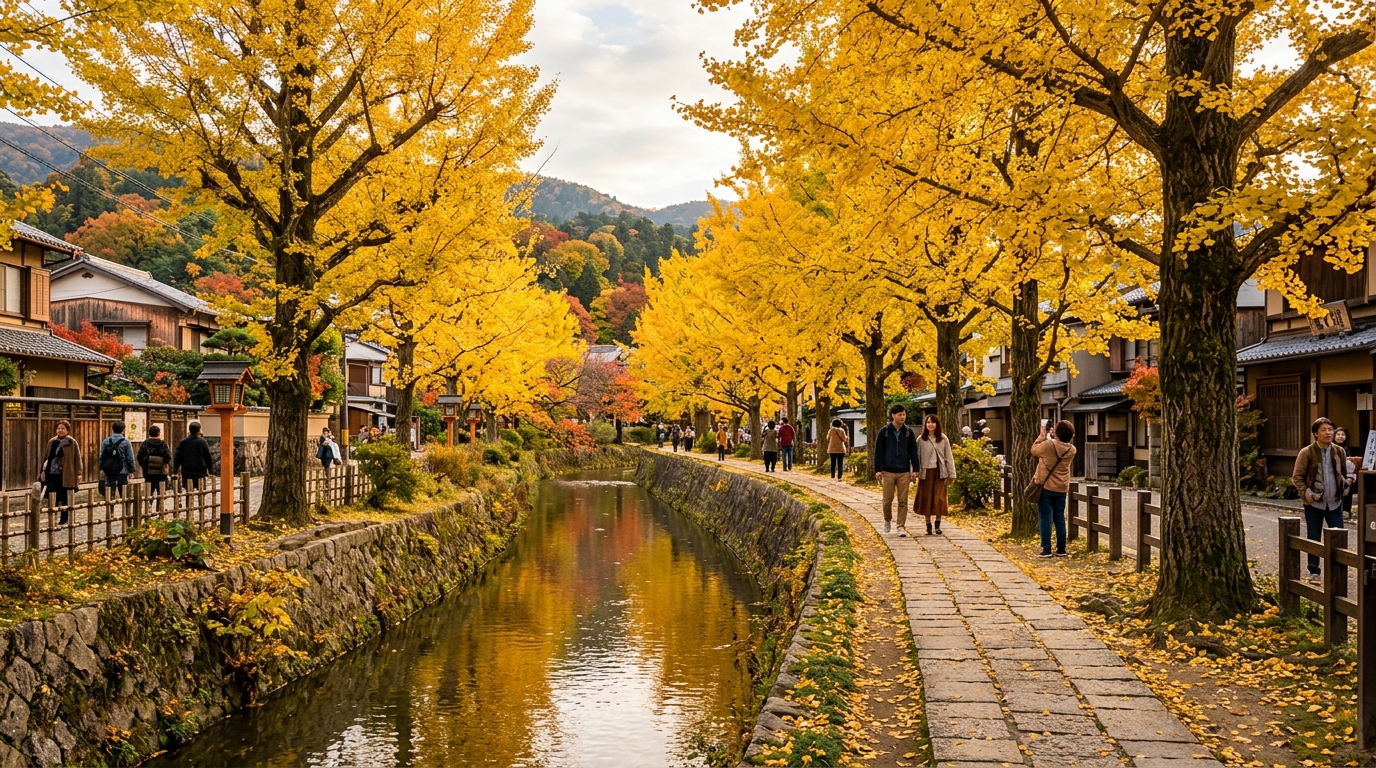
Why Modern People Need "Saijiki Time Sense" More Than Ever
In 2026, global warming and extreme weather are shaking Japan's traditional sense of the seasons. Cherry blossoms bloom at record-early dates, autumn shortens, and winter snow diminishes. According to a 2025 report from Japan's National Institute for Environmental Studies, over the past 30 years the number of summer days has increased by an average of 13.7 days, while winter days have decreased by 9.2.
And yet, precisely because of this era, the value of saijiki-style time sense has actually increased.
There are three reasons.
Reason 1: A natural mindfulness practice
The goal of mindfulness meditation, popularized in the West, is to direct awareness to "this present moment." A 2025 Harvard University study showed that mindfulness practitioners had cortisol levels averaging 23% lower than non-practitioners.
Living according to saijiki is a tool that automatically performs "presence" through the axis of the seasons. Simply observing the seasons changing every five days naturally returns your consciousness to the here and now.
Reason 2: An early warning system for climate change
Each kō in the saijiki is a record of "what should occur at this time." If it doesn't, something is off. Saijiki is, in effect, an informal climate change monitoring system developed by Edo-period Japanese.
For example, if cold days persist into Keichitsu (when insects should be emerging), spring is arriving late. Combined with modern meteorological data, saijiki becomes a living lens through which to feel the impact of climate change firsthand.
Reason 3: A bridge between the local and the global
Saijiki is thoroughly local. The 72 micro-seasons, written for the climate of Kyoto, do not apply identically to Hokkaido or Okinawa. But it is precisely this locality that gives it value in a global era.
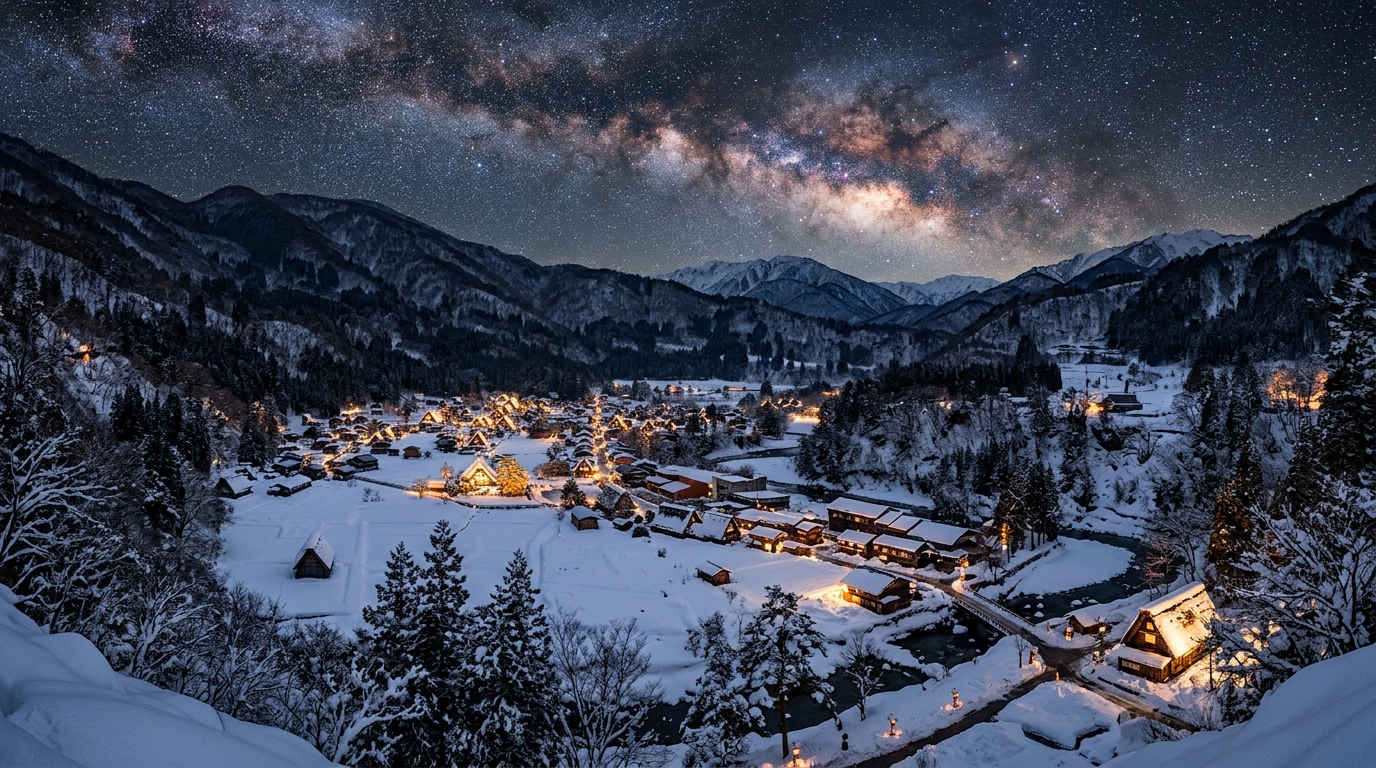
One reason foreign travelers come to Japan is to experience "a seasonal subtlety impossible in their home country." Kyoto's cherry blossoms, Arashiyama's autumn leaves, Shirakawa-gō's snow — without the saijiki time sense, these become mere photo spots. With it, they become a philosophical education.
A Saijiki Calendar for Travelers
For international travelers visiting Japan, knowing saijiki deepens the journey by a factor of ten. Here are seasonal travel suggestions.
[February · Risshun to Usui] Early spring in Kyoto
- Plum blossom spots: Kitano Tenmangū (Kyoto), Yushima Tenmangū (Tokyo)
- Kō to experience: Harukaze kōri o toku — the faint breath of spring inside the cold
- Seasonal foods: fukinotō (butterbur sprouts), rapeseed flowers, Spanish mackerel
[April · Seimei to Kokuu] End of cherry blossoms, start of new leaves
- Spots: Mount Yoshino, Takatō Castle, Kakunodate
- Kō to experience: Niji hajimete arawaru — "Rainbows first appear" after rain
- Seasonal foods: bamboo shoots, wild mountain vegetables, first bonito
[June · Bōshu to Geshi] Aesthetics of the rainy season
- Spots: Kamakura's hydrangeas, Kyoto's Kifune Shrine, gasshō-zukuri villages
- Kō to experience: Kusaretaru kusa hotaru to naru — "Rotten grass becomes fireflies"
- Seasonal foods: ayu (sweetfish), plums, loquats
[October · Kanro to Sōkō] Autumn leaves and cold dew
- Spots: Nikkō, Hakone, Sagano in Kyoto
- Kō to experience: Kirigirisu to ni ari — "Crickets at the doorstep"
- Seasonal foods: chestnuts, new rice, Pacific saury
[December · Taisetsu to Tōji] Snow and the long night
- Spots: Shirakawa-gō, Zaō, Sapporo
- Kō to experience: Kuma ana ni komoru — "Bears enter hibernation"
- Seasonal foods: crab, oysters, yuzu
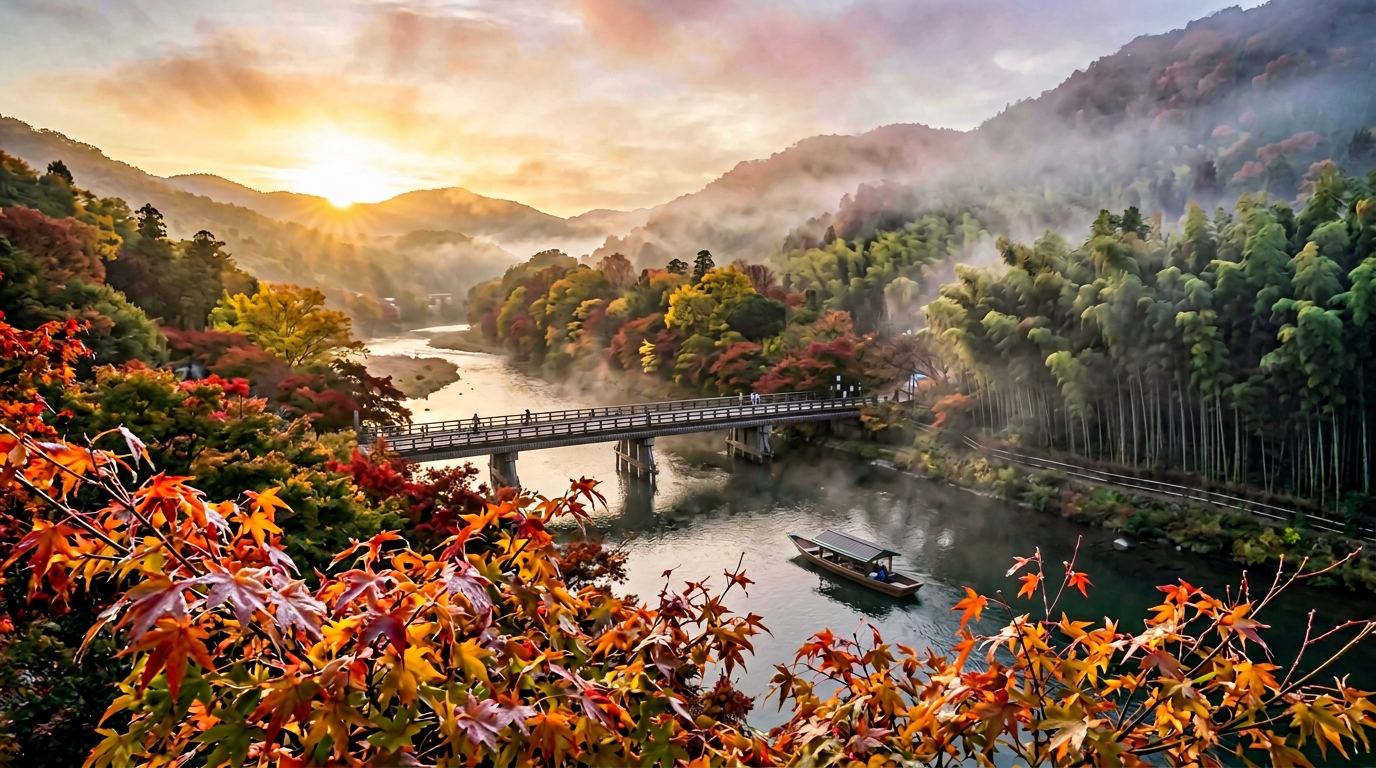
Kyoto — The City Where Saijiki Lives Most Fully
As introduced in the companion article "Kyoto Is a Living Museum of Japanese Philosophy," Kyoto remains the city in modern Japan where saijiki lives most vividly.
At Kyoto's centuries-old kaiseki restaurants, menus still change according to the 72 micro-seasons. Every five days the tableware changes, every five days the flowers change, every five days the motif of the confections changes. This is called hashiri–shun–nagori — enjoying seasonal ingredients in three stages: the early arrival, the peak, and the lingering farewell. The three-stage framework itself is a living expression of saijiki time sense.
Dividing the year not into 365 days but into 72 × 5 days — this sensitivity is the secret behind Kyoto kaiseki achieving a level unmatched anywhere in the world.
Beyond food, Kyoto's traditional machiya townhouses still practice seasonal transformation. In winter, shōji screens are closed; in summer, they are replaced with reed blinds. Furniture arrangements, vase positions, hanging scrolls — all change with the season. The house itself breathes in the rhythm of saijiki.
Even the hair ornaments (hanakanzashi) worn by Gion's geiko and maiko change by the month. January is pine-bamboo-plum, February plum, March rapeseed flowers, April cherry blossoms — this fine-grained rhythm shapes the very sense of time of the city.
Modern Brands and Saijiki — The Commercial Value of 72 Seasons
Surprisingly, the saijiki time sense is embedded at the core of many of Japan's most successful modern brands.
Toraya (founded 1526): Japan's most famous traditional confectionery still produces roughly 250 seasonal wagashi per year, most tied to specific solar terms or micro-seasons. The confection called Suisen-zuki appears only in late January during Daikan, and Ajisai (hydrangea) exists only from Bōshu to Geshi in June. Each confection's window on the shelf averages 10–15 days — a product design that follows the exact rhythm of the 72 kō.
The reason Toraya has amassed hundreds of thousands of Instagram followers globally isn't only the beauty of the confections, but the "72 seasons" narrative structure behind them. Customers aren't buying sweets. They're buying seasons.
MUJI: Since 2020, MUJI has run a "seasonal postcard" series, distributing free postcards with different designs for each of the 24 solar terms. It sounds like a minor campaign, but as a brand loyalty mechanism it's remarkably effective. "Let's drop by MUJI to pick up the next solar term's card" — 24 automatic reasons to visit per year, generated by the ancient calendar.
Starbucks Japan: Even as a global chain, Starbucks Japan releases 2–3 times more seasonal products aligned with the solar terms (spring matcha frappuccino, autumn roasted tea frappuccino, etc.) than its overseas counterparts. Per-store revenue in Japan runs about 1.4× the global average (Starbucks 2024 annual report).
The idea of dividing time into 72 parts is a powerful differentiator in modern experience design. When a brand partitions the world in five-day or fifteen-day rhythms instead of daily, weekly, or monthly, its relationship with customers deepens astonishingly.
7 Habits to Bring Saijiki Into Your Daily Life
You don't need to study saijiki academically. What matters is creating a one-minute-a-day habit of noticing the season. Try adopting these seven.
Habit 1: Open the window each morning and smell the air Your nose is the first to notice the season changing. The smell of soil, grass, rain, snow — consciously distinguishing them expands a single year by a factor of 72.
Habit 2: Change your phone wallpaper every five days Switch to an image matching the current kō. Forced seasonal awareness, built into your device. Multiple saijiki apps now exist — search and install one.
Habit 3: Always add a "seasonal dish" to your table Among vegetables, fruit, and fish at the supermarket, pick one item now at its peak and eat it this week. Your mouth becomes an instrument of seasonal awareness.
Habit 4: Observe nature for five minutes once a week A park, a balcony, a windowsill — anywhere will do. Stand still for five minutes and search for "change." Find one thing different from last week.
Habit 5: Include a seasonal greeting in your messages Email, LINE, anywhere. "The kō of Keichitsu, when the insects awaken" — a single line like this transforms the texture of a conversation.
Habit 6: Place a single flower in your room Not a large bouquet. A single stem is enough. Look at it morning and evening. Time begins to flow visibly.
Habit 7: Review the six kō of the past month at month's end Ask yourself: "Did I actually feel each one?" "Were there signs of climate change?" This reflection sharpens your observational skill for the next month.
Related Articles
If the themes here resonate, explore the companion pieces.
- [Kyoto Is a Living Museum of Japanese Philosophy] Why Kyoto's kaiseki restaurants change menus every five days
- [Seven Japanese Philosophies for Life] The ichigoichie and wabi-sabi that shape saijiki from within
- [Koji, Umami, and the Soul of Japanese Food] The fermentation wisdom that maximizes seasonal ingredients
In Closing — Raising the Resolution of Time
In 1854, American author Henry David Thoreau wrote in Walden: "Time spent among nature is time added to life."
Japanese people knew this truth 1,200 years earlier. And they systematized it in the form of saijiki.
Now, in an era of climate change and digital fatigue, we must reclaim saijiki-style time sense. By dividing one year into 72 parts instead of four, your life becomes 72 times richer.
Or more precisely: the length of a year doesn't change. What changes is the resolution at which you experience it.
Someone living at high resolution discovers five seasons in five days. Someone living at low resolution lumps four months into a single "summer."
Which life would you rather live?
We're constantly searching for ways to live longer. Health, exercise, nutrition, sleep — all are attempts to physically extend lifespan. But the truth saijiki offers is different. Not the length of time, but its density. By experiencing the same year through 72 divisions instead of 4, your life subjectively expands many times over.
The next time you visit Kyoto, or tomorrow morning when you open your window — spend just one minute noticing the color of the sky, the temperature of the wind, the flow of the clouds. That becomes your first moment of discovering one of the 72 seasons. And from that moment on, you begin to share a sense of time with Bashō and Issa, and with the artisans still reading the seasons at Kyoto's old teahouses today.