Japan's trains run on unspoken rules. This guide walks first-time visitors through the silence, the queues, the IC cards, and the small gestures that turn you from tourist into respected guest — before your first ride.
Read this article to earn +5 MTC
The first time a foreign visitor steps onto a Tokyo commuter train, they often freeze. Not because anything is wrong — but because something is missing. The carriage is packed shoulder-to-shoulder, yet almost silent. No phone calls. No loud laughter. No music leaking from headphones. Just the hum of the rails and the measured breathing of strangers who have tacitly agreed to respect each other's space.
Japan's transportation system is one of the most efficient in the world, but what makes it truly remarkable is not the punctuality of the Shinkansen or the density of the Tokyo Metro — it is the culture that surrounds it. An invisible contract of manners holds the whole thing together, and if you arrive without knowing the rules, you may find yourself the target of polite but unmistakable disapproval. This guide is for you. It is the manual I wish every foreign friend had received before landing at Narita.
1. The Silent Train: Why Nobody Talks on the Metro
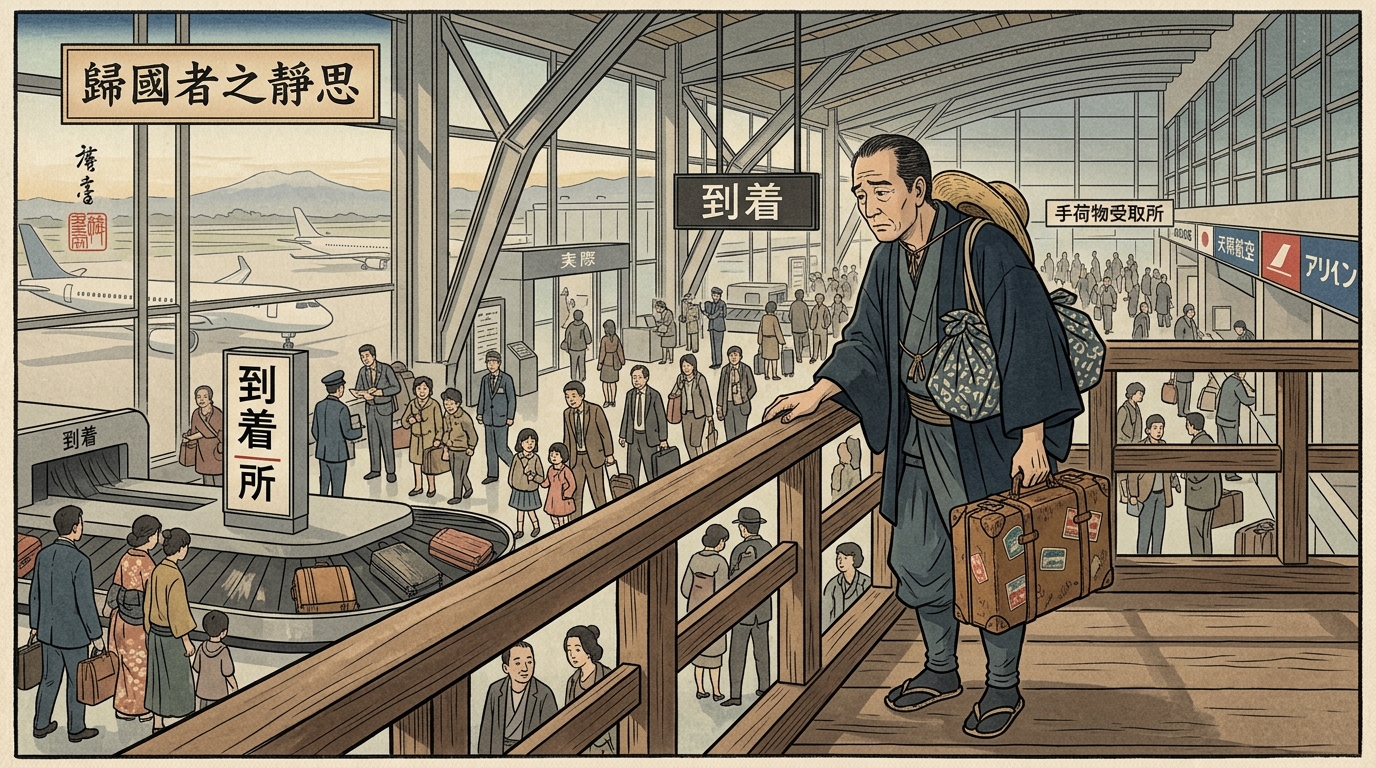
The single most surprising thing for first-time visitors is the silence. On the Yamanote Line at rush hour — with more than two hundred people crammed into a single car — conversations are whispered, if they happen at all. Phone calls are almost never made. Ringtones are silenced into what Japanese calls manner mode (マナーモード). Even couples hold hands in wordless communion.
This is not because Japanese people are shy. It is because the train is considered a shared public space, and shared space should not be dominated by any one person's noise. A loud phone call in a quiet carriage is experienced as a small act of aggression — an assumption that your business matters more than the collective peace of fifty strangers.
What to do:
- Switch your phone to silent mode before boarding. If you must check a message, do it silently.
- Never take a phone call on the train. If your phone rings, quickly decline and step off at the next station if you need to call back.
- Keep conversation volume low. A whisper or soft voice is appropriate; laughter that fills the carriage is not.
- Use headphones, and check that no sound is leaking. Japanese commuters have an almost supernatural ability to detect headphone bleed from three seats away.
2. Queuing: The Invisible Line That Organizes Millions
Japan runs on lines. At the platform, you will see small painted arrows or numbered marks on the floor — these indicate exactly where the train doors will stop, and where passengers should line up. Two files form on either side of the door, leaving a gap in the middle for disembarking passengers.
When the train arrives, nobody pushes forward. People wait for everyone to exit first. Then, in order, the queue flows in. The entire process takes about twelve seconds, and it works because no one tries to cheat it.
What to do:
- Find the painted line or queue marker on the platform and stand at the back of the line.
- Never stand directly in front of a door. Step aside to let people exit.
- Do not push. Even in Shibuya rush hour, you will find that simply moving with the flow is faster than trying to force your way.
- At escalators, stand on one side (left in Tokyo, right in Osaka) and leave the other side open for people who want to walk up.
3. IC Cards and Automatic Gates: The Tap That Saves Hours
If you are visiting Japan for more than a day, buy an IC card. Suica and Pasmo are the two most common, and they work interchangeably across Tokyo's trains, subways, buses, taxis, vending machines, and convenience stores. Welcome Suica or Pasmo Passport are special versions for tourists that don't require a deposit.
The card is rechargeable at any station kiosk (the machines have an English button), and using it is as simple as tapping your card flat against the green scanner as you walk through the gate. No stopping. No fumbling for change. No paper tickets.
Rules of the gate:
- Tap firmly and flat. The scanner needs a full surface to read the card — a corner tap often fails.
- Have your card ready before you reach the gate. Stopping to search your bag blocks the person behind you.
- If the gate buzzes red, you have insufficient balance. Step aside (don't block the gate), walk to a fare-adjustment machine (精算機, seisan-ki), and add credit.
- A single card can be loaded with multiple trips. You can also use it on buses — just tap when you board and again when you exit.
4. Priority Seats, Women-Only Cars, and the Unspoken Hierarchy
Every train in Japan has a set of priority seats (優先席) marked with pictograms of an elderly person, a pregnant woman, a person with a cane, and a parent with a child. These seats are technically available to anyone — but if one of those passengers boards, you are expected to stand up and offer your seat without being asked. Simply stand, smile, and gesture.
During rush hour, you may also notice a pink-marked car at one end of the train — this is the women-only car (女性専用車). It operates on weekday mornings (usually until 9:30 AM) on many urban lines, and is reserved for women, children, and people with disabilities. Male visitors should avoid boarding these cars during their designated hours.
5. Taxis, Buses, and the Shinkansen: Mode-Specific Etiquette
Taxis. Never — ever — open or close the passenger door yourself. Japanese taxi doors are operated automatically by the driver. Standing next to the door and trying to yank it open is both embarrassing and slightly dangerous. Simply wait, and the door will swing open for you. Tipping is not expected and can even cause confusion; just pay the exact fare with cash or your IC card.
Buses. In most of Japan (except central Tokyo), you board from the rear door, take a paper ticket with a number printed on it, and pay when you exit at the front. The fare is displayed on a screen at the front, corresponding to the number on your ticket. On IC-card-enabled buses, simply tap on entry and tap on exit.
The Shinkansen. The bullet train has its own set of rules. Reserved seats (指定席) require an additional ticket; non-reserved cars (自由席) are first-come-first-served. Do not put your feet on the seat in front of you. Do recline slowly and, if polite, glance back to check with the passenger behind you. Eating is allowed and even encouraged — the ekiben (station lunch box) is a travel ritual. Just keep your trash, bundle it neatly, and take it with you when you leave.
6. The Top Five Mistakes Foreign Visitors Make (and How to Avoid Them)
-
Taking a phone call on the train. Even a thirty-second "I'm on my way" call marks you instantly as someone who does not understand. If your phone rings, decline and text instead.
-
Blocking the gate. Tap-and-walk is the rhythm. Stopping inside the gate to check your map stops a river of people behind you. Step to the side.
-
Boarding before others exit. Even if you're in a hurry, waiting the three seconds for passengers to disembark is the single clearest sign of respect.
-
Eating on local trains. The Shinkansen and limited-express trains welcome food. Local commuter trains do not. An onigiri on the Yamanote Line draws quiet frowns.
-
Ignoring the escalator side rule. Standing two-abreast on a Tokyo escalator blocks the "walking lane" and creates a backup of frustrated commuters behind you. In Tokyo, stand on the left; in Osaka, stand on the right.
7. The Deeper Meaning: Why Japan's Transport Manners Matter
Here is the secret that most guidebooks miss: these rules are not about rigidity. They are about radical consideration. The silence, the queue, the exact tap of the IC card — each is a small ritual that says, I see you, and I will not make your commute harder than it needs to be.
In a country where Tokyo alone moves thirty-seven million people a day through its rail network, these rituals are what make the system humane rather than hellish. When you learn them, you stop being a tourist who is tolerated and become a visitor who is welcomed. Japanese people notice. They may not say it out loud — they rarely do — but you will feel it in the softening of the gaze, the slight bow, the small sumimasen (thank you / excuse me) that passes between you.
Travel is, in the end, a conversation with a place. Japan's transportation system is asking you a quiet question: Will you move through our shared space with care? Say yes, and the country will open to you.