Japan has survived for 2,685 years while empires rose and fell around it. The secret? A relentless willingness to observe, adapt, and perfect. Here’s why the world’s oldest nation’s playbook matters for your career and life.
Read this article to earn +5 MTC
Every civilization rises. Most fall. Empires crumble, dynasties end, and borders are redrawn by war, revolution, or simply the passage of time. Yet one country has defied this pattern for over 2,685 years — and it's not the one most people would guess.
Japan, a nation roughly the size of California, holds a distinction no other country on Earth can claim: the world's longest unbroken line of sovereign governance. While Rome fell, the Ottoman Empire dissolved, and the British Empire contracted, Japan's imperial dynasty has continued without interruption since 660 BCE — 126 emperors in an unbroken chain that connects the mythic past to Emperor Naruhito today.
But this article isn't really about history. It's about a question that matters to all of us: Why does a country that has survived longer than any other refuse to look inward?
The Paradox of Permanence
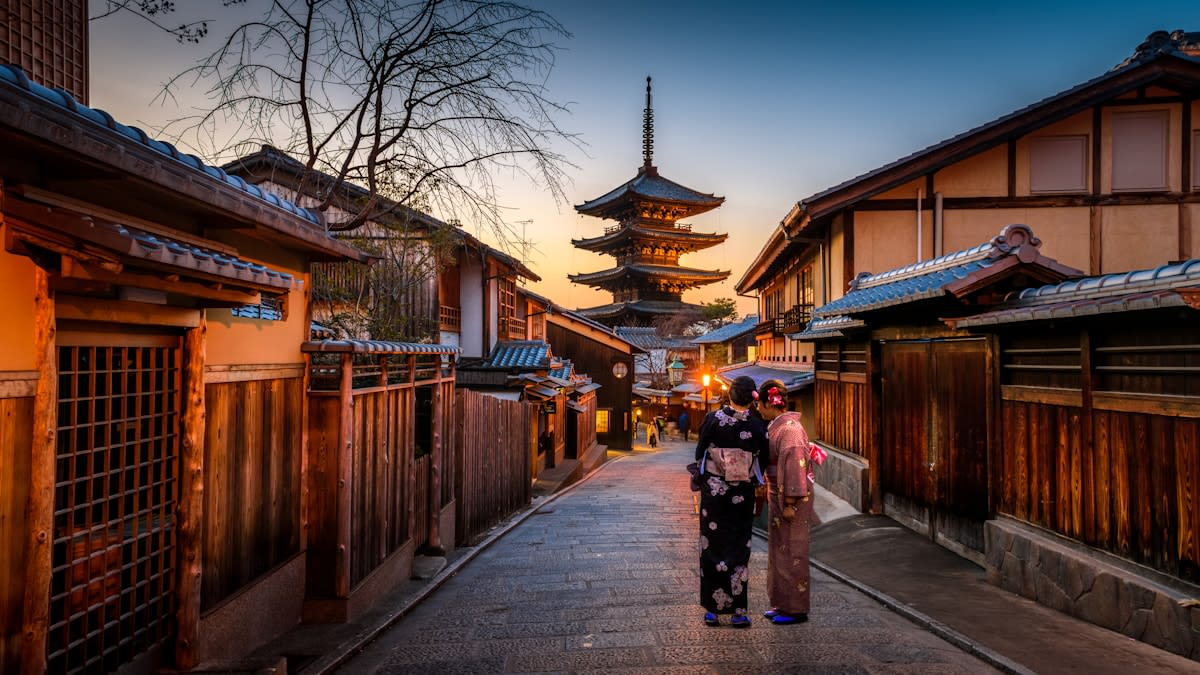
You might expect the world's oldest continuous nation to be deeply conservative — walled off, self-sufficient, suspicious of the outside world. And at certain points in its history, Japan was exactly that. The Sakoku policy (1633–1853) sealed the country's borders for over two centuries.
But here's what makes Japan fascinating: the very thing that kept it alive for millennia is also what drives it to constantly look beyond its borders.
Japan sits on a volcanic archipelago with limited natural resources. It has no oil, little arable land relative to its population, and faces earthquakes, tsunamis, and typhoons with alarming regularity. Survival was never guaranteed — it had to be earned, generation after generation.
This existential pressure created something remarkable: a culture that treats adaptation not as compromise, but as strength.

Absorb, Transform, Excel — The Japanese Pattern
Throughout its long history, Japan has followed a distinctive three-step pattern that explains its relationship with the world:
Step 1: Observe. Japan has always been a careful student of other civilizations. In the 6th century, it studied Chinese governance, writing systems, and Buddhism. In the Meiji era (1868), it studied Western industrialization, military strategy, and constitutional law. Today, it studies Silicon Valley, K-pop marketing, and Scandinavian sustainability.
Step 2: Adapt. Japan never copies wholesale. It filters foreign ideas through its own cultural lens, keeping what works and discarding what doesn't. Chinese characters became the foundation for Japanese writing — but Japan invented two entirely new scripts (hiragana and katakana) to make them work for the Japanese language. Western democracy was adopted, but the Emperor remained as a symbol of continuity.
Step 3: Perfect. This is where Japan's real magic happens. Borrowed ideas don't just get localized — they get elevated. Ramen came from China; Japan turned it into a global culinary phenomenon. Cars were invented in Europe; Japan made them reliable enough to dominate world markets. Animation existed before anime; Japan transformed it into one of the most influential art forms of the 21st century.
This pattern isn't just cultural trivia. It's a survival strategy refined over 2,685 years.
Why This Matters to You
Here's where it gets personal. Whether you're building a career, running a business, or simply trying to figure out your place in a rapidly changing world, Japan's story offers a powerful framework:
Longevity doesn't come from isolation — it comes from knowing when to open the door.
Think about the companies, communities, and individuals that have lasted. They share something with Japan: they're rooted in strong values but relentlessly curious about what's happening beyond their walls.
The startup founder who studies competitors isn't being unoriginal — she's doing what Japan has done for millennia. The professional who travels, reads widely, and draws inspiration from other fields isn't scattered — they're following the oldest playbook for survival on Earth.

The Soft Power Revolution
After World War II, Japan faced perhaps its greatest existential challenge. Defeated, devastated, and constitutionally barred from military expansion, it needed a new way to engage with the world.
What followed may be the most successful national reinvention in modern history.
Japan became the world's first true soft power superpower. Through anime, cuisine, technology, fashion, and a philosophy of craftsmanship that the world came to admire, Japan rebuilt its global influence without a single soldier crossing a border.
Today, Japanese cultural exports — from Studio Ghibli films to matcha lattes, from Toyota's reliability to Nintendo's imagination — shape daily life across the globe. The country that was once feared as a military power is now beloved as a cultural one.
And it all traces back to that ancient pattern: observe, adapt, perfect.
What the World's Oldest Nation Sees That Others Miss
So what exactly does Japan see when it looks outside its borders?
It sees possibility where others see threat. When globalization disrupts industries, Japan doesn't just react — it anticipates. Its investment in robotics and AI isn't reactive; it's a 50-year strategy to address an aging population before the crisis hits.
It sees bridges where others see barriers. Japan's cultural diplomacy turns every sushi restaurant into an embassy, every anime series into a conversation starter, every bullet train into proof that precision and ambition can coexist.
It sees the long game. While other nations chase quarterly results, Japan thinks in centuries. The Ise Grand Shrine has been ceremonially rebuilt every 20 years for the past 1,300 years — not because the building is failing, but because the act of renewal itself is the point.
The Invitation
Japan's 2,685-year story isn't just a historical curiosity. It's an active invitation to rethink how we approach our own lives and work.
Ask yourself: Are you building walls or opening doors? Are you clinging to what you know, or are you brave enough to observe, adapt, and perfect — the way a tiny island nation has done since before the Roman Republic existed?
The world's oldest country didn't survive by standing still. It survived by looking outward — and having the wisdom to know that what you find outside your borders can make everything inside them stronger.
Maybe it's time you did the same.